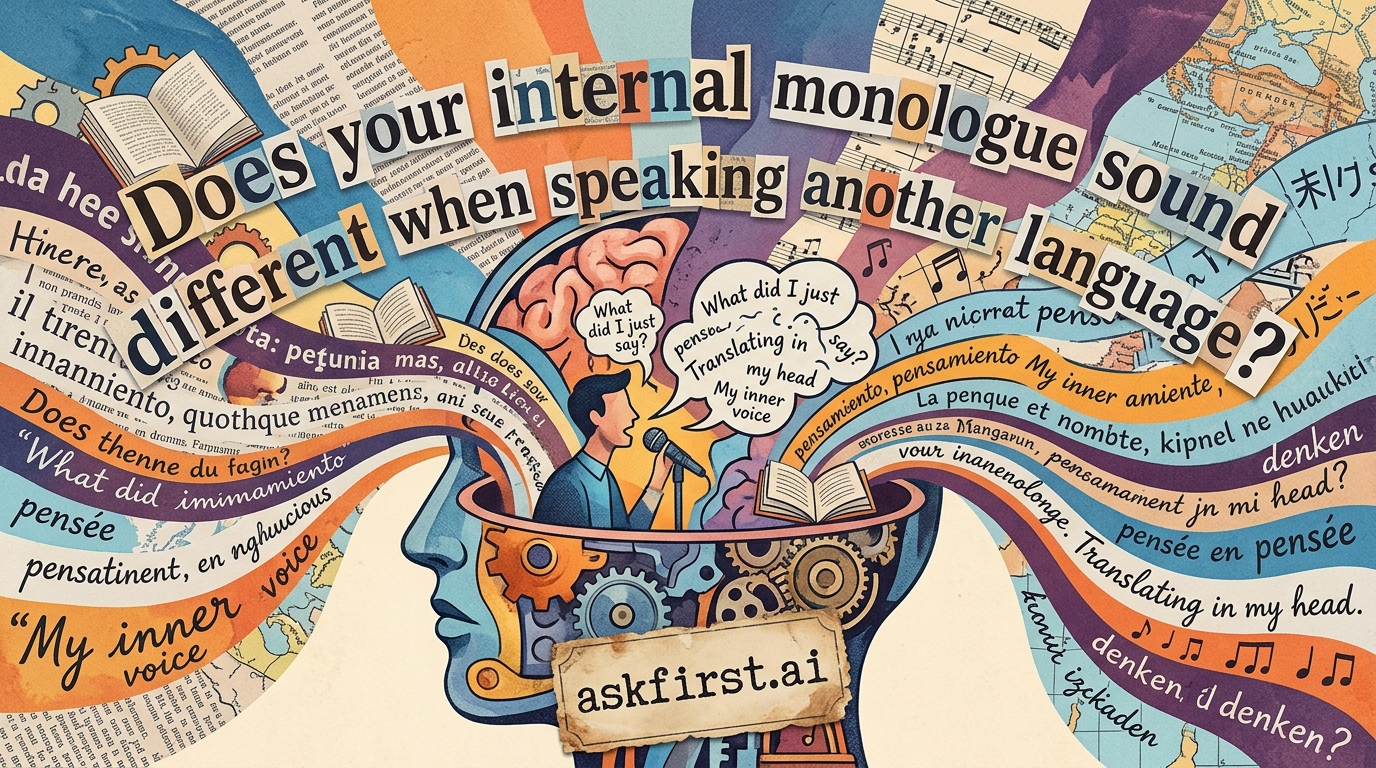
The Phenomenon of Internal Linguistic Shifts
Research into cognitive science and neurolinguistics suggests that the internal monologue—the voice inside the mind—is not a static feature of human consciousness. Instead, it is a dynamic, fluid process that adapts to the linguistic landscape a person inhabits. When an individual achieves proficiency in a second language, the internal narrative often undergoes a profound metamorphosis. It is not merely a change in vocabulary; it is a shift in the conceptual framework and emotional resonance of one's thoughts.
The Relationship Between Language and Cognition
The Sapir-Whorf hypothesis, or linguistic relativity, posits that the structure of a language influences its speakers' worldview or cognition. As an individual adopts a new language, they often adopt a new 'thinking persona.' For many bilingual or multilingual individuals, the internal monologue in a second language feels more analytical or objective. Studies have indicated that when people think in a foreign language, they often experience a reduction in emotional intensity. This is known as the 'foreign language effect,' which allows for more detached, utilitarian decision-making.
Why the Internal Monologue Changes
Emotional Distance: A primary driver of the change is the lack of formative emotional history with the second language. Because a native language is often tied to childhood memories and familial connections, it carries a heavy affective load. A foreign language, acquired later in life, often functions as a more neutral tool for processing logic and data, resulting in a distinct shift in the 'tone' of the internal monologue.
Conceptual Mapping: Different languages categorize the world in unique ways. For example, some languages have specific tenses for causality that do not exist in others. When one speaks a language that requires precise grammatical gender or formality, the mind must organize concepts according to those rules. This forces the internal monologue to 're-calibrate' to accommodate the specific syntactic requirements of the target language.
Processing Efficiency: In a native language, processing is automatic and deeply rooted in the subconscious. In a second language, the cognitive load is higher. This forces a different type of attention, often making the internal monologue feel more deliberate, structured, and at times, more formal or precise.
Scientific Insights and Observed Variability
Neurolinguistic imaging studies have shown that different areas of the brain may be recruited when switching between languages for internal reflection. While the core language networks in the left hemisphere remain active, the effort required to produce discourse in a non-native tongue engages executive control networks more heavily. This explains why some people report that their second-language self feels more 'confident' or 'assertive.' The lack of deeply ingrained cultural inhibitions in the second language allows the internal voice to bypass the social constraints often felt when using one’s native tongue.
Cultural Identity and the 'Bilingual Self'
Psychologists have observed that the phenomenon of the 'bilingual self' is a testament to the flexibility of the human psyche. Many polyglots report having different facets of their personality depending on which language they are using. If the internal monologue shifts, it is because the speaker is tapping into the specific cultural associations, idioms, and social contexts inherent to that language.
- Analytical Mode: Using a second language often promotes a 'cooler' analytical state of mind, which is helpful in high-pressure tasks.
- Social Connectivity: The native language remains the primary vehicle for emotional expression and intimate social bonding.
- Cognitive Flexibility: Practicing a second language regularly improves executive function, which keeps the brain resilient and adaptable over a lifespan.
Can One Influence the Internal Monologue?
Active exposure is the key to incorporating a new language into the internal narrative. Immersion is not just about listening to external speech; it is about forcing the mind to solve problems, narrate daily tasks, and formulate opinions in the target language. Over time, as neural pathways associated with that language strengthen, the brain begins to favor it for specific types of cognitive tasks. Eventually, the internal monologue transitions from an effortful translation process to a seamless stream of thought in the target language.
The Everlasting Nature of Linguistic Evolution
The internal monologue is not a fixed script. It is an evolving tapestry woven from every linguistic experience. As the world becomes increasingly interconnected, the capacity to pivot between languages—and by extension, between 'thought styles'—is a powerful cognitive advantage. Understanding this process demystifies the experience of bilingualism and highlights the sheer plasticity of the human brain. Whether one thinks in a native or a second language, the voice in the mind remains a fascinating mirror of the diverse ways humans interpret reality, logic, and emotion.