The Chronometric Influence of Caffeine
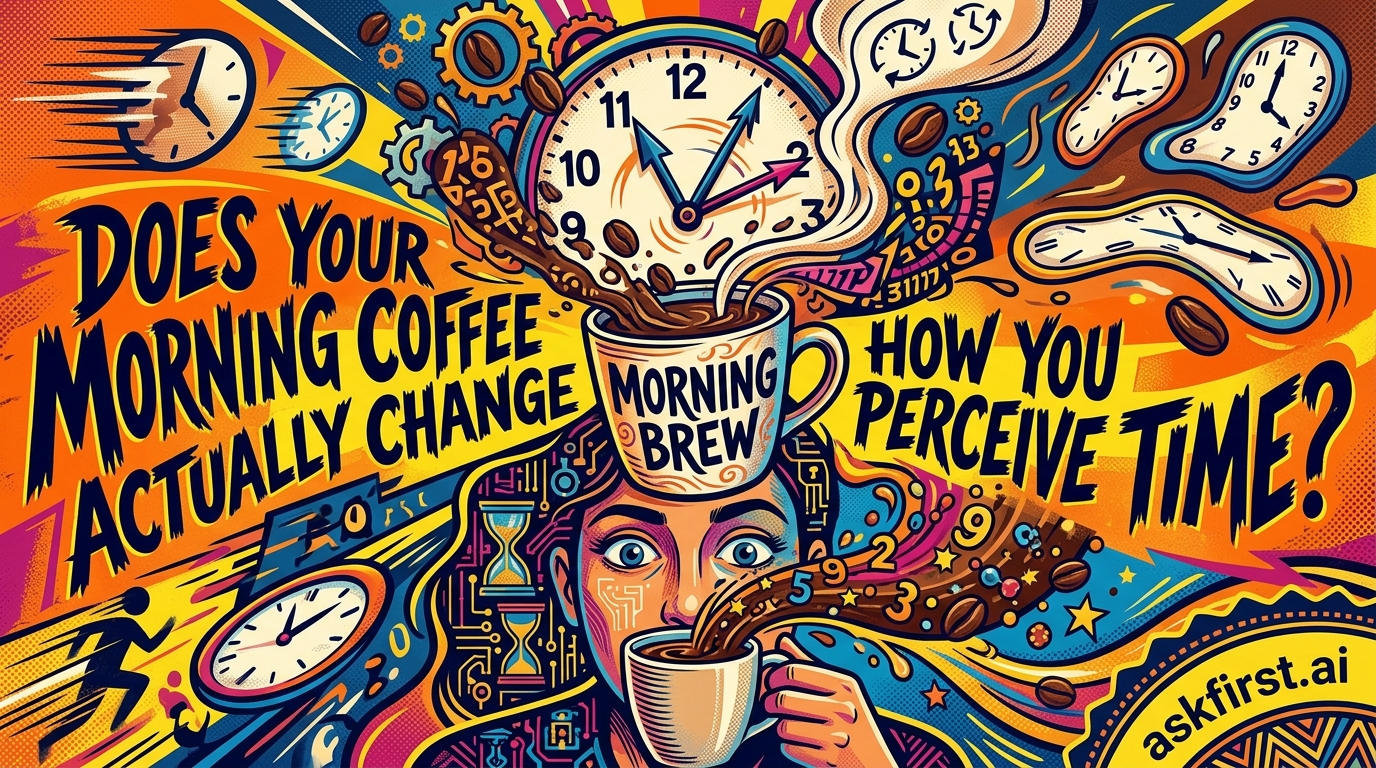
Modern neuroscience reveals that the habitual morning cup of coffee is far more than a mere stimulant; it acts as a subtle filter for the human perception of time. While it is common knowledge that caffeine blocks adenosine receptors to stave off fatigue, research into chronobiology suggests that stimulants like coffee fundamentally alter the internal pacemakers that regulate subjective time. When individuals consume caffeine, they often experience a phenomenon known as 'temporal acceleration,' where the brain processes events with heightened urgency, making it feel as if time is moving faster than it otherwise would in a lethargic state.
The Internal Clock Mechanism
Humans do not possess a single 'clock' organ. Instead, subjective time is a decentralized process involving the prefrontal cortex, the cerebellum, and the basal ganglia. These regions integrate environmental stimuli to track duration. Caffeine influences the dopaminergic system, which is intrinsically linked to time estimation. High levels of dopamine—induced by a strong espresso—are associated with the overestimation of duration in the short term, but also with an increased 'sampling rate' of sensory information. This creates the illusion that one has more time to react, while simultaneously making external reality seem to flash by with increased velocity.
Psychological Hooks: Why We Feel Rushed
- The Dopamine Spike: Caffeine elevates dopamine, which accelerates the internal pace of the brain's rhythm. When the brain runs faster, the outside world appears to slow down in high-intensity moments, but in daily life, this leads to the 'rush' sensation where hours seem to vanish in mere minutes.
- Cognitive Filtering: Caffeine enhances alertness, forcing the brain to process more granular details per second. Because there is more data to synthesize, the brain perceives the passage of time as being more 'dense,' leading to the feeling that one has accomplished more in less time.
- The Myth of Efficiency: Many believe coffee makes time move slower because it helps focus. However, science indicates the opposite; by increasing the rate of cognitive throughput, coffee-drinkers often feel like they are chasing the clock rather than keeping pace with it.
Experimental Findings in Neuroscience
Studies utilizing interval-timing tasks—where participants must estimate the duration of a stimulus—show that caffeine subjects consistently demonstrate a 'speeding up' of their internal clock. In a study published in the Journal of Psychopharmacology, participants who were administered caffeine consistently underestimated time intervals, suggesting their internal 'metronome' was ticking significantly faster than the objective standard. This finding challenges the conventional belief that focus creates a sense of prolonged time; rather, high alertness creates a sense of compressed time.
Societal Impacts: The 'Coffee Pace' of Modernity
This phenomenon has profound implications for lifestyle and productivity. If coffee accelerates the perception of time, it explains why office environments filled with caffeine-dependent workers feel like high-pressure, fast-paced zones. The collective acceleration of perception creates a cultural expectation of immediate feedback. When everyone in a workspace is operating on a caffeinated, accelerated temporal scale, the tolerance for slow, deliberate tasks diminishes. This is not just a psychological preference but a neurological byproduct of our caffeine-soaked culture.
Distinguishing Between Perception and Reality
It is vital to distinguish between objective time and subjective temporal perception. Objective time, as measured by atomic clocks, remains constant. Subjective time is a constructive act of the mind. When you sip your coffee, you are not literally bending the fabric of space-time; you are, however, modulating the speed at which your neural architecture catalogs experiences. The more you perceive, the more 'time' seems to contract. Conversely, when you are tired, your brain processes information more sluggishly, which often makes time feel like it is dragging, as the brain struggles to fill the gaps in its temporal integration.
Strategies for Temporal Management
To manage this effect, consider the following strategies:
- Timed Consumption: Limit caffeine intake to periods requiring intense bursts of output rather than sustained, all-day sipping to maintain a more natural temporal rhythm.
- Mindful Breaks: When the coffee-fueled 'acceleration' kicks in, engage in grounding exercises. This helps recalibrate your internal clock, preventing the sensation that the day has slipped away unnoticed.
- Monitor Intake: Understand that your perception of how busy you are is directly tied to your chemical intake. If the world feels like it is moving too fast, it is worth examining whether that is a reality of your schedule or a byproduct of your stimulant consumption.
In summary, coffee acts as a neurochemical tuner. It sharpens the focus and speeds up the clock, effectively shrinking the perceived duration of your morning tasks. Understanding this allows one to master the balance between the productive 'rush' of high alertness and the ability to exist in the present moment.