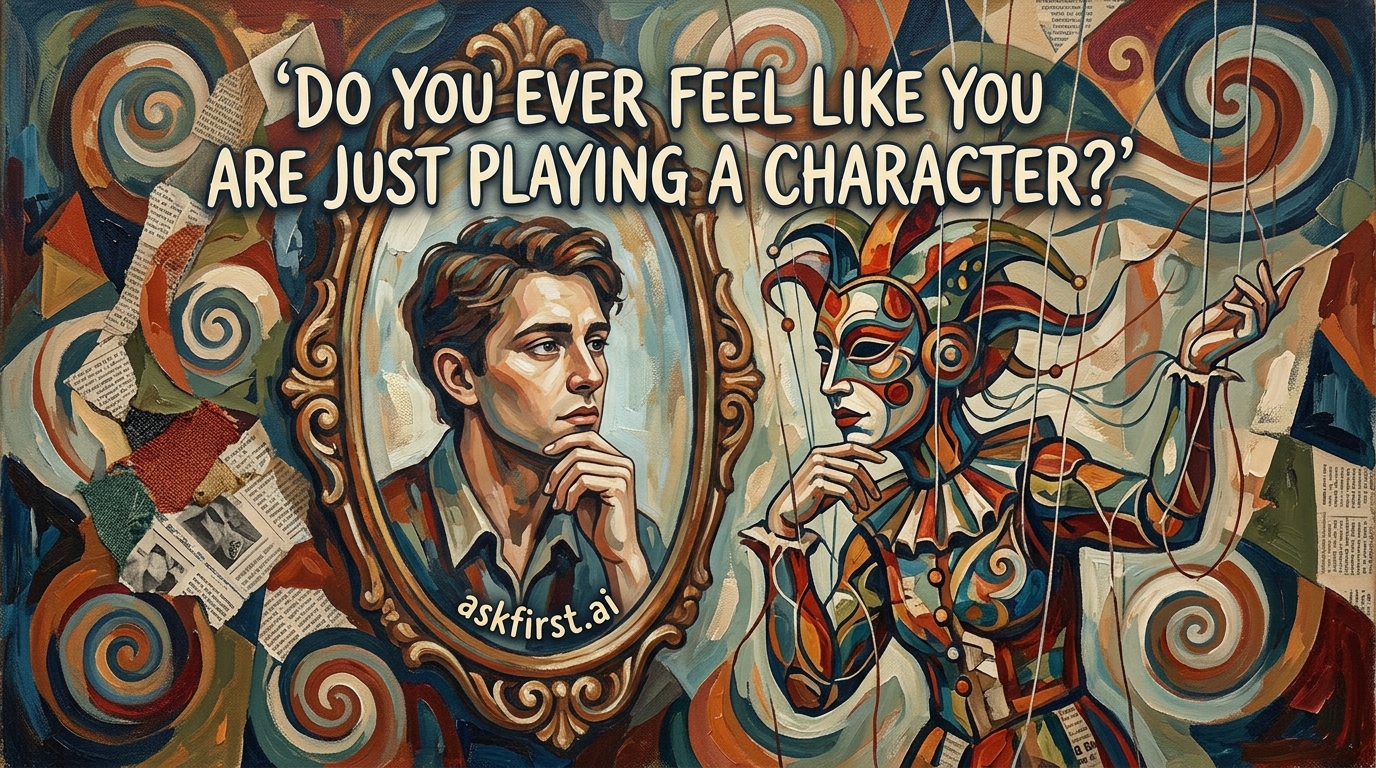
The Phenomenon of the Social Persona
The perception of performing a 'character' in everyday life is a psychological concept rooted in sociological theory, most notably Erving Goffman’s dramaturgical analysis. In his seminal work, The Presentation of Self in Everyday Life, Goffman proposed that human interaction is a theatrical performance. Individuals act as actors on a stage, managing impressions to suit the expectations of an audience—be it colleagues, family, or friends. This sense of performing is not necessarily indicative of dishonesty; rather, it is a fundamental mechanism of social coordination and human adaptation.
The Mechanisms of Impression Management
Impression management refers to the conscious or subconscious process by which individuals attempt to influence the perceptions others have of them. This process involves:
- Front Stage Behavior: The performance tailored for public consumption where social norms are strictly observed.
- Back Stage Behavior: The private space where the 'actor' drops the mask, relaxes, and prepares for the next performance.
- Role Distance: The psychological space between the individual and the social role they are currently occupying, allowing for a sense of detachment from the duty at hand.
Psychological Roots: Why Does the Feeling Persist?
Scientific inquiry into self-concept suggests that identity is fluid rather than static. Neurobiological studies indicate that the 'self' is a constructive narrative built by the brain to synthesize disparate experiences into a cohesive story. When this narrative feels strained—such as when external requirements conflict with internal values—the sensation of 'playing a character' arises. This phenomenon is often associated with:
Cognitive Dissonance: The mental discomfort experienced when holding two or more contradictory beliefs or values. To resolve this, individuals often adopt a 'persona' that aligns with the specific environment to minimize internal friction.
Adaptive Chameleonism: High self-monitors are individuals who naturally adjust their behavior to fit the social situation. While this creates a sense of performance, it is also a highly successful strategy for navigating complex social hierarchies and professional landscapes.
The Spotlight Effect: This psychological bias causes people to overestimate the degree to which their actions and appearance are noticed by others. The pressure of feeling 'watched' frequently leads to the adoption of a refined, curated persona.
Distinguishing Performance from Deception
It is vital to distinguish between functional persona-building and toxic disingenuousness. In professional environments, for example, maintaining a specific 'character' of reliability, professionalism, and expertise is a standard aspect of social intelligence. Research in workplace psychology highlights that 'emotional labor'—the process of managing feelings and expressions to fulfill the emotional requirements of a job—is a necessary skill, even if it leaves the individual feeling detached. The goal is to reach a state of 'authentic performance,' where the professional role is integrated into the individual's genuine sense of self.
Cultivating Authenticity in a Performative World
If the feeling of 'playing a character' becomes overwhelming, it is often a sign of misalignment. Experts suggest several strategies to bridge the gap between the performed self and the core identity:
- Self-Reflective Journaling: By documenting experiences, individuals can track when they feel 'authentic' versus 'performative,' identifying the specific triggers that necessitate the mask.
- Values Alignment: Clearly defining core values ensures that even when adopting different 'roles' (parent, employee, mentor), the underlying motivations remain consistent and anchored to personal truth.
- Practice Vulnerability: Research by sociologists indicates that showing measured, appropriate vulnerability creates deeper connections and reduces the need for a rigid, perfect persona.
Philosophical Perspectives: The 'True' Self
Existentialist philosophers have long debated the existence of a 'true' self. Jean-Paul Sartre argued that existence precedes essence, implying that human beings have no fixed nature and are essentially whatever they choose to be through their actions. In this light, the 'character' being played is not a fake mask, but a creative act of self-definition. There is no 'final' version of the self to discover; rather, the self is a continuous project of creation. Accepting that life is a series of roles allows individuals to act with intentionality and grace, transforming the pressure of 'performing' into the freedom of deliberate living. Embracing this perspective allows for a harmonious integration of the public persona and private experience.