The Temporal Illusion of Aging: A Neurological Perspective
It is a universal human experience: childhood summers felt like they stretched on for an eternity, yet as an adult, years seem to flicker by in the blink of an eye. This phenomenon is not merely a matter of nostalgia; it is deeply rooted in the way the human brain processes information, encodes memories, and perceives the flow of existence. Understanding this subjective acceleration of time requires an examination of neurobiology, cognitive processing, and the proportional theory of time perception.
The Proportional Theory of Time
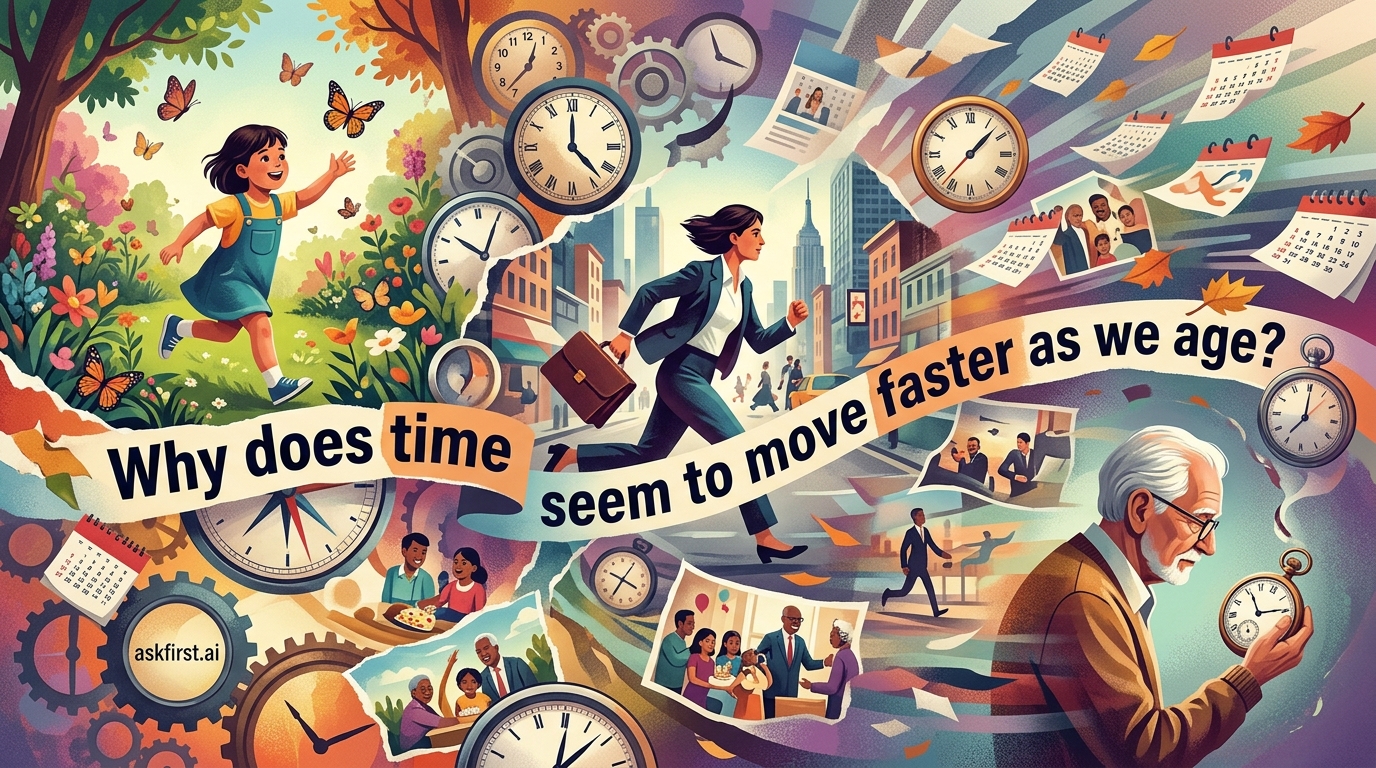
One of the most prominent explanations is the Proportional Theory, first proposed by French philosopher Paul Janet in 1877. This theory suggests that as individuals age, each unit of time represents a progressively smaller fraction of their total life experience. For a five-year-old child, a single year represents 20 percent of their entire existence. The magnitude of such a duration creates a deep, profound sense of lingering time. By the time a person reaches the age of fifty, that same year represents only two percent of their life. Because the brain perceives time in relative rather than absolute terms, our 'internal ruler' is constantly being recalibrated as the total length of the 'ruler' grows longer, making each passing year feel proportionally shorter.
Neural Processing and the Novelty Factor
Beyond simple mathematics, there is the Novelty Factor. The human brain is an efficiency machine that prioritizes the processing of new information. In childhood, the world is a series of constant discoveries: learning to walk, encountering new schools, experiencing new emotions, and navigating complex social landscapes. During these years, the brain is flooded with novel stimuli, which requires high levels of cortical engagement and dense memory formation. Because the brain spends more 'computational power' encoding these unique experiences, the mind perceives a longer duration of time.
Conversely, as adulthood progresses, life often settles into repetitive routines—commuting, working, and performing household chores. When the brain encounters a routine, it switches to a 'low-power' mode, effectively skipping the need to record every detail of the experience because it is categorized as familiar. The psychological consequence of this cognitive efficiency is the sensation that time is accelerating; since there are fewer 'new' memory markers being stored, the brain looks back at a block of time and finds it sparsely populated with distinct events, leading to the subjective impression that the period passed in an instant.
Dopamine and the Internal Clock
Neurological research also points to the neurotransmitter dopamine as a key player in time perception. Studies have shown that dopamine levels, which influence the speed of the internal clock, tend to decline as people age. Higher levels of dopamine are associated with the ability to perceive time intervals more accurately or even slow them down by heightening attention. As these levels fluctuate or decrease, the 'ticks' of the internal clock become less rhythmic, which may distort how we estimate the duration of past events.
How to Slow Down the Perception of Time
While the objective passage of time remains constant, individuals have a surprising amount of agency in modulating their subjective experience. By intentionally altering daily patterns, one can effectively 'stretch' their perception of time:
- Embrace Newness: By deliberately engaging in novel activities—learning a new language, traveling to unfamiliar locations, or picking up a hobby—you force the brain to abandon its routine, low-power processing mode. This increases the density of memory formation.
- Practice Mindfulness: Meditation and deep presence allow the mind to focus on the 'now.' When you are fully attentive, you are not skipping over seconds as 'background noise,' but rather observing them with higher resolution.
- Break Routines: Small shifts in daily habits, such as taking a different route to work or rearranging your workspace, can act as 'novelty triggers' that stimulate the hippocampus, the brain area involved in memory and the perception of time.
Conclusion
The feeling that time is accelerating is essentially a byproduct of the brain's successful adaptation to its environment. As we collect more experiences, the world becomes more predictable, and the brain—in its quest for efficiency—stops highlighting the passage of time. By understanding the mechanisms behind this temporal shift, we gain the power to consciously inject novelty and awareness into our lives, ensuring that even as the years move forward, we remain present for the journey.