The Cognitive Metamorphosis: How Programming Shapes the Human Mind
For decades, researchers have examined whether the acquisition of a complex skill influences one's fundamental psychological makeup. Programming, often viewed as a rigorous technical pursuit, transcends mere syntax and logic; it functions as a form of cognitive conditioning. When individuals learn to code, they undergo a shift in how they process information, solve problems, and perceive the world around them. This transformation is not merely about learning a language but about adopting a computational way of thinking that permeates daily decision-making processes.
The Rise of the 'Computational Mindset'
Learning to code necessitates a transition toward a structured, algorithmic approach to daily challenges. This is known as computational thinking. It involves breaking down gargantuan, overwhelming tasks into small, manageable, and logical steps. Once a person master this habit within an IDE (Integrated Development Environment), it often leaks into their personal life. Research suggests that those who code become more adept at identifying cause-and-effect relationships. This leads to a personality trait characterized by increased patience and tolerance for ambiguity. As programmers know, the first solution is rarely the perfect one; this realization cultivates resilience and a growth-oriented mindset.
Impact on Analytical Reasoning and Patience
One of the most profound shifts occurs in the realm of frustration management. Coding is essentially an exercise in systematic failure. A developer might spend eight hours hunting for a misplaced semicolon. This consistent exposure to 'debugging' creates a psychological buffer against stress. Over time, programmers often report higher levels of grit—a personality trait defined by perseverance and passion for long-term goals. They learn that failure is not a terminal state but an informative feedback loop. This perspective shifts their personality from one that avoids difficult problems to one that seeks them out for the sake of intellectual growth.
The Dual-System of Logic and Creativity
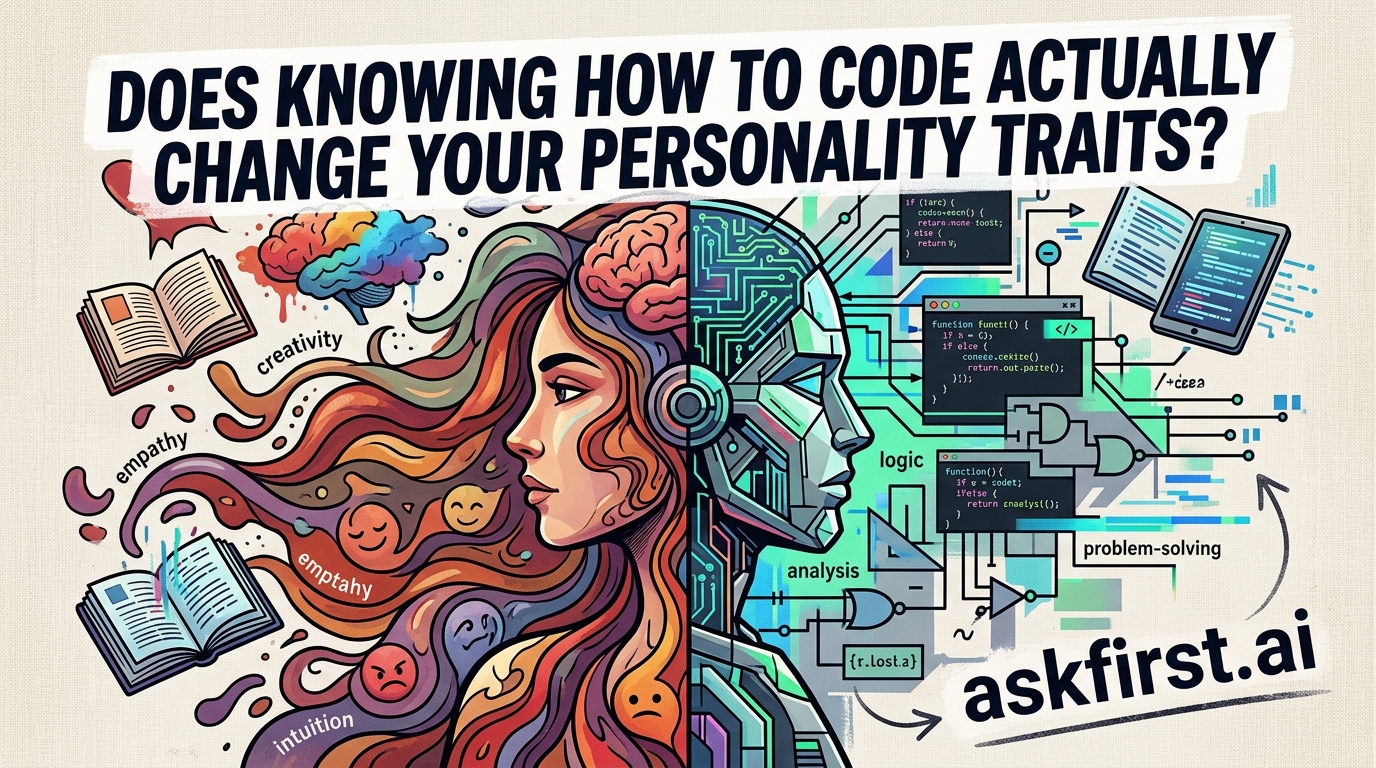
Contrary to the myth that coders are 'left-brained' drones, coding requires a synthesis of analytical precision and creative architecture. Coding is a form of constructive creativity—much like writing poetry or composing music, but with functional constraints. Consequently, those who code often report an enhancement in their 'divergent thinking' capabilities. They become better at envisioning multiple potential future outcomes from a single decision. This mental agility reflects a change in temperament, making individuals more adaptable and open to novel solutions in social and professional settings.
Social Perception and Communication Patterns
There is a notable shift in how developers communicate. Coding prioritizes clarity, conciseness, and precision. Many who deeply integrate coding into their mental model find that their interpersonal communication undergoes a transformation. They become more literal and structured in how they explain their thoughts, sometimes to the confusion of those outside the field. However, this precision also means that their decision-making becomes more evidence-based. They are less likely to rely on intuition alone and more likely to look for the underlying 'logical architecture' of a human interaction or a business problem.
The Myth of Isolationism vs. The Reality of Collaborative Complexity
Historically, the 'lonely coder' archetype suggested that learning to code made people socially detached. Modern psychology suggests the opposite. Because software development is increasingly team-based and dependent on complex version control, coders are forced to develop empathy for their future selves and their peers. The act of writing clean, maintainable code is an act of consideration. This translates into social traits such as improved teamwork, higher levels of empathy regarding documentation (clear communication), and a more collaborative approach to collective intelligence.
Neuroplasticity and the Long-term Shift
Neuroscience suggests that learning new, complex skills stimulates neuroplasticity. By learning to code, an individual is literally remapping their brain to handle hierarchical structures and logical flow more efficiently. These physiological changes correlate with personality changes in openness to experience. Because programmers are consistently required to learn new technologies and frameworks, they become 'lifelong learners.' This intellectual humility—a trait where one recognizes the vastness of what they do not know—is a hallmark of many high-performing developers.
Conclusion: A New Way of Being
Ultimately, learning to code does not change a person's core values, but it does alter their 'operating system.' It enhances specific traits like patience, logical persistence, systematic thinking, and adaptability. As society becomes increasingly digitized, the traits forged in the crucible of programming are becoming highly valuable in every walk of life. The programmer’s mind is not just a tool for building software; it is a framework for navigating a complex, ever-changing world with a calm and methodical hand.