The Science of the Earworm: Why Melodies Linger
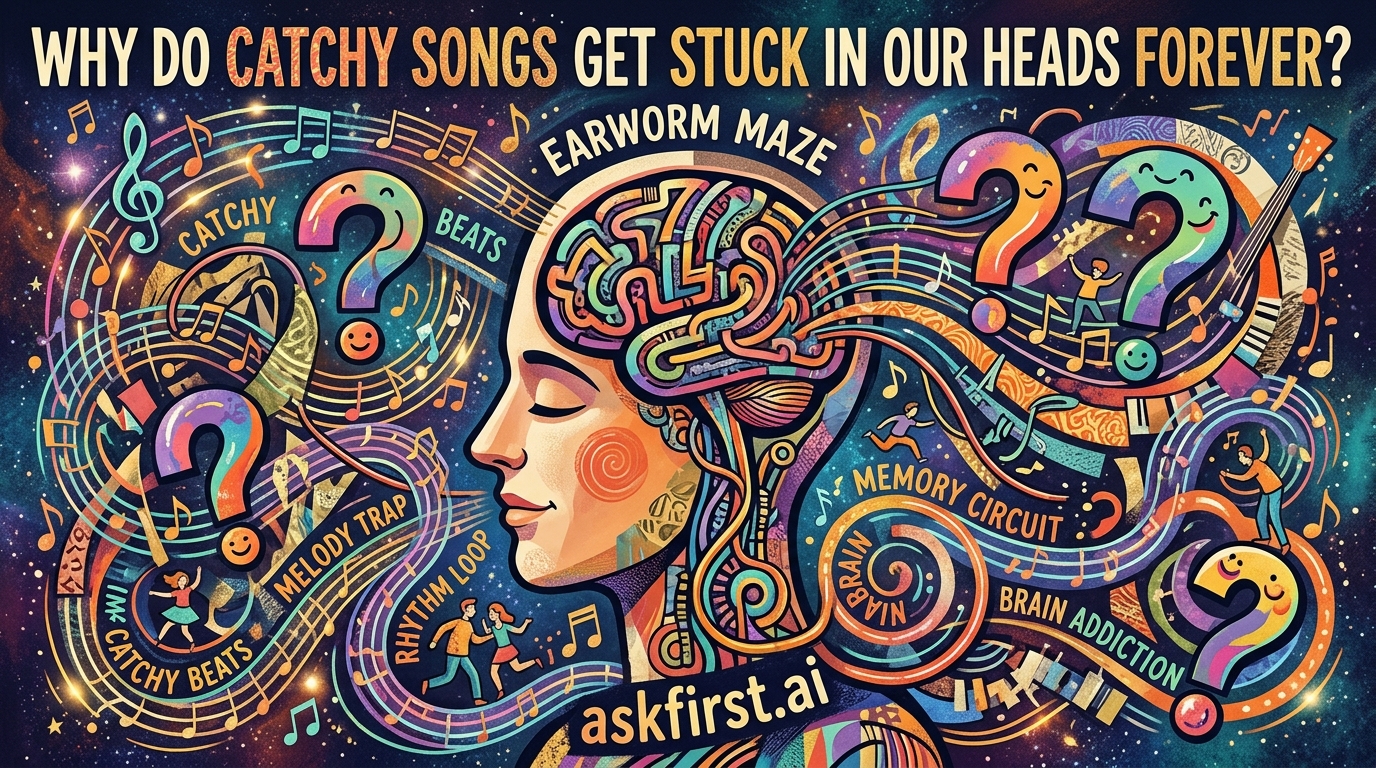
It is a universal human experience: a snippet of a song begins playing in the mind, repeating in an endless, involuntary loop. This phenomenon, scientifically known as Involuntary Musical Imagery (INMI) or colloquially as an 'earworm,' affects nearly everyone at some point. Research suggests that around 98% of people experience earworms, often triggered by stress, memory, or mere boredom. But why does the human brain become a captive audience to a repetitive musical sequence?
The Neurological Mechanisms
When listening to music, the brain does not just process auditory information; it engages a vast network of neural regions. The primary player in the earworm phenomenon is the auditory cortex. Studies indicate that this region remains active even after the music stops. If the brain is in a state of 'low arousal' or 'mind-wandering,' it may subconsciously attempt to fill the void by accessing stored musical memories. Essentially, the brain tries to finish the song, creating a loop because it lacks a definitive 'stop' command.
Furthermore, the hippocampus—the center for long-term memory—frequently retrieves these fragments. Research published in the journal Psychology of Music suggests that the brain treats catchy musical hooks as 'cognitive shortcuts,' making them exceptionally easy to encode and recall.
Characteristics of a Sticky Melody
Not every song has the power to occupy the mind indefinitely. Musicologists and psychologists have identified specific structural patterns that predispose a song to become an earworm:
- Melodic Simplicity: Tunes that feature a balance of familiar scale patterns with slight, unexpected intervals are most effective. If a melody is too complex, the brain struggles to hold onto it; if it is too simple, it fails to capture attention. The 'sweet spot' is a mix of high accessibility and rhythmic predictability.
- Repetition: The fundamental basis of music, repetition, is the core of an earworm. Recurring motifs reinforce the memory, effectively 'embedding' the hook into the neural architecture.
- Rhythmic Drive: Songs with a steady, danceable beat are significantly more likely to trigger an earworm than slower, free-form compositions. The physical response to a beat encourages the brain to engage with the rhythm.
The 'Zeigarnik Effect' and Musical Loops
One compelling psychological theory regarding earworms is the Zeigarnik Effect, which posits that humans remember interrupted tasks better than completed ones. When a brain hears a song segment and stops listening before the end, it enters a state of 'cognitive incompleteness.' The mind may repeatedly loop the snippet in an attempt to resolve the tension of the song's ending, much like a mental itch that requires scratching. This leads to a persistent loop of the most melodic or repetitive hook, often the chorus, which serves as the most distinct 'anchor' of the piece.
External and Internal Triggers
While the structure of the music is a significant factor, the context of the listener also plays a role:
- Emotional Association: Songs linked to high-intensity moments—like a first concert, a graduation, or a stressful commute—are frequently indexed by the hippocampus for retrieval. Because emotional depth triggers strong neurological responses, the associated melody is often prioritized.
- The Boredom Factor: Earworms thrive in moments of low cognitive load. When the brain is not engaged in complex problem-solving, it naturally drifts into default mode networks, providing the perfect stage for an earworm to emerge.
Can We Stop the Loop?
Because the phenomenon is rooted in cognitive processes, silencing an earworm requires a strategy that engages the brain's working memory elsewhere. Popular 'cures' backed by research include:
- Engaging in Puzzles: Solving Sudoku or crosswords forces the brain to dedicate resources to verbal or analytical processing, displacing the auditory loop.
- Chewing Gum: Some studies suggest that the physical act of moving the jaw interferes with the subvocalizations of a song, subtly breaking the internal playback mechanism.
- 'Cure' Songs: Listening to a neutral, complex piece of music can occasionally override the repetitive hook, effectively pushing the earworm out of the immediate memory buffer.
Ultimately, earworms are not just annoying quirks; they are evidence of the human brain's incredible capacity to decode, organize, and store patterns. Music is hardwired into our identity, and those persistent, looping melodies serve as a testament to the powerful, lifelong relationship between human cognition and artistic expression. Whether viewed as an unwanted intruder or a personal soundtrack, the earworm remains one of the most fascinating intersections of psychology and musicology.