The Paradox of Social Isolation
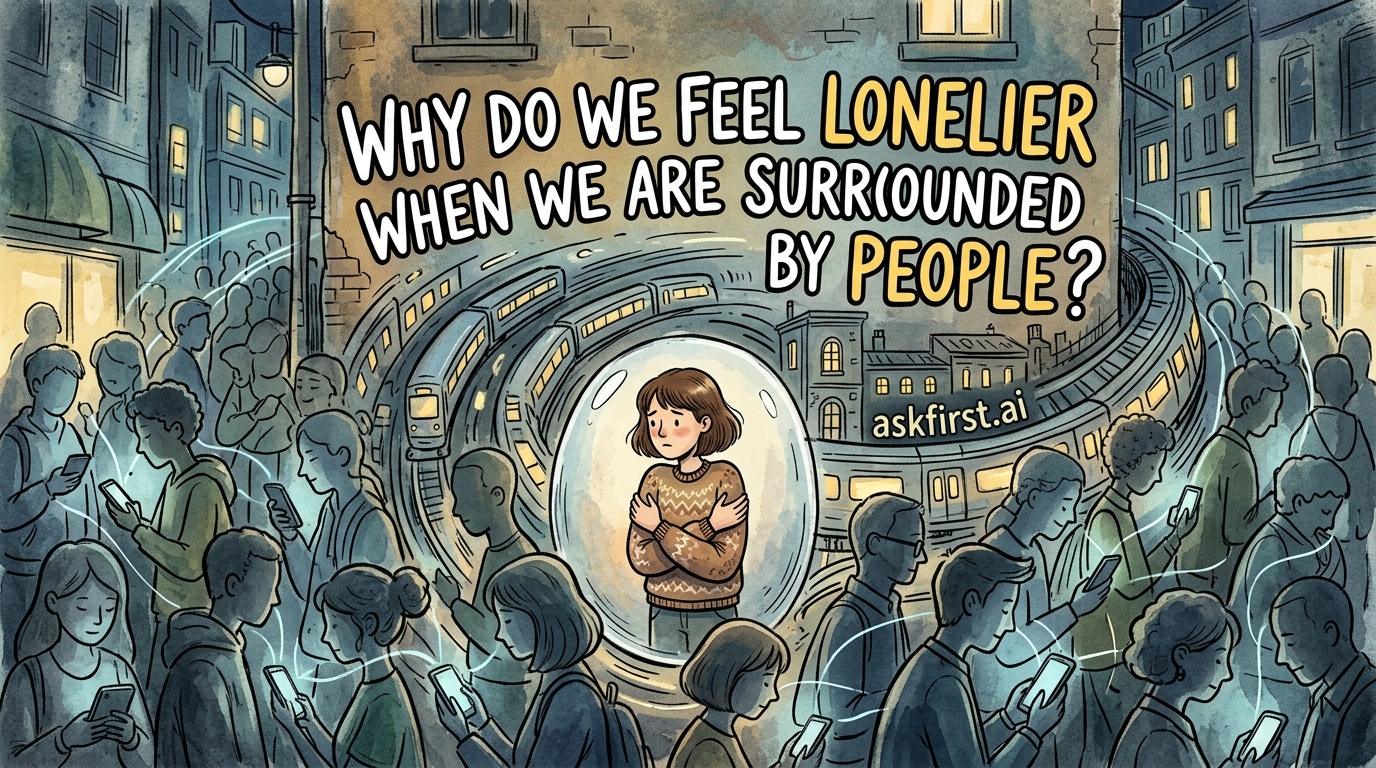
The phenomenon of feeling profound loneliness while physically surrounded by others is a cornerstone of modern social psychology. It represents a fundamental disconnect between physical presence and emotional intimacy. While humans are biologically hardwired for connection, the quality of these interactions often dictates the internal emotional state, rather than the mere number of individuals in a room. This psychological state is often referred to as 'perceived social isolation.'
The Mismatch of Expectation and Reality
One primary driver of this feeling is the expectancy gap. When individuals enter a social setting, there is an often subconscious expectation for validation, understanding, or connection. If these expectations are not met—perhaps due to surface-level conversations, emotional unavailability of peers, or a failure to 'mask' personal struggles—the discrepancy between the desired state and the reality creates a vacuum. This vacuum is felt as loneliness. Research in social cognitive neuroscience suggests that the brain processes social pain using similar neural pathways to physical pain; thus, the dissonance between wanting to belong and feeling unseen acts as a legitimate distress signal.
The Role of Social Comparison
Being surrounded by others frequently triggers the Social Comparison Theory, proposed by Leon Festinger. In groups, individuals often find themselves measuring their own worth, success, or happiness against those present. If a person feels they are falling short—whether in status, social grace, or emotional fulfillment—the presence of others serves as a constant reminder of these perceived inadequacies. This is particularly prevalent in hyper-connected environments where social media and physical presence blur. The feeling of being 'alone in a crowd' is often a symptom of feeling misunderstood or judged, which effectively isolates the individual internally even while they are externally integrated.
Surface-Level Interaction and Emotional Depth
Modern social life is frequently characterized by 'low-depth' interactions. Sociology highlights the concept of relational superficiality, where the frequency of contact increases but the quality of emotional exchange decreases. When interactions are confined to small talk, professional banter, or performative social behavior, the fundamental human need for vulnerability remains unsatisfied. Without the exchange of authentic selves, the brain does not register the social interaction as 'bonding.' Therefore, the person remains in a state of emotional hunger despite being in a target-rich social environment.
Cognitive Dissonance in Crowds
The psychological phenomenon known as emotional regulation failure also plays a role. When in a group, individuals often exert significant cognitive effort to maintain social norms, monitor their own behavior, and ensure their responses align with group expectations. This 'self-monitoring' consumes mental resources. If an individual feels they cannot drop this persona, the resulting exhaustion leaves little room for authentic connection. The individual becomes an observer of their own social performance rather than a participant in a genuine human experience. This self-alienation is a core component of the loneliness experienced in crowds.
Strategies for Bridging the Gap
To mitigate this paradoxical loneliness, psychological research suggests several proactive strategies:
- Cultivate Authenticity: Shift the focus from performing to connecting. Engaging in deeper, more vulnerable conversations helps dismantle the wall between the self and the group.
- Mindful Presence: Practice being truly present in conversations rather than observing the room or worrying about group dynamics. Active listening decreases the feeling of isolation.
- Selectivity in Connection: Understand that loneliness is often a signal for a 'need for intimacy' rather than a 'need for quantity.' Prioritizing one or two meaningful connections within a group is more effective than attempting to connect with everyone simultaneously.
- Self-Compassion: Acknowledge that feeling lonely in a group is a common human experience, not a reflection of individual failure or lack of social skills.
Evolutionary Perspectives
From an evolutionary standpoint, humans are social primates designed to thrive in small, tightly-knit tribes. The modern 'crowd'—be it an office, a conference, or a busy transit hub—often mimics the scale of a tribe but lacks the deep, historical interdependence that tribal living provided. The brain's social surveillance system is essentially misfiring; it feels the presence of people, but fails to detect the specific, high-stakes emotional support required for survival. When the brain senses a lack of safety or deep attachment, it triggers the discomfort of loneliness to encourage the individual to seek out more secure, higher-quality bonds. Thus, the feeling is not necessarily a sign of mental disorder, but an evolutionary tool designed to steer humans toward more meaningful, life-sustaining connections.