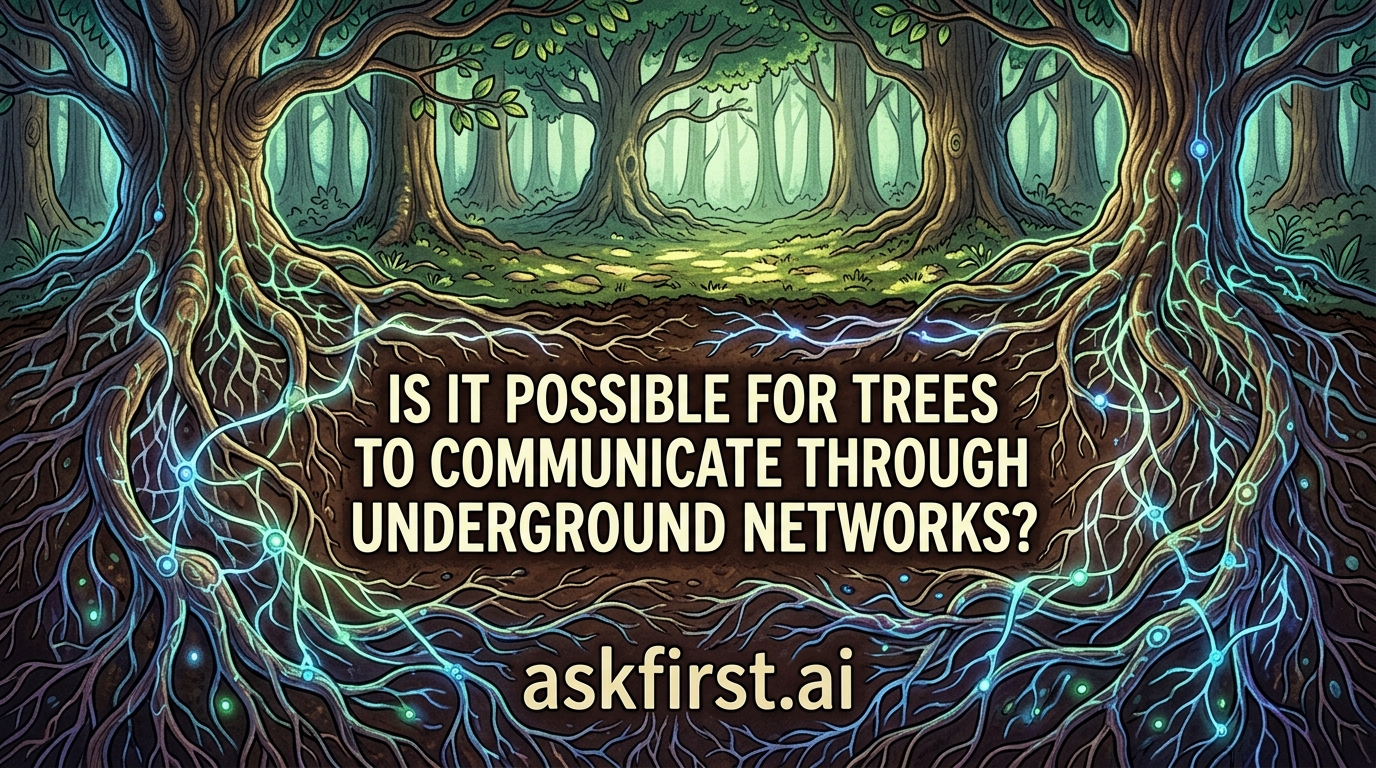
The concept of a 'Wood Wide Web' has transformed the botanical understanding of forest ecosystems. Far from being solitary individuals competing strictly for light and space, trees are interconnected through a complex, symbiotic relationship involving mycorrhizal fungi. This underground infrastructure, known as the common mycelial network, facilitates an intricate exchange of nutrients, water, and signaling information between forest inhabitants.
The Anatomy of the Wood Wide Web
At the heart of this network lie mycorrhizae, a symbiotic association between fungal hyphae and plant roots. The fungi extend far into the soil, far beyond the reach of individual root systems, allowing them to absorb essential minerals like phosphorus and nitrogen with high efficiency. In exchange, the trees provide the fungi with sugars produced through photosynthesis. This partnership creates a massive subterranean grid where trees of different species and ages become physically linked.
Nutrient Transfer and Resource Sharing
Research has demonstrated that this network allows for the redistribution of resources. Larger, older trees—often termed 'mother trees'—act as central hubs. Studies conducted by researchers such as Dr. Suzanne Simard suggest that these elder trees can transmit excess carbon to shaded saplings that lack sufficient sunlight for photosynthesis. This life-saving transfer increases the survival rate of the younger generation, illustrating a sophisticated form of cooperative behavior that sustains the forest community.
Chemical Signaling and Defensive Alerts
Beyond simple resource logistics, trees utilize these fungal bridges to send chemical signals. When a tree is attacked by insects, it can release chemical alarms through the mycelial network. Surrounding trees, upon receiving these subterranean signals, begin to synthesize defensive enzymes or increase their production of chemical compounds that repel herbivores. This early-warning system provides neighbors with a distinct survival advantage, effectively allowing the forest to act as a singular, cohesive organism.
Debunking the Myth of Passive Plant Life
For centuries, human perception categorized plants as passive organisms devoid of intelligence. However, the evidence of subterranean networking forces a paradigm shift. Trees 'sense' their environment, 'communicate' threats, and 'support' their kin. While this is not human-like communication involving vocabulary and syntax, it is a functional, data-driven exchange of biochemistry that dictates the health of the entire ecosystem. It highlights that survival in the natural world is not purely about individual competition but rather about biological connectivity.
Complexity of Interactions
It is important to note that these interactions are not purely benevolent. Mycorrhizal networks also facilitate a darker side of ecology. Some species, such as the black walnut, utilize the network to spread allelopathic toxins to inhibit the growth of competing species. Furthermore, parasitic plants, like some orchids, are known to 'hack' the system, stealing carbon from the network without providing any nutrients in return. This demonstrates that the underground network is an active, competitive, and highly nuanced marketplace of biological currency.
Evolutionary Significance
Why did these systems evolve? From an evolutionary perspective, the connectivity offered by fungal networks allows forests to be more resilient against environmental stressors such as drought, extreme temperature, and pathogens. By maintaining the health of the community, individual trees ensure their own long-term viability. When a tree dies, it does not immediately disconnect; its decaying wood acts as a reservoir of carbon and moisture for the fungi, which continue to support the remaining community. This circular economy of resources represents an peak example of ecological efficiency.
Scientific Perspective and Future Research
While the term 'Wood Wide Web' is an evocative metaphor, it is grounded in rigorous scientific observation. Ongoing research continues to map the density of these networks and identify the specific signaling pathways utilized by different species. As technology advances, such as the use of isotope labeling to trace carbon movement, scientists are discovering that these connections are even more widespread than previously estimated. Understanding these dynamics is essential for modern forestry and conservation; replanting practices are now shifting to include the protection of established soil structures and mother trees, as the removal of these nodes can collapse the entire communicative integrity of a forest stand.
Ultimately, the existence of this network proves that the forest is a collaborative society. By viewing trees as part of a grand, subterranean structure, we can better appreciate the invisible threads that hold the natural world together. Nature is not just a collection of plants, but an integrated, pulsing network of life where the ground beneath our feet is a highway for vital information and nourishment.