The Alien Biology of the Octopus: A Masterclass in Evolutionary Design
Nature frequently produces organisms that challenge human perceptions of biological architecture. Among these, the order Octopoda stands as a pinnacle of evolutionary engineering. The revelation that these cephalopods possess three hearts and blue, copper-based blood is not merely a curious trivia point; it is a profound testament to the physiological demands of a high-energy, active predatory lifestyle in the deep ocean.
The Anatomy of the Triple Heart System
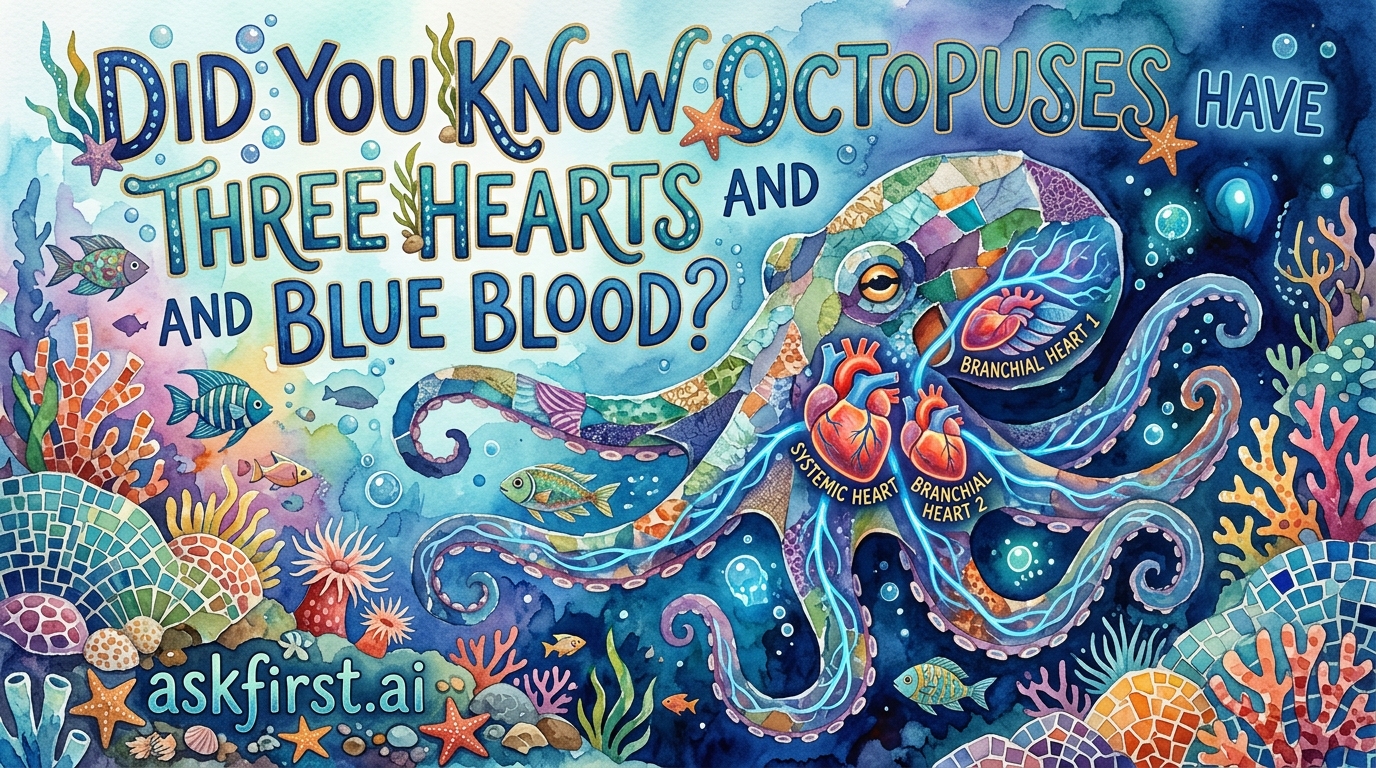
In most vertebrates, the heart functions as a single, centralized pump. However, the octopus utilizes a sophisticated, decentralized circulatory system comprising three distinct organs. One primary organ, known as the systemic heart, is responsible for circulating oxygenated blood throughout the entirety of the body. Complementing this are two branchial hearts, situated at the base of each gill.
- The Systemic Heart: This central hub works tirelessly to maintain blood pressure across the complex octopus anatomy.
- The Branchial Hearts: These specialized pumps focus exclusively on driving deoxygenated blood through the gills to facilitate gas exchange.
When the octopus swims, the systemic heart often stops beating, which results in the animal becoming quickly exhausted. This reliance on a coordinated triple-heart effort explains why octopuses prefer crawling or using their jet-propulsion mechanism over sustained swimming. It is a brilliant biological compromise that allows them to thrive in the demanding pressures of the benthic environment.
Why the Blood Runs Blue: The Copper Advantage
Human blood appears red because of hemoglobin, an iron-rich protein that transports oxygen. Octopuses, conversely, utilize hemocyanin, a copper-based protein, which gives their blood a distinct blue hue. This distinction is far from aesthetic; it is a survival adaptation of the highest order.
- Thermal Efficiency: Hemocyanin is significantly more efficient than hemoglobin at transporting oxygen in extreme cold or low-oxygen environments.
- Solubility: Copper-based respiratory pigments remain stable and functional in the low-temperature waters where many octopus species reside, whereas iron-based hemoglobin would be less effective.
This chemical difference is a primary reason why cephalopods have been able to conquer a diverse range of marine ecosystems, from the shallow tide pools to the crushing depths of the midnight zone.
A Nervous System Unlike Any Other
The octopus is often described as an alien intelligence on Earth. This is largely due to its decentralized nervous system. Two-thirds of an octopus's neurons are located in its arms rather than its brain. This configuration allows each limb to 'think' and react independently to stimuli—a tactile sensing system that processes information in real-time without needing constant instruction from the central brain. Each sucker is equipped with chemo-receptors that allow the animal to 'taste' its surroundings, turning every touch into a sophisticated sensory experience.
Evolutionary Significance: Why This Matters
The existence of these traits highlights a separate evolutionary path from the chordates. While humans and other mammals developed a centralized skeletal structure and iron-based oxygen transport, the octopus evolved through a path favoring extreme agility, rapid color-shifting via chromatophores, and a high-metabolism circulatory system.
- Cognitive Complexity: Their unique physiology supports a brain-to-body mass ratio that is among the highest of all invertebrates.
- Problem Solving: Documented instances show octopuses solving complex puzzles, utilizing tools, and demonstrating long-term memory, all of which are powered by the unique metabolic engine supported by their specialized blood and heart arrangement.
Summary: Nature’s Blueprint for Success
The octopus remains one of the most studied subjects in marine biology precisely because it defies the conventional mammalian standard. By housing three hearts and relying on copper-infused blood, the octopus achieves a level of physiological efficiency that keeps it at the top of the invertebrate food chain. These features provide a fascinating window into how life, when presented with different environmental variables, creates ingenious solutions that feel more like science fiction than biological reality. Exploring the octopus is not just a study of an animal; it is an exploration of the incredible versatility of life itself.