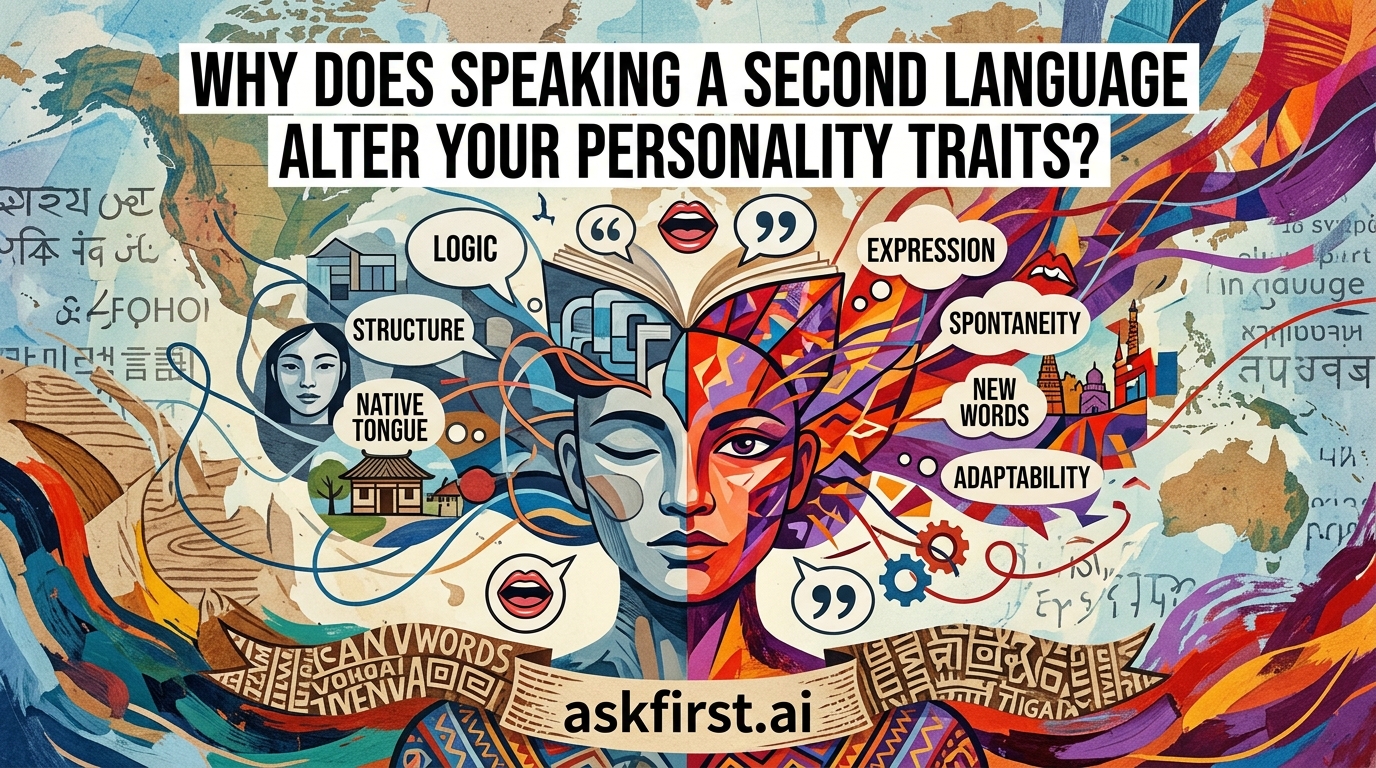
The Cognitive Prism: How Bilingualism Reshapes the Self
It is a phenomenon frequently reported by polyglots and bilingual individuals: the feeling that one becomes a slightly different person when switching languages. This is not merely an anecdotal observation but a profound psychological reality supported by emerging research in cognitive linguistics and social psychology. Speaking a second language acts as a catalyst for shifting cultural norms, behavioral expectations, and even emotional processing, effectively acting as a 'cognitive prism' that refracts the human personality.
The Cultural Accommodation Hypothesis
The primary driver behind this personality shift is the Cultural Accommodation Hypothesis. When individuals acquire a second language, they rarely learn the vocabulary and grammar in a vacuum. Instead, they absorb the social nuances, cultural values, and idiomatic behaviors of the cultures associated with that language. When a bilingual speaker switches languages, they subconsciously access the cultural schemata associated with that specific language. For instance, an individual who speaks both English and Japanese may find themselves more assertive and individualistic while speaking English, yet more polite, humble, and collectivist when speaking Japanese. The language serves as a mental cue, signaling the brain to adopt the behavioral patterns deemed appropriate within that cultural context.
Emotional Regulation and the Distance Effect
One of the most fascinating aspects of multilingualism is the impact on emotional expression. Studies have shown that when individuals process emotionally charged information in their second language (L2), they exhibit a reduced physiological response compared to their native language (L1). This is often referred to as the 'Foreign Language Effect'. By processing emotions through an L2, speakers gain a sense of psychological distance. This distance can decrease the intensity of emotional reactions, allowing the speaker to think more rationally and perform better on logical tasks. Because the L2 is less 'visceral' and does not carry the deep, formative memories of childhood, it can act as a buffer, leading people to feel less inhibited, more adventurous, or even more clinical in their decision-making process.
Structural Differences and Cognitive Flexibility
Beyond cultural associations, the very structure of a language influences how a person perceives reality. This is rooted in the Sapir-Whorf Hypothesis (or linguistic relativity), which suggests that the language we speak influences our cognitive processes. For example, languages that categorize gender differently or utilize specific spatial frames of reference can subtly alter how a speaker organizes their thoughts. Bilingual brains are required to constantly navigate and inhibit one language system to utilize the other. This constant exercise strengthens the executive functions of the brain, specifically in areas related to task switching, inhibition, and cognitive flexibility. This enhanced executive control can manifest as a more adaptable personality, as the brain becomes conditioned to handle multiple perspectives simultaneously.
Key Mechanisms Driving the Shift
- Identity Mapping: The brain stores different aspects of the self in different linguistic contexts. The 'self' becomes a multifaceted entity that expands or contracts depending on the language medium.
- Social Rehearsal: Each language is practiced in different social environments. The personality traits reinforced in those environments (e.g., professionalism in a workplace language vs. humor in a social language) become tethered to that language.
- Reduced Emotional Heuristics: By using a non-native language, the speaker bypasses some of the reflexive, emotional associations of their primary language, leading to more objective or analytical personality traits.
The Ever-Present Adaptability
The phenomenon of a changing personality across languages suggests that the 'self' is not a fixed, monolithic entity. Instead, personality is dynamic and deeply contextual. A multilingual individual essentially possesses a toolkit of psychological personas, each tuned to different cultural frequencies. As the globalized world continues to emphasize cross-cultural communication, the ability to 'code-switch' not just in vocabulary, but in personality and behavior, stands as one of the most powerful tools for personal development.
Ultimately, learning a second language is more than a technical skill; it is a transformative exercise in empathy and cognitive expansion. It allows individuals to break free from the constraints of their native cultural scripts and explore new ways of thinking, acting, and being. Whether it is becoming more daring in Spanish, more precise in German, or more diplomatic in French, the multilingual mind is proof that we are capable of growth far beyond the limits of our native tongue.