The Evolutionary Origins of Gaze Perception
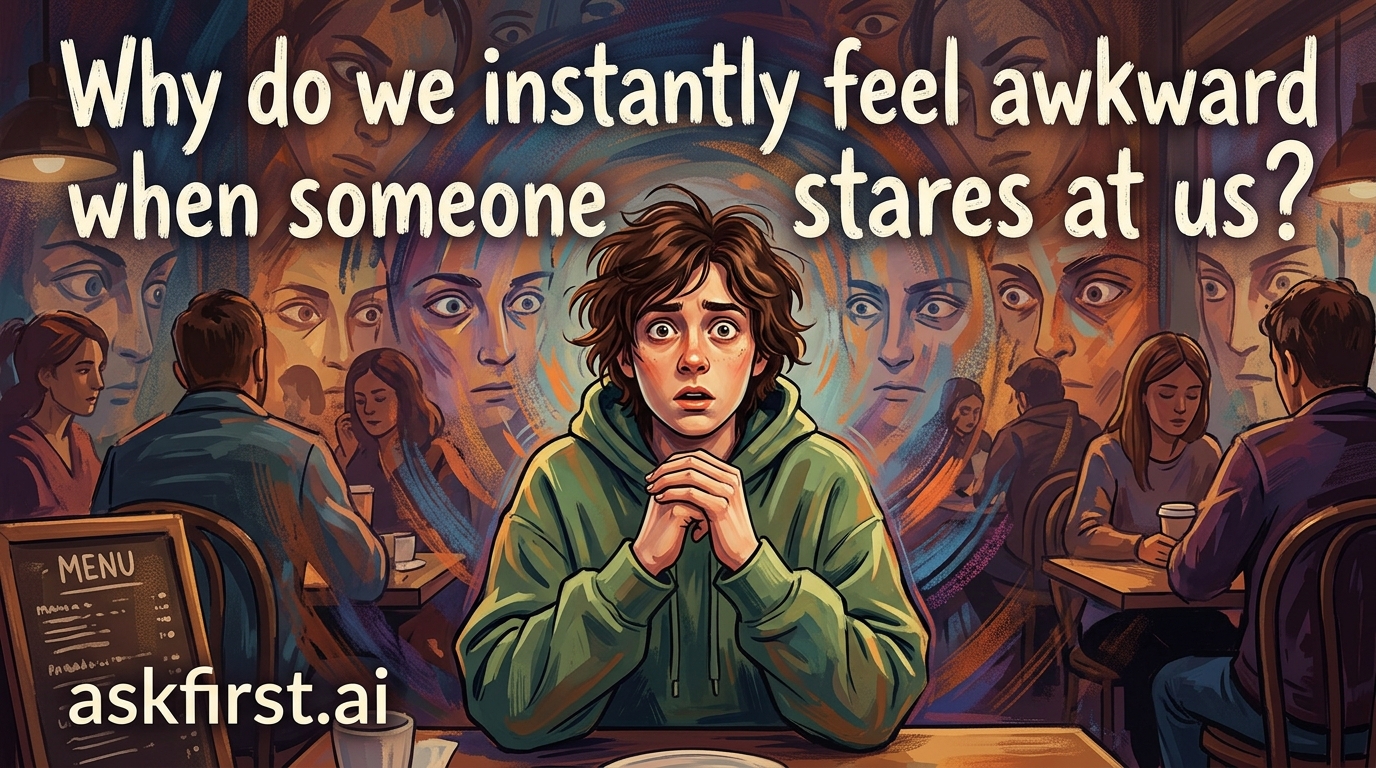
Human beings possess a remarkably sensitive mechanism for detecting when they are being watched. This phenomenon, often referred to as the 'stare-in-the-mind' effect or the feeling of being watched, is rooted in deep evolutionary biology. From an anthropological perspective, being stared at could traditionally signify one of two things: the presence of a predator or the intent of a potential rival. Because early humans who failed to notice a predator’s gaze often did not survive to pass on their genes, the human brain developed a specialized neural circuitry dedicated exclusively to gaze detection.
The Neuroscience of the Gaze
When a human senses a direct gaze, the brain’s amygdala—the almond-shaped cluster associated with processing fear and social signals—is immediately activated. Even in the periphery of our vision, we possess a heightened sensitivity to eyes. Neuroscientists have identified a group of neurons known as 'gaze-sensitive cells' located in the superior temporal sulcus. These neurons are triggered specifically when someone looks in our direction, even if we are not consciously aware of it. This process happens at lightning speed, often before the higher-order cognitive centers of the prefrontal cortex have had the chance to process or interpret the event.
Psychological Implications: The Spotlight Effect
Beyond simple biology, the feeling of awkwardness is amplified by the Spotlight Effect. This is a psychological phenomenon where individuals tend to believe they are being noticed more than they actually are. When a person feels a stare, the internal narrative shifts to self-consciousness: 'What are they looking at? Do I have something on my face? Are they judging my appearance?' This internal scrutiny creates an immediate sense of social anxiety, as the gaze acts as a spotlight that forces a person to evaluate themselves from an external, objective point of view. This state is known as 'objective self-awareness,' which often results in heightened psychological discomfort.
The Social Contract of Eye Contact
In human social interactions, the gaze is loaded with implicit communication rules. Across most cultures, prolonged, unreciprocated eye contact is viewed as an intrusion or a sign of aggression. When someone breaks these social norms by staring, the recipient feels a breach in their personal space. Because eye contact is an intimate act—often reserved for established relationships or moments of significant interpersonal tension—the act of a stranger staring feels like a violation of the boundary between the public and private self. The brain interprets this breach as a social threat, triggering a subtle 'fight-or-flight' response that manifests as that familiar, prickly feeling of awkwardness.
The Phenomenon of Pseudostaring
Interestingly, humans are so tuned into gaze detection that we frequently experience 'false positives.' Because our eyes are specifically evolved to spot human gaze patterns (a dark pupil surrounded by a white sclera), we are prone to detecting a stare even when it is not there. In a busy environment, if someone glances in our direction for a fraction of a second, our brain may interpret that as a direct, fixed stare. This constant hyper-vigilance ensures that we never miss a social signal, but it also creates regular bouts of unnecessary social anxiety in public settings.
Practical Strategies for Managing the Discomfort
Understanding that this reaction is a biological relic helps in mitigating the resulting awkwardness. By reframing the experience, individuals can shift their reaction from anxiety to neutrality:
- Cognitive Reframing: Recognize that the feeling is a vestigial trait of your evolutionary past, not a real-time threat.
- The Spotlight Realignment: Remind yourself of the Spotlight Effect; often, the person looking may be distracted or looking through you, not at you.
- Maintain Personal Agency: Focus on a task or a nearby object. By shifting the gaze to a third point, the power dynamic of the stare is broken, signaling that the 'threat' or social pressure has been acknowledged and dismissed.
Conclusion
The instant surge of awkwardness upon being stared at is a testament to the complexity of human social evolution. While it can feel like a negative emotional state, it is actually a highly efficient survival tool that has protected humanity for millennia. By mastering our response to these gaze-sensitive signals, we can navigate the complexities of social space with greater confidence, understanding that our discomfort is merely our biology doing exactly what it was designed to do.