The Physiological Burden of Concealment
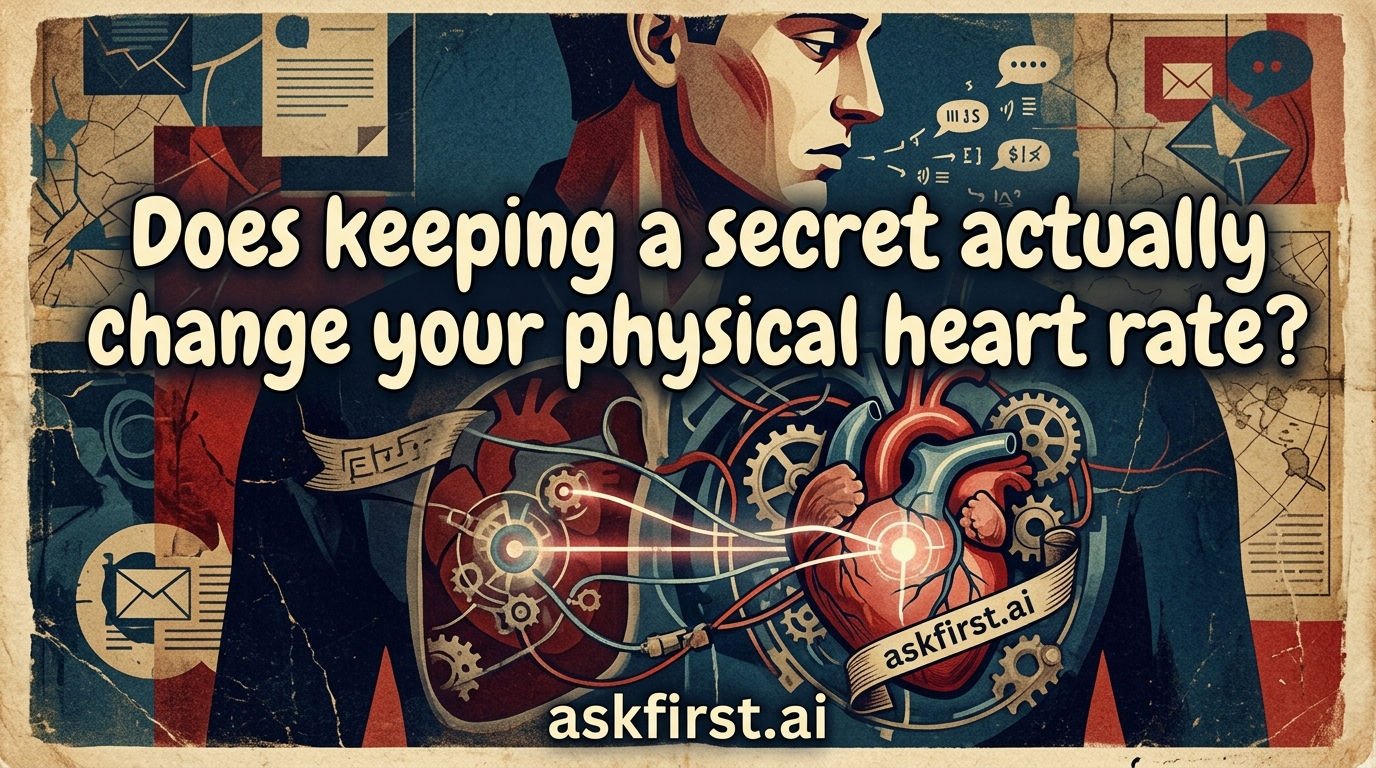
Scientific research into the act of keeping a secret reveals a fascinating link between cognitive load and cardiovascular function. When an individual harbors a secret, the brain engages in a complex process known as active suppression. This cognitive demand triggers the sympathetic nervous system, the body's 'fight-or-flight' mechanism, which can lead to measurable changes in physiological markers, including heart rate, blood pressure, and skin conductance. Far from being a passive mental state, secrecy is an active task that consumes metabolic energy and forces the body into a state of heightened arousal.
The Mechanisms of the Hidden Burden
When a person holds back information, they are essentially engaged in a dual-task scenario. They must monitor their verbal and non-verbal output to ensure the secret is not leaked, while simultaneously processing the normal flow of conversation. This monitoring process requires significant activity from the prefrontal cortex. Because the brain operates on a finite resource model, this constant executive functioning taxes the system. Studies in psychophysiology have demonstrated that during periods of concealment, the vagus nerve—which helps regulate heart rate—may become less effective at maintaining a resting heart rate, leading to minor but detectable elevations.
Why Secrets Influence Heart Rate
- Sympathetic Nervous System Activation: The body perceives the social threat of exposure as a stressor. This activation causes the release of epinephrine and norepinephrine, hormones that directly increase the heart's pumping rate.
- The Anticipatory Stress Response: Even when not actively disclosing, the mere prospect of having to protect the secret creates a state of anticipatory stress. The body remains on guard, which keeps heart rate variability lower than it would be during a state of complete relaxation.
- Cognitive Load and Parasympathetic Withdrawal: Keeping a secret acts as an 'inhibitory task.' Research suggests that inhibiting information creates a specific pattern of cardiovascular strain often referred to as 'cardiovascular reactivity,' which is distinct from physical exertion.
Can Others Detect the Shift?
While heart rate fluctuations occur, the magnitude is often subtle. Polygraph technology, despite its controversies, is built on the premise that physiological spikes occur during deceptive practices. However, scientists note that heart rate alone is an unreliable indicator of lying because emotions like nervousness, surprise, or even suppressed excitement can mimic the physiological signature of a secret. The key is that the individual is engaged in an internal conflict—a tug-of-war between the impulse to share and the directive to conceal—which creates the physiological 'noise' detected by heart monitors.
The Evolutionary Perspective
From an evolutionary standpoint, social cohesion is vital for survival. Humans are social animals hardwired to function best through transparency and trust. When we keep secrets, we are working against our biological impulse for social synchronization. This creates a state of internal dissonance. The heart, often dubbed the 'second brain' due to its complex neural network, responds to this dissonance by adjusting its pace. It is a biological signal that the individual is disconnected from their social environment, creating a form of self-imposed stress that keeps the body in a state of alert.
The Long-Term Impact on Health
Constant concealment can have cumulative effects. Chronic stress on the cardiovascular system, even if the elevation in heart rate is minor, can be taxing over years. Psychologists often emphasize that 'sharing' a secret acts as a form of catharsis. When the secret is revealed, the cognitive load is removed, the sympathetic nervous system stands down, and heart rate typically returns to a calm, baseline rhythm. This recovery period is essential for maintaining cardiovascular health. Consequently, the act of keeping a secret is not just a mental exercise; it is a full-body event that demonstrates the intricate interconnectedness of our thoughts, our social lives, and our primary organ, the heart. Research consistently points to the idea that honesty, or at least the reduction of 'hidden burdens,' fosters a more relaxed, and thus heart-healthy, internal environment.