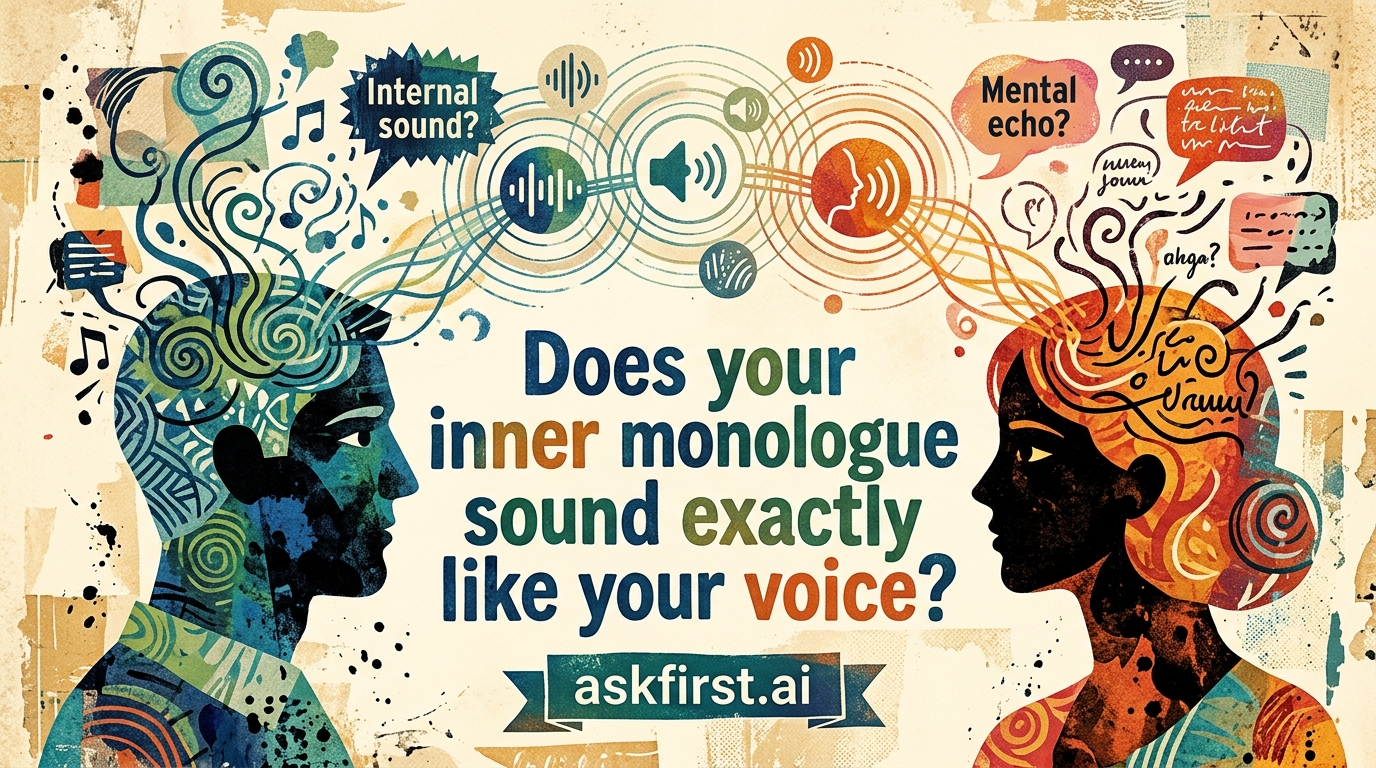
The Anatomy of the Inner Voice
Many individuals assume that the internal dialogue running through their minds—the constant commentary on daily tasks, memories, and future planning—is an exact replica of their spoken voice. However, neurological research reveals that the phenomenon of internal speech is far more complex and multifaceted. The 'inner voice' is not merely an auditory playback but a sophisticated cognitive process involving linguistic, sensory, and executive systems within the brain.
The Neurobiology of Internal Speech
When humans speak aloud, the brain engages the motor cortex to control the vocal apparatus, including the larynx, tongue, and lips. During silent inner speech, the brain exhibits similar activation patterns. Research, such as studies conducted using functional magnetic resonance imaging (fMRI), shows that the Broca’s area—a region typically associated with speech production—remains active during silent thinking. However, because the actual motor output to the vocal cords is suppressed or minimized, the brain does not generate the same acoustic properties as a physical voice.
Why the Internal Voice Often Differs
For many, the inner voice does not sound like a physical recording of their own speech. Several factors contribute to this distinction:
- Auditory Feedback: When speaking aloud, humans hear themselves through two paths: bone conduction and air conduction. The inner voice relies entirely on internal neural simulations, lacking the external acoustic depth and resonance of actual speech.
- Abstraction: The internal monologue is often an abstract linguistic stream rather than a literal sound recording. It represents thought as concepts, semantics, and syntax rather than a literal phonological reconstruction.
- Cognitive Load: Depending on the complexity of the thought, the brain may simplify the internal representation. A rapid decision-making process may look less like a formal sentence and more like a series of fragmented symbols or shorthand concepts.
Variability Among Individuals
It is essential to recognize that human cognitive diversity is immense. A groundbreaking concept in psychology is Anuralia, a condition in which individuals do not experience a constant inner monologue. Some people think entirely in images, sensations, or abstract conceptual webs, finding the idea of a 'voice' in their head as metaphoric rather than literal. Others report that their inner voice can change tone, cadence, or even take on the qualities of other people they know, depending on the context of the thoughts being processed.
Myths About Inner Speech
There is a common misconception that if a person cannot 'hear' a voice in their mind, they might have a cognitive deficit. This is scientifically inaccurate. The presence or absence of an auditory-like inner voice is a matter of neurodiversity, not clinical dysfunction. Furthermore, the belief that an inner voice must be 'constant' is also a myth. Most people experience internal speech as an intermittent phenomenon that fluctuates based on attention levels and task engagement.
The Evolution of the Internal Dialogue
From an evolutionary psychology perspective, the inner voice serves as a tool for self-regulation and simulation. By talking to oneself silently, the brain can 'dry run' social interactions or solve problems without the metabolic cost of physical speech. This rehearsal mechanism allows for social intelligence and behavioral planning. Because the priority is the transmission of meaning rather than the replication of sound, the brain prioritizes speed and efficiency, leading to the unique 'sound' of thoughts which is rarely a perfect match for one's physical audio footprint.
Conclusion: The Internal Echo
In summary, while the inner monologue often feels familiar because it utilizes one's native language and linguistic structures, it is technically distinct from the voice emitted through the vocal cords. The inner voice is a brain-simulated projection that prioritizes meaning, speed, and strategic thinking. Whether one's inner monologue sounds like a carbon copy of their voice, a muffled whisper, or even entirely silent, it remains a testament to the fascinating complexity of human cognition. Recognizing these differences encourages a deeper appreciation for the diverse ways that human consciousness manifests itself in everyday life.