The Psychology of Transitional Spaces
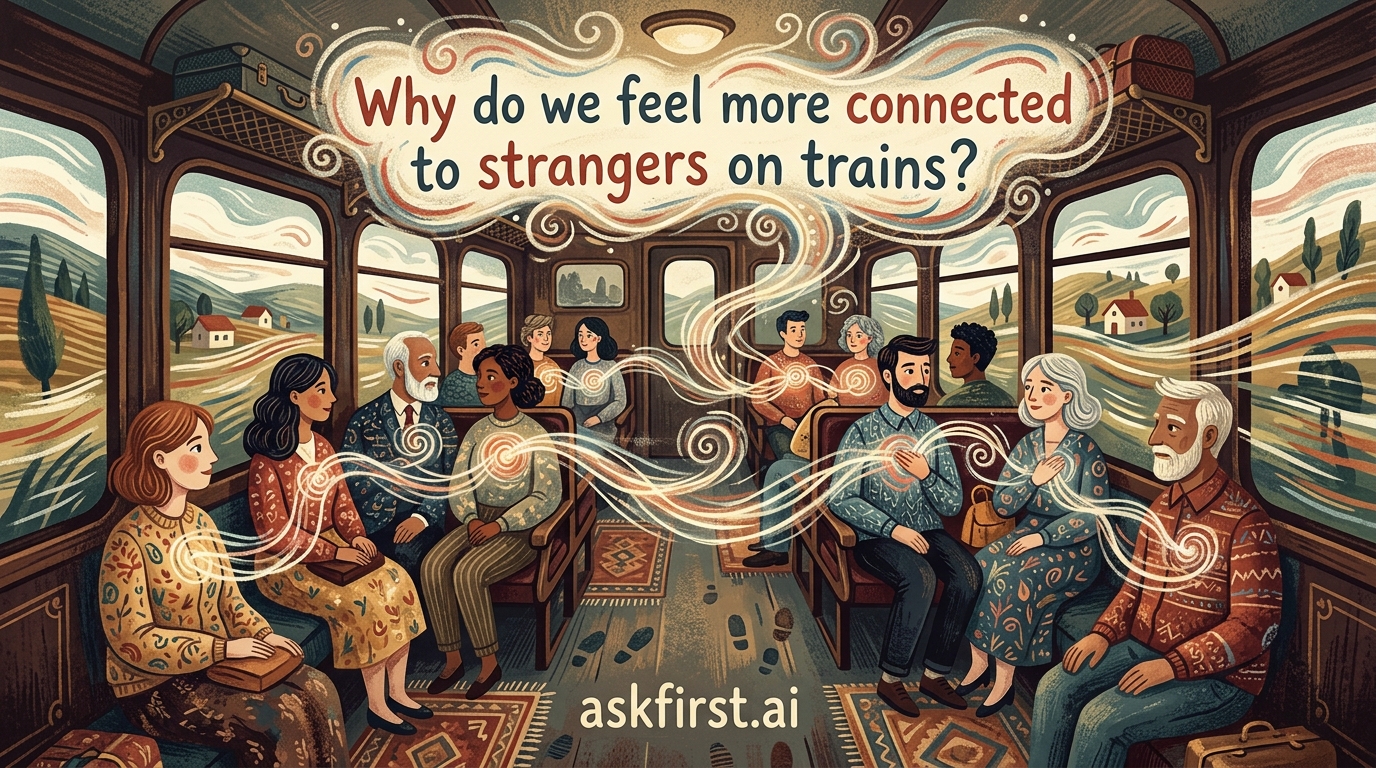
Human beings are social animals, but the dynamics of connection change drastically depending on the environment. The phenomenon of feeling a sudden, strange sense of intimacy or connection with a stranger on a train—often referred to as 'commuter intimacy'—is a fascinating study in environmental psychology and social behavior. While modern urban life encourages us to ignore those around us, the train carriage acts as a unique 'third space' where traditional social rules are suspended.
The Role of Shared Destiny and Anonymity
One of the most potent psychological factors at play is the concept of 'shared destiny.' When passengers board a train, they are physically bound together in a moving vessel, traveling from point A to point B. This shared spatial reality creates a subconscious sense of unity. Because everyone is a transient guest in this environment, the pressure to maintain one's social persona or perform a specific professional role vanishes. This is the anonymity paradox: being surrounded by strangers while trapped in a confined space actually makes people feel safer, not more threatened, because the temporary nature of the encounter eliminates the need for future repercussions or ongoing social judgment.
The 'Bystander Effect' and the Gentle Connection
In public spaces like parks, we are rarely forced into eye contact. On a train, however, the geometry of seating often forces proximity. According to the research of social psychologists like Stanley Milgram, who studied urban overload, people in dense environments develop 'urban coping mechanisms' to protect their privacy. Yet, when someone breaks that barrier with a polite smile or a brief comment on the transit delay, the unexpectedness of that human warmth feels magnified. Because the environment is usually 'cold,' the slightest bit of positive human interaction feels like a significant oasis of connection.
- Reduced Social Stakes: There is no fear of long-term social fallout, as you will likely never see this person again.
- Rhythmic Synchronization: The movement and noise of the train provide a rhythmic background that can lull the brain into a more reflective and open state.
- Shared Struggle: Delays or crowded carriages create a common enemy or experience, which is a classic psychological tool for group bonding.
Liminality: The Space Between
The concept of liminality, derived from anthropology, describes 'threshold' states where individuals are in transition, no longer in their starting point but not yet at their destination. During these moments, social structures are often loosened. People are more open to introspection and outward connection because they are in a state of suspended identity. You are not just an employee, a parent, or a student while on the train; you are a traveler. This role change allows people to perceive themselves and others with a fresh, less judgmental lens.
Why This Connection Lasts in Our Memories
These fleeting moments are often remembered more vividly than interactions with acquaintances because of the 'high-contrast' nature of the event. The brain prioritizes memories that stand out against the routine. A brief, meaningful exchange with a stranger amidst the dull monotony of a daily commute creates a memory spike. It serves as a reminder of our fundamental human need to belong, even if that belonging lasts only for the duration of a rail journey.
Scientific Perspective on Social Cues
While we might assume we want to remain isolated, studies on 'social foraging' suggest that humans have an innate drive to scan for safe, social stimuli. In a train carriage, we are constantly processing the social cues of those around us. When we lock eyes with a fellow passenger, we are looking for a mirror of our own emotional state. This synchronization, even if non-verbal, creates a powerful sense of resonance that we rarely experience in our rigid, routine-filled work lives. It is a reminder that despite the barriers of modern society, the potential for connection is always sitting right across the aisle.