The Temporal Illusion of Joy: How Happiness Warps Perception
Human perception of time is far from an objective, mechanical measurement like the ticking of a clock. Instead, it is a malleable construct synthesized by the brain, heavily influenced by emotional states, neurochemistry, and the density of information processing. When an individual experiences states of genuine, profound happiness, the internal 'clock' often undergoes a significant transformation, leading to the widely reported phenomenon where time seems to fly or, conversely, expands in the memory.
The Neurochemistry of Time Perception
The brain does not have a single dedicated clock; rather, it uses a distributed system of neural pathways that track intervals. Dopamine, the neurotransmitter most closely associated with reward, motivation, and happiness, plays a pivotal role in these circuits. Research suggests that high levels of dopamine activity, such as those occurring during peak states of joy or excitement, can influence the speed of the internal pacemaker.
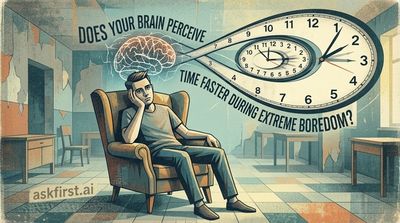
- The Pacemaker-Accumulator Model: Cognitive scientists often describe this as a pacemaker that emits pulses. When dopamine levels rise, these pulses may be processed more rapidly or efficiently. If the brain is accumulating pulses at a higher rate due to the physiological arousal associated with happiness, the subject perceives the elapsed interval as shorter. This explains why an hour of ecstatic play feels like mere minutes, while a boring, neutral, or repetitive task feels like an eternity.
The Paradox of Encoding: Memory Density
There is a crucial distinction between the perception of time as it happens (retrospective vs. prospective) and how it is remembered.
- Prospective Timing: While in the flow state—a core component of deep happiness—the brain is so fully occupied with the activity that it stops monitoring the passage of time. Because the brain is not paying attention to duration, time 'flies.'
- Retrospective Timing: Interestingly, when looking back on a happy, novel, or exhilarating experience, the opposite effect often occurs. Because happy events are often filled with high-intensity stimuli, emotional engagement, and novel experiences, the brain stores more distinct memories. When the mind retrieves these memories later, the sheer volume of recorded detail leads to the conclusion that the event lasted longer than it actually did. This is known as the 'Holiday Paradox'—the vacation felt short while you were there, but feels long and rich when you recall it weeks later.
Why Happiness Skews Reality
From an evolutionary perspective, this temporal flexibility serves a function. The brain is optimized to focus on what matters most for survival and reproduction. When an organism is experiencing a state of genuine happiness—often tied to success, bonding, or learning—the brain prioritizes deep engagement and information gathering.
By 'speeding up' the perceived passage of time during intense engagement, the brain prevents the organism from becoming prematurely fatigued or bored by complex, rewarding tasks. It acts as a biological lubricant for social and cognitive development. In states of low mood or threat, the brain shifts to a 'time-dilated' mode, making every second seem slow and deliberate. This is a survival mechanism intended to heighten alertness and vigilance. Happiness, in contrast, grants the brain permission to drop its guard, focus on the present, and lose track of the external clock.
The Impact of 'Flow State'
Psychologist Mihaly Csikszentmihalyi coined the term 'Flow' to describe the state of optimal experience where individuals are fully immersed in an activity. During Flow, the prefrontal cortex—the part of the brain responsible for higher-order thinking and self-monitoring—shows reduced activity. This 'transient hypofrontality' means that the self-consciousness that usually monitors time is effectively turned off.
- Engagement: The brain is too busy processing the rewards of the activity to calculate time.
- Reduced Self-Monitoring: Without the constant internal monologue asking 'how much time is left?', the passage of time becomes invisible.
- Emotional Amplification: High emotional valence reinforces the memory traces, ensuring that while the moment was short, the lasting impact is profound.
Conclusion
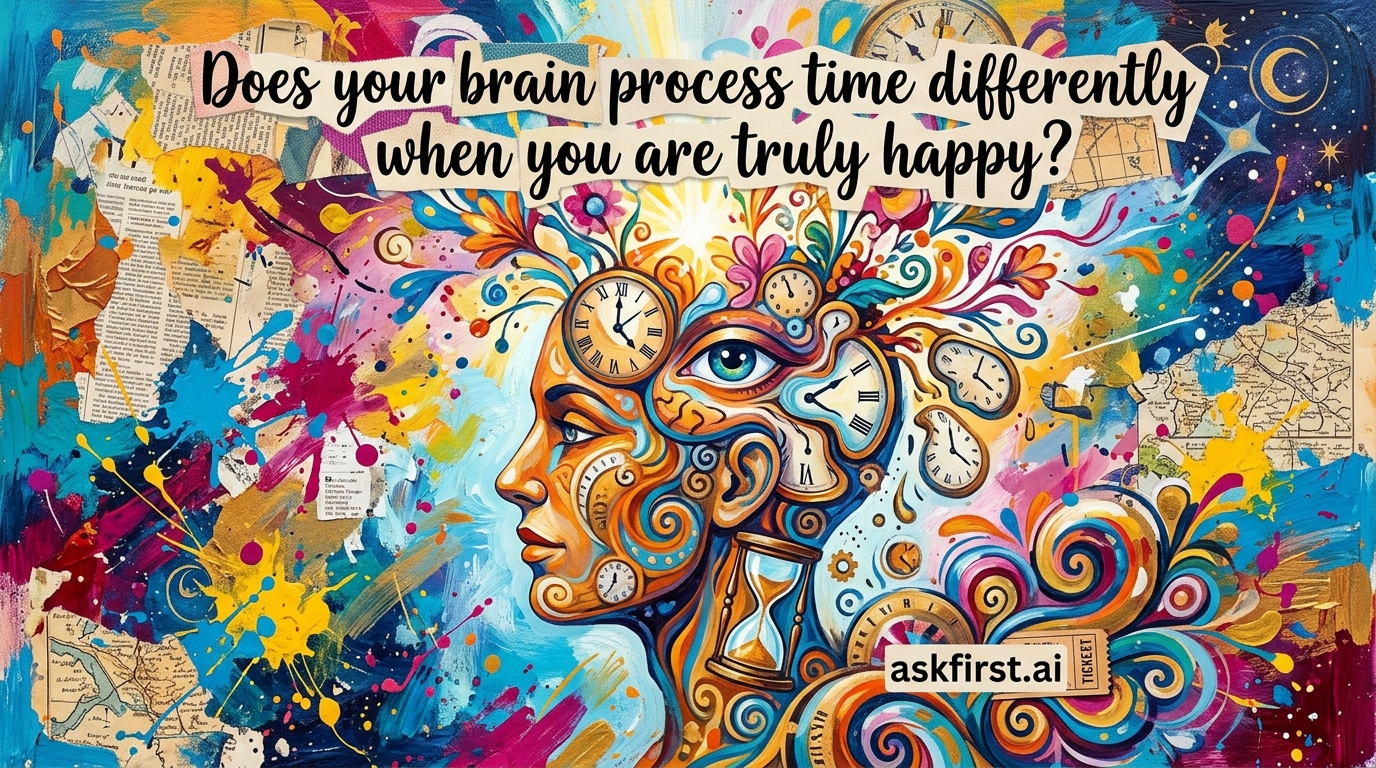
Does the brain process time differently when you are happy? Decidedly, yes. Through the modulation of dopamine, the reduction of cognitive self-monitoring, and the increased density of memory encoding, happiness fundamentally alters the brain's temporal dashboard. Happiness effectively detaches the mind from the ticking of the clock, favoring the richness of experience over the accuracy of measurement. In essence, the more joy you find in an activity, the more 'real' and dense your life feels, even if the minutes seem to vanish like mist in the sun.