The Psychosocial Evolution: Pets as Relationship Catalysts
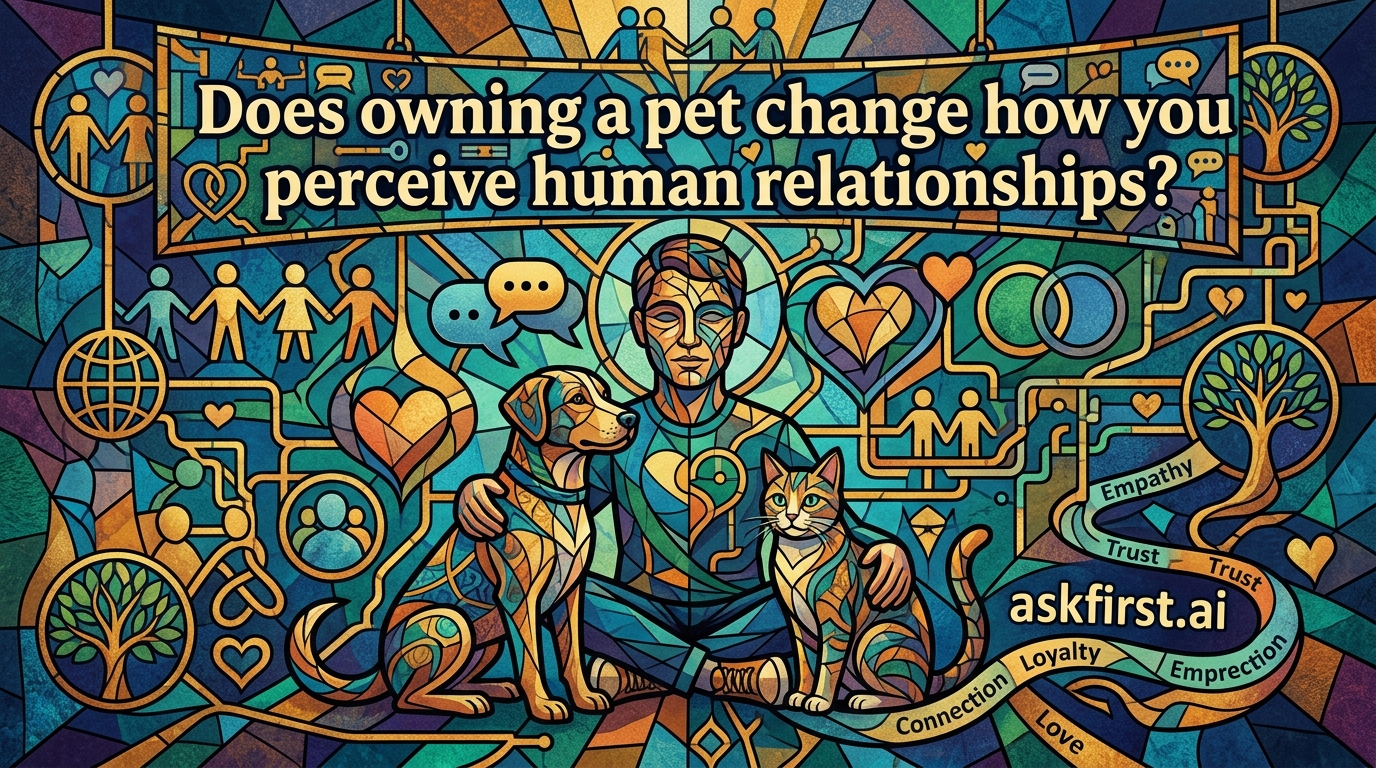
Human-animal interaction is a profound phenomenon that extends far beyond simple companionship. Research in evolutionary psychology and sociology suggests that the presence of a pet fundamentally reshapes how individuals navigate, value, and maintain human connections. By acting as a secure base, animals influence emotional intelligence, interpersonal trust, and the complexity of empathy.
The Security Hypothesis: Pets as Attachment Figures
According to Attachment Theory, originally developed by John Bowlby, humans seek a 'secure base'—a source of comfort that allows for exploration of the world. For many, pets fulfill this role, mirroring the function of human caregivers. When an individual experiences this consistent, non-judgmental bond, the internal working model of what constitutes a 'safe' relationship expands.
- Reduced Defensive Mechanisms: Because pets offer unconditional positive regard, individuals may lower their guard, decreasing the hyper-vigilance often associated with past interpersonal trauma.
- Increased Emotional Availability: Practicing vulnerability with a pet—such as speaking to them about stresses—trains the brain to engage in disclosure, making it psychologically easier to initiate similar exchanges with human peers.
Expanding the Empathy Loop
Empathy is often characterized as a muscle; the more it is exercised, the more robust it becomes. Caring for a non-verbal creature necessitates a constant 'perspective-taking' process. To understand a pet, one must observe body language, environmental cues, and subtle behavioral shifts. This heightened observational skill directly translates into the human realm.
Research published in the Journal of Personality and Social Psychology indicates that people who interact frequently with animals develop higher 'perspective-taking' scores. This means that when a human partner exhibits frustration or silence, the pet-owner is more likely to interpret these signals with curiosity rather than immediate judgment or defensive anger. The pet acts as an educational conduit for deciphering emotional dialects that lack direct verbal translation.
Social Lubrication and the 'Bystander' Effect
Beyond individual psychology, pets function as powerful social facilitators. Sociological studies frequently highlight the 'Pet Effect' in public settings. When an individual is accompanied by a pet, the social barrier between strangers is significantly lowered.
- Conversational Bridging: Pets serve as a neutral third party that sparks natural, low-stakes interaction between humans. This reduces the 'fear of the stranger,' which can improve the overall perception of humanity as a safe and approachable collective.
- Community Cohesion: Neighbors who encounter each other while walking dogs are statistically more likely to engage in pro-social behaviors, such as favors or deep conversation, compared to those who do not.
Challenging the Myth of Replacement
There is a common misconception that individuals who prioritize pet relationships are necessarily retreating from human society—the 'cat lady' or 'lonely hermit' tropes. However, psychological data suggests the opposite. Most pet owners view their animals as a supplemental layer of social support that actually provides the emotional 'fuel' necessary to engage in more demanding human relationships.
By ensuring that basic companionship needs are met, a pet reduces the desperate, 'neediness' energy that can sometimes drive humans away. Consequently, the pet-owner often enters human relationships with more stability and emotional independence, paradoxically making them a more desirable and present partner for others. They are not choosing the pet over the human; they are utilizing the pet to manage the stress of the modern world, allowing them to bring their best, most regulated selves to their human interactions.
The Shift in Expectation Management
Perhaps the most significant change lies in the expectation of reciprocation. Human relationships are notoriously transactional; they are governed by subtle social contracts regarding support, time, and ego. Pets, however, operate on a simpler contract of presence.
When a person experiences this pure, uncomplicated loyalty, it creates a benchmark for healthy bonding. It teaches the owner that relationships do not always need to be a battle of wills or an exchange of favors. This realization can lead to the 'weeding out' of toxic, high-maintenance human associations. Individuals become more discerning, opting for human partners who mirror the stability and kindness modeled by their animal companions. Ultimately, owning a pet acts as a mirror that reflects the capacity for love, teaching humans how to give and receive care without the heavy baggage of performative expectations.