The Eternal Sweetness: Why Honey Never Spoils
Honey is one of the few food products that defies the conventional laws of biology and decay. While most perishables begin to decompose shortly after production, honey stands as a chemical anomaly, capable of remaining edible for millennia. This remarkable phenomenon has fascinated archaeologists and food scientists for generations.
The Chemical Architecture of Longevity
The secret behind honey’s indefinite shelf life lies in a perfect confluence of chemistry and environmental conditions. Several key factors work in tandem to create a hostile environment for the bacteria and microorganisms that typically cause food to spoil:
- Low Water Content (Hygroscopic nature): Raw honey contains very little moisture, usually less than 18%. This low water activity level prevents microbes from thriving. Bacteria require moisture to survive; because honey acts as a desiccant, it draws water out of bacterial cells, effectively dehydrating and destroying them.
- High Acidity: Honey has a pH level typically ranging between 3.2 and 4.5. This level of acidity is sufficient to inhibit the growth of most food-borne bacteria, acting as a natural preservative barrier.
- Hydrogen Peroxide Infusion: During the process of transforming nectar into honey, bees add an enzyme called glucose oxidase to the nectar. This enzyme breaks down into hydrogen peroxide, which acts as a powerful disinfectant, keeping unwanted pathogens at bay while the honey matures.
- The Seal of the Hive: Bees play an active role in the preservation process. By fanning their wings over the nectar, they evaporate excess moisture. Once the honey is ready, they seal the honeycomb cells with a wax cap, creating an airtight, hermetically sealed vault that protects the honey from ambient moisture and contamination.
Historical Evidence and Discovery
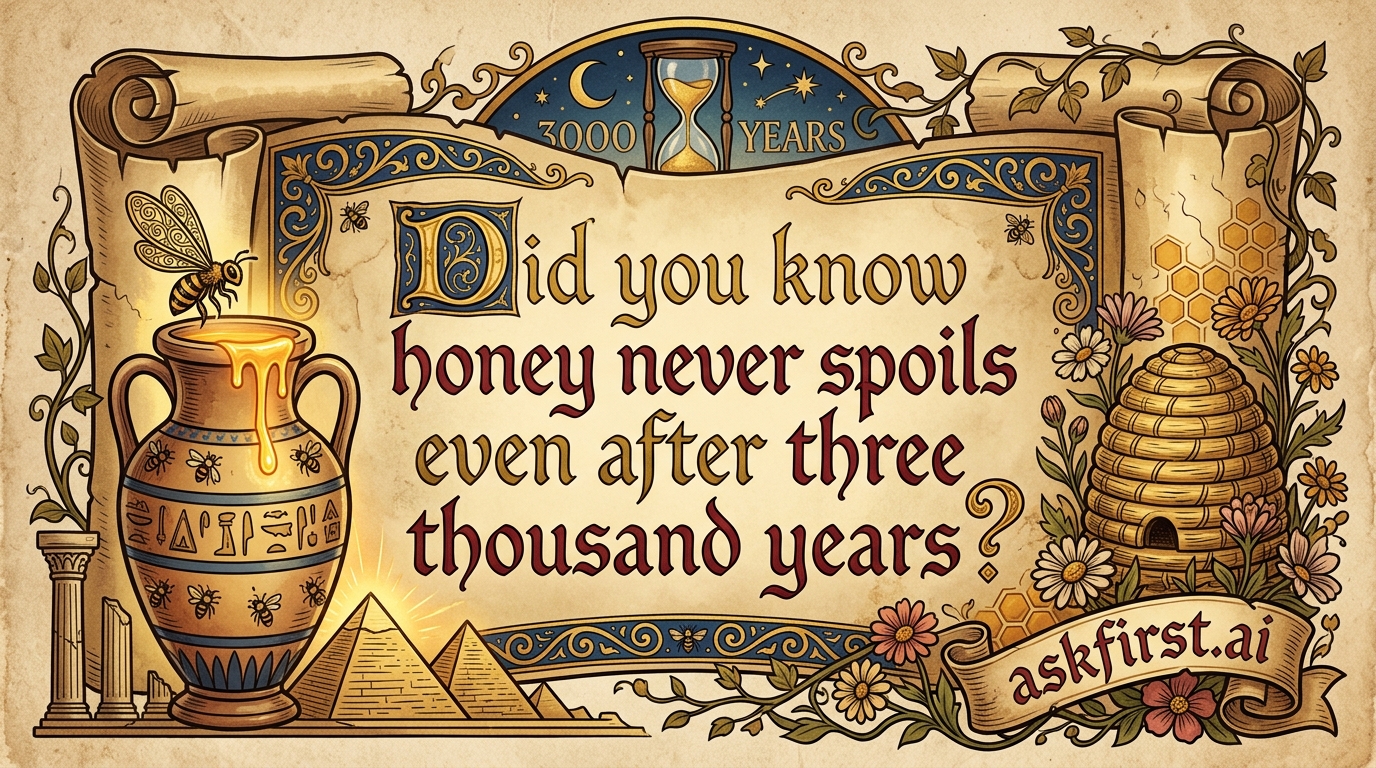
The claim that honey can survive for thousands of years is not merely theoretical; it is rooted in tangible archaeological evidence. Excavations of ancient Egyptian tombs have frequently yielded pots of honey that are over 3,000 years old. Astonishingly, researchers who have analyzed these finds report that the honey remains perfectly safe for consumption—though it is often advised against due to its cultural and historical significance. These discoveries underscore that honey is a substance that essentially stops time within its own golden matrix.
The Process of Crystallization: A Sign of Authenticity
It is vital to distinguish between spoilage and crystallization. Many consumers mistakenly believe that if honey turns cloudy, thick, or forms hard crystals at the bottom of a jar, it has gone bad. In reality, the opposite is true. Crystallization is a natural physical process that occurs when glucose molecules separate from the water in the honey. This transition is influenced by temperature, floral origin, and the ratio of glucose to fructose. If your honey crystallizes, simply placing the jar in a warm water bath will return it to its original, smooth consistency. It is a sign of purity rather than degradation.
Storage Best Practices
While honey is technically immortal, its quality can be maintained optimally through proper storage techniques:
- Use Airtight Containers: Always keep the lid tightly closed to prevent the honey from absorbing moisture from the surrounding air. Moisture absorption is the one factor that could potentially lead to fermentation.
- Avoid Extreme Temperatures: Storing honey at room temperature in a dark cupboard is ideal. Excessive heat can degrade the complex enzymes that give honey its unique health properties, while cold temperatures accelerate the crystallization process.
- Avoid Contamination: Never dip a used utensil back into the honey jar. Introducing bread crumbs, saliva, or other organic matter can introduce yeast and bacteria, which might lead to spoilage over time. Always use a clean, dry spoon.
Conclusion
Honey serves as a brilliant example of nature’s ingenuity. By manipulating moisture levels, utilizing enzymatic defense mechanisms, and creating a low-pH environment, bees produce a substance that defies decay. Whether found in a modern pantry or unearthed from an ancient burial chamber, honey remains a testament to the stability and preservation capabilities of the natural world. It is not just a sweet treat; it is a timeless substance that links the modern era to the deep history of civilization.