The Anatomy of Intimacy: Why Secrets Bind Us Together
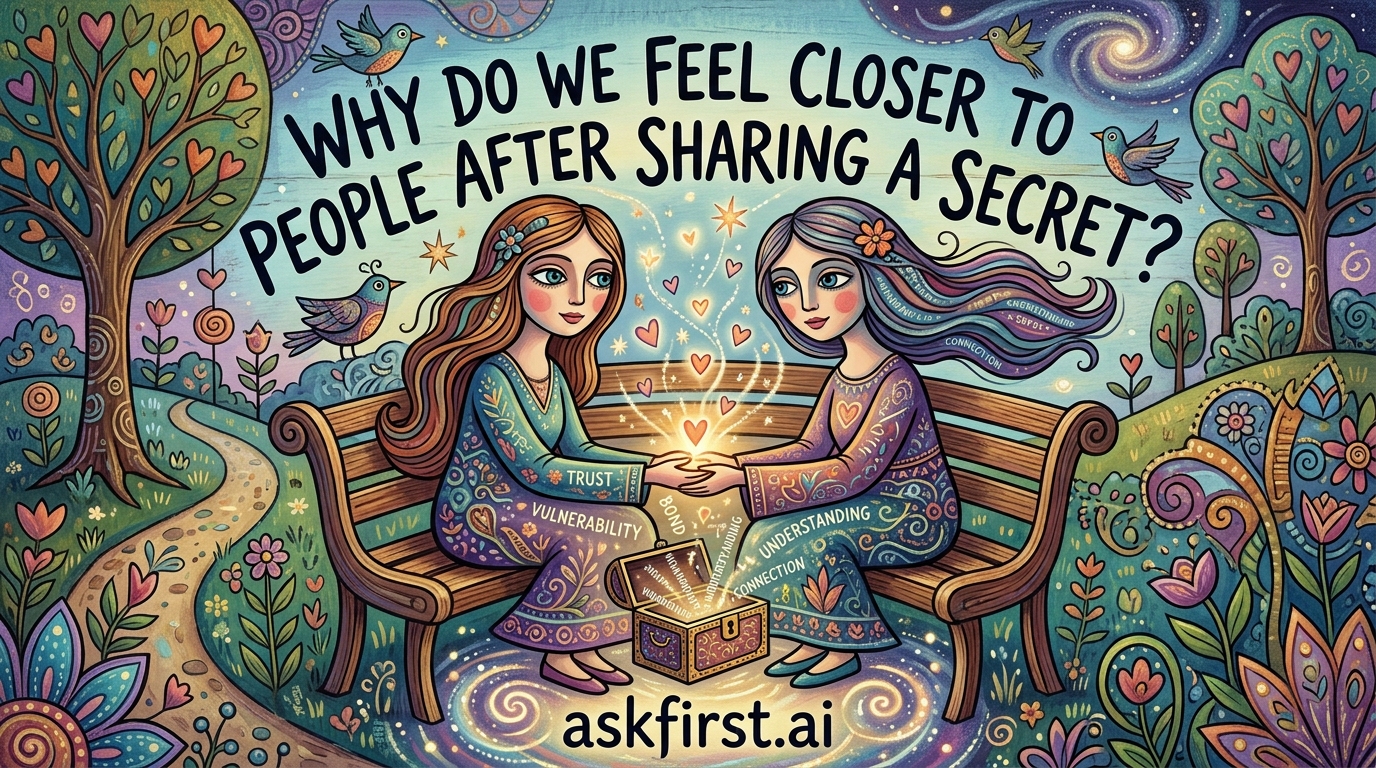
The act of sharing a secret is one of the most potent catalysts for human connection. When we whisper a truth that we have kept hidden, we are not merely exchanging information; we are engaging in a sophisticated psychological ritual that reshapes the architecture of our relationships. This phenomenon, often termed "self-disclosure," acts as a social glue, transforming acquaintances into confidants and friends into soulmates. To understand why we feel inextricably closer to someone after revealing a secret, we must examine the intersection of vulnerability, social exchange theory, and the neurobiology of trust.
The Vulnerability Paradox: Risk as a Currency of Trust
At the heart of secret-sharing lies the concept of vulnerability. When you share a secret, you are essentially handing the listener a weapon—or, more accurately, the potential to harm your reputation, your self-esteem, or your social standing. According to Brené Brown, the renowned research professor and author of Daring Greatly (Gotham Books, 2012), vulnerability is the "birthplace of innovation, creativity, and change," but it is also the bedrock of intimacy.
By exposing a hidden part of ourselves, we are signaling to the other person that we trust them with our psychological safety. This creates a "vulnerability loop." When you disclose something sensitive, you are taking a leap of faith. If the listener responds with empathy, validation, and discretion, they signal that they are a "safe harbor." This reciprocal exchange of risk creates a powerful bond because it proves that the other person values your well-being more than they value the power they could hold over you by exposing your secret.
Social Exchange Theory and the Reciprocity Norm
Sociologists often point to Social Exchange Theory, a framework popularized by George Homans in his seminal work Social Behavior: Its Elementary Forms (Harcourt, Brace & World, 1961). The theory posits that human relationships are formed through a subjective cost-benefit analysis. While this sounds clinical, it explains the deep psychological satisfaction of secret-sharing.
Sharing a secret is a "high-cost" interaction. It requires emotional labor and carries the risk of rejection. However, the "reward" is the formation of a unique, exclusionary bond. When you share a secret, you are creating a "secret garden" that only the two of you inhabit. This exclusivity is a powerful psychological incentive. It differentiates that specific person from the rest of your social circle. The listener, feeling honored by the confidence placed in them, often feels compelled to reciprocate with a secret of their own. This cycle of "tit-for-tat" disclosure accelerates the intimacy process, bypassing the years of casual conversation it might otherwise take to reach a similar level of closeness.
The Neurobiology of Secrets: Oxytocin and the Reward System
There is a tangible physiological component to this experience. When we engage in deep, vulnerable conversation, the brain releases oxytocin—often dubbed the "bonding hormone." Research conducted by Paul Zak, a neuroeconomist and author of The Moral Molecule (Dutton, 2012), highlights how oxytocin facilitates trust and social bonding.
When you share a secret and receive a positive, non-judgmental response, your brain’s reward system—specifically the ventral striatum—is activated. You receive a dopamine hit, reinforcing the behavior. Your brain essentially logs the interaction as a "successful social bond." This is why, after a long night of "soul-baring" conversation, you often feel a sense of euphoria or deep peace regarding the relationship. You have successfully navigated a high-stakes social interaction, and your biology rewards you for the increase in social cohesion.
The "Confidant Effect" and Social Identity
Beyond the dyadic (two-person) bond, sharing a secret changes how we perceive ourselves in relation to the other person. By sharing a secret, you are inviting the other person into your internal world. You are saying, "I want you to know the real me, not just the persona I present to the world."
In The Social Animal (Worth Publishers, 2011), Elliot Aronson discusses how the perception of an individual changes when they reveal their flaws. Contrary to the fear that secrets will make us look "lesser," honest self-disclosure often makes us more likable. This is known as the Pratfall Effect: people who are seen as competent but also reveal their vulnerabilities are often viewed with more warmth and affection than those who maintain a perfect, impenetrable facade. By sharing a secret, you humanize yourself, which invites the listener to lower their own defenses.
Conclusion: The Enduring Power of Confidentiality
The feeling of closeness that follows secret-sharing is not an accident; it is an evolutionary adaptation. We are social animals who rely on deep, stable bonds for survival. Secrets function as a filter, helping us identify allies who are capable of holding our emotional weight.
Whether it is a shared childhood memory, a professional ambition, or a private insecurity, the act of confiding is a profound declaration of trust. It tells the other person that they are worthy of your truth. In a world that often demands superficiality, the courage to share a secret is perhaps the most authentic way to bridge the distance between two human minds. By choosing to be vulnerable, we do not just share a piece of information—we share a piece of our humanity, and in that exchange, we find the true essence of intimacy.