The Chronobiology of Affection: How Love Distorts Time
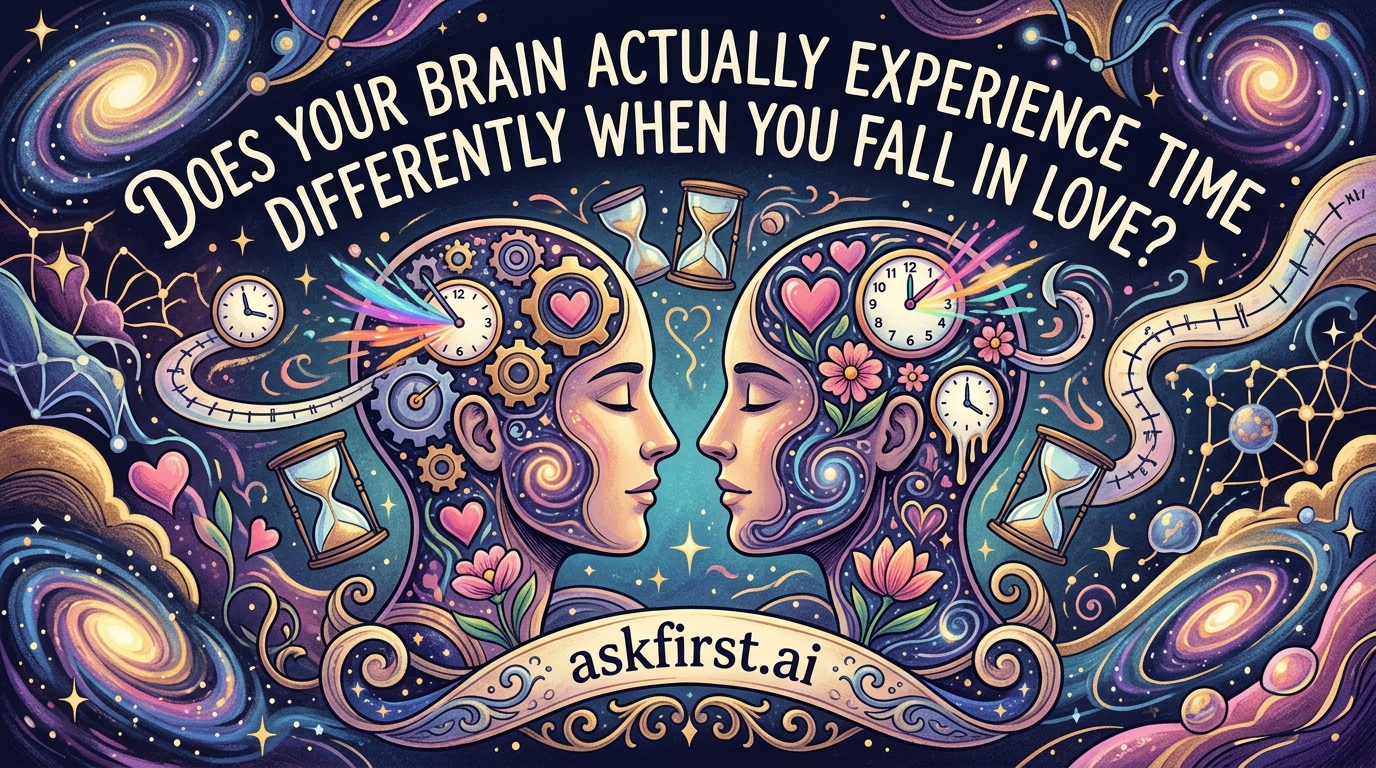
When an individual falls in love, the subjective experience of time often undergoes a profound metamorphosis. While the clock on the wall ticks at a constant rate, the human perception of that interval becomes highly elastic, stretching during moments of intense infatuation and seeming to contract during routine interactions. This phenomenon is rooted in the complex interplay between neurochemistry, emotional intensity, and the cognitive architecture of the human brain.
The Neurochemical Basis of Temporal Distortion
At the core of this experience is the release of specific neurotransmitters, most notably dopamine and norepinephrine. The initial phase of love, often characterized by passionate infatuation, triggers a surge of dopamine—the primary chemical associated with the brain's reward system. Research suggests that high levels of dopamine can influence the internal clock. Studies in chronobiology have indicated that increased dopaminergic activity can lead to a 'speeding up' of the brain's internal pulse. When the internal pacemaker runs faster than the objective external environment, external events appear to take longer to unfold, leading to the sensation that 'time slows down' during a pleasant encounter.
- The Dopamine Factor: Elevated levels heighten alertness and focus, making one hyper-aware of specific details during interactions with a romantic interest.
- The Norepinephrine Surge: This chemical contributes to the excitement and increased arousal associated with new love, which further keeps the brain in a state of high vigilance.
Why Routine Feels Like a Flicker
Conversely, as a relationship transitions from the 'passion' phase to the 'companionate' phase, the brain relies less on novelty and more on habituation. In psychology, the 'Holiday Paradox' provides a compelling analogy. When people go on vacation, they encounter new environments, leading to the formation of many new memories. Because the brain spends more energy encoding these novel experiences, the trip feels longer in retrospect. Conversely, when life becomes a routine, the brain stops paying attention to redundant stimuli, leading to a 'contraction' of time. In the context of love, the initial stage is a period of intense novelty—every smile, every conversation, and every shared moment is new and unique, which stretches the perception of time. As the relationship stabilizes into deep familiarity, this temporal stretching fades, explaining why years spent in a long-term relationship can suddenly seem to have 'passed in the blink of an eye.'
The Role of Emotional Salience and Attention
Attention is the currency of time perception. When a person is deeply infatuated, their attentional resources are almost entirely monopolized by the object of their affection. In cognitive psychology, it is well established that when an individual focuses intently on a task or stimulus, the subjective experience of time duration increases. This is known as 'prospective timing.' When one is waiting for a message from a partner or looking forward to an upcoming date, the brain constantly checks the clock, so to speak, effectively magnifying the passage of time. This increased focal awareness makes seconds feel like minutes.
- Attention Modulation: By narrowing the scope of attention to a single source of emotional salience, the brain creates a temporal 'magnifying glass.'
- Memory Encoding: The intensity of emotions associated with early romantic attraction ensures that memories are encoded more vividly. A moment that feels like a singular event becomes a highly detailed memory, reinforcing the impression that 'a lot happened' within a short period.
The Biological Perspective
It is important to note that this is not a hallucination but a legitimate physiological state. The brain is not just perceiving the world; it is actively constructing it. Because the brain uses multiple areas—including the prefrontal cortex for planning and the striatum for timing—to calculate duration, any hormonal shift during a state of love will inevitably ripple through these regions. The amygdala, which processes emotional significance, communicates intensely with the hippocampus during these periods, essentially 'tagging' these romantic moments as high-priority. This tagging forces the brain to allocate more processing power to these time intervals.
Conclusion: The Subjective Reality
In essence, falling in love turns the brain into a hyper-efficient time-distorter. The combination of intense novelty, heightened attentional focus, and a flood of neurochemical activity creates an internal environment where time simply does not behave the way it does during mundane activities. While the external world remains bound by the standard measures of hours and minutes, the human mind experiences these as fluid, malleable constructs. Whether it feels like time is freezing in a beautiful moment or flying by during a period of deep connection, the brain is simply providing a subjective reflection of the intense emotional landscape of love.