The Science of Mimicry: Unveiling the Chameleon Effect
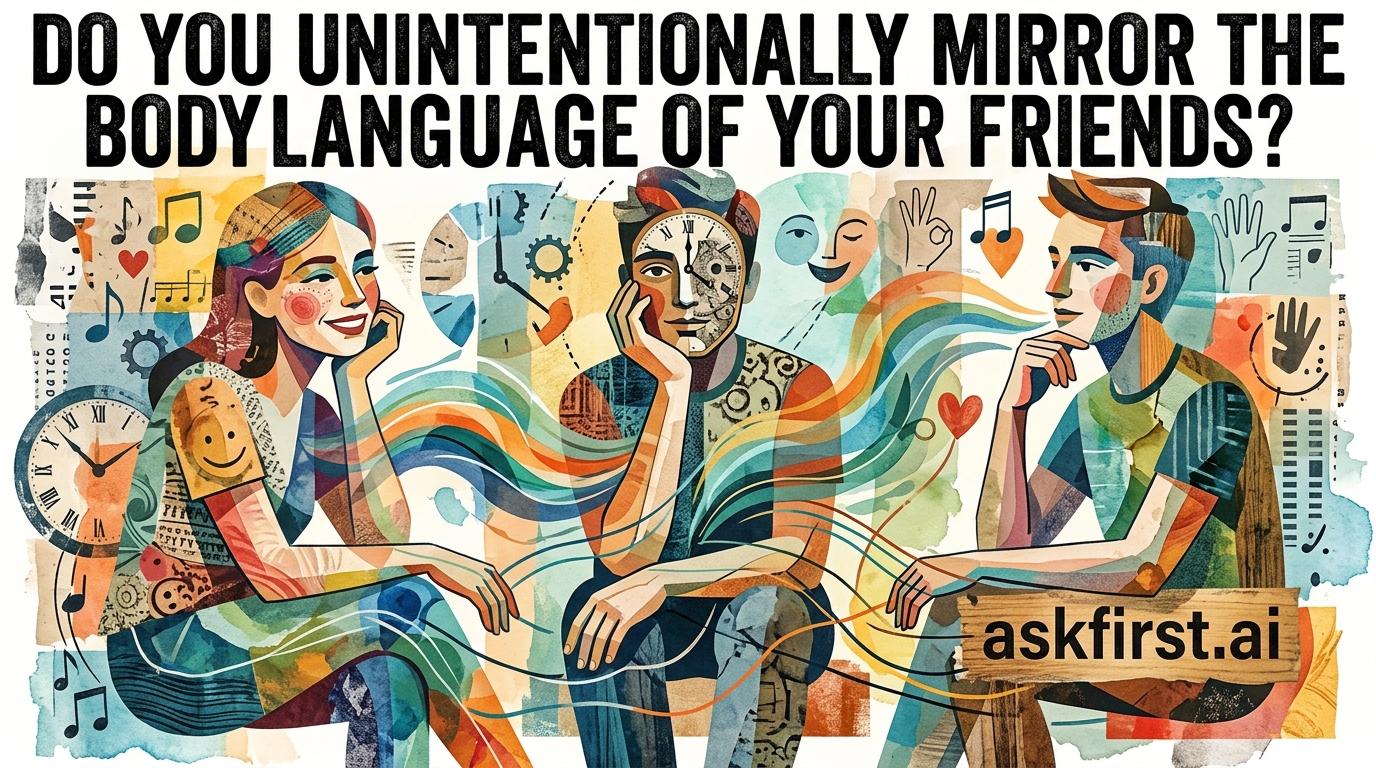
Human interaction is guided by an invisible, silent rhythm that dictates social harmony and emotional connection. The phenomenon where individuals unconsciously adopt the postures, mannerisms, facial expressions, and speech patterns of their interlocutors is known as the Chameleon Effect. While it often goes unnoticed, this automatic mirroring serves as the social glue that binds relationships, signals empathy, and fosters trust within peer groups.
The Neurobiology of Mirroring
At the core of this behavior lies the mirror neuron system in the human brain. Discovered in the 1990s by researchers studying macaque monkeys, these specialized cells fire not only when an individual performs an action but also when they observe someone else performing that same action. This neural architecture allows humans to simulate the internal state of others, essentially helping the brain 'feel' what another person is experiencing. When friends interact, this system creates a bridge between disparate minds, facilitating non-verbal synchronization that reinforces social bonds.
Why Mirroring Enhances Social Cohesion
Mirroring is more than just a quirky neurological byproduct; it is an evolutionary survival mechanism. Research suggests several key psychological benefits:
- Building Rapport: Studies consistently show that people are more likely to like those who subtly mirror their behavior. This creates a perception of 'sameness' and shared identity.
- Demonstrating Empathy: When someone leans in while a friend is talking or adopts a somber posture during a sad story, it signals active listening and genuine emotional resonance.
- Reducing Friction: Synchronized non-verbal behavior reduces perceived social distance, making interactions feel smoother and less taxing on cognitive resources.
The Spectrum of Mimicry: From Subtle to Mimicry
It is important to distinguish between spontaneous mimicry—which is natural and mostly unconscious—and conscious mimicry, which can come across as manipulative. Truly unintentional mirroring typically involves micro-behaviors:
- Postural Echoing: Matching how a friend sits or stands, such as both parties crossing their legs or leaning back simultaneously.
- Speech Alignment: Adopting the cadence, tone, or specific vocabulary unique to a friend group. Over time, close friends often develop a unique 'linguistic signature' that signals membership in their specific circle.
- Facial Mimicry: Automatically adopting the smile or furrowed brow of a friend, which triggers a corresponding emotional response in the brain, thereby fostering emotional contagion.
Factors Influencing the Chameleon Effect
While mirroring is universal, the intensity of the effect varies based on several factors:
- Level of Rapport: The stronger the bond, the more pronounced the mirroring. Individuals are significantly more likely to mirror those they perceive as being in their 'in-group.'
- Social Anxiety: Paradoxically, individuals with higher levels of social anxiety may engage in more frequent or exaggerated mirroring as a subconscious attempt to seek approval and avoid rejection.
- Cultural Context: While mirroring occurs across cultures, the degree to which it is displayed can vary based on individualistic versus collectivistic societal values. In highly collective societies, synchronized behavior is often a deliberate social expectation.
When Mirroring Goes Wrong
While the Chameleon Effect is generally a hallmark of healthy social engagement, the timing matters immensely. 'Mismatching' occurs when one person mirrors the other at an inappropriate moment, such as mimicking a nervous fidgeting habit, which can lead to discomfort. Furthermore, when individuals realize they are being mirrored, the psychological benefit often turns into suspicion, as the act of 'copying' is perceived as mockery or manipulation rather than a natural extension of empathy.
Conclusion: The Silent Language of Connection
Mirroring is a testament to the fact that humans are fundamentally social creatures hardwired for connection. It is a silent conversation that takes place beneath the surface of conscious awareness, reinforcing the ties that define friendships. By understanding that these mimicry behaviors are a natural, positive aspect of human behavior, one can gain deeper insight into the complexities of human interaction. The next time you find yourself suddenly crossing your arms at the exact same moment as your friend, recognize it not as a coincidence, but as a subtle, biological dance of trust and belonging that reinforces the strength of your unique bond.