The Evolutionary Roots of Social Perception
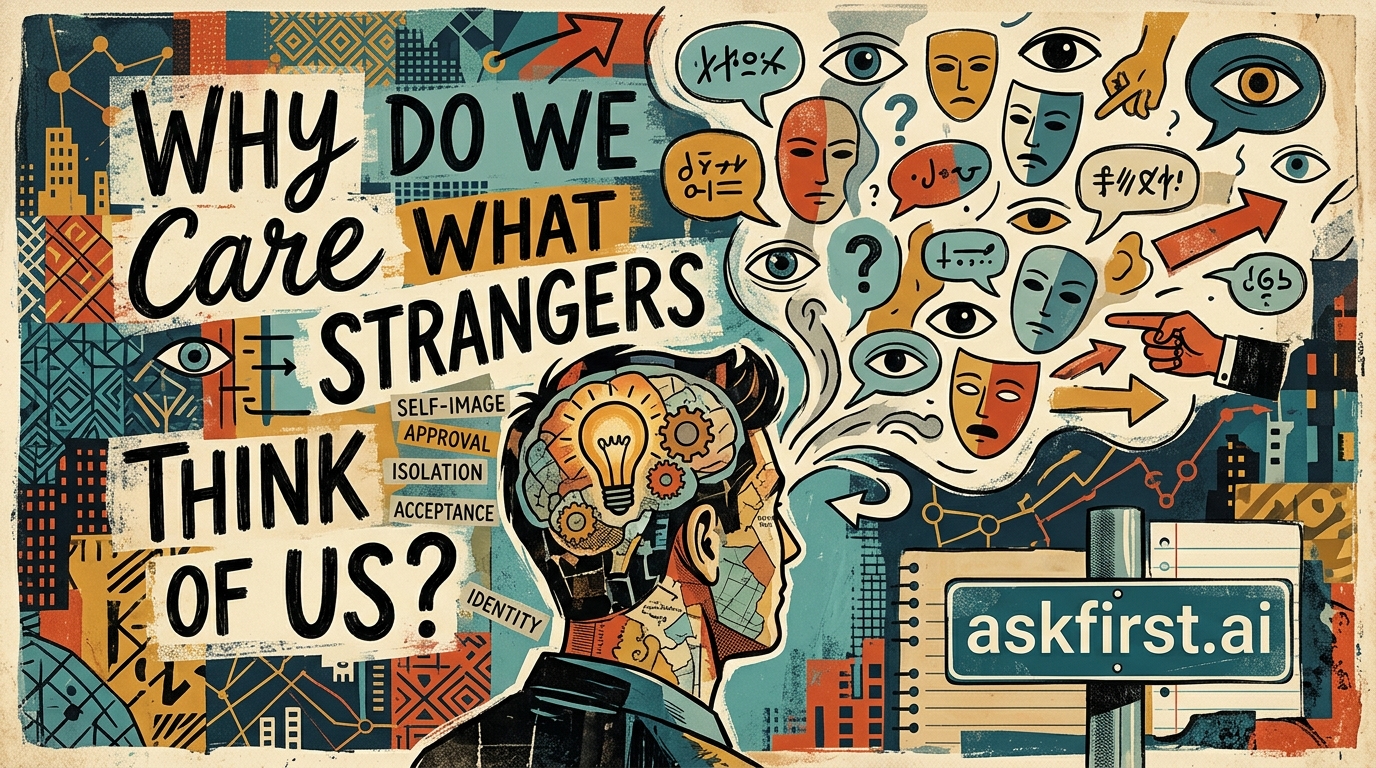
Human beings are inherently social creatures, a trait that has been honed by millions of years of evolution. The obsession with how strangers perceive us is not a modern vanity but a deeply embedded survival mechanism. In the ancestral environment, belonging to a tribe was synonymous with survival. Those who were ostracized or viewed negatively by their peers faced a significant disadvantage, often leading to isolation, lack of resources, and ultimately, a decreased chance of reproduction. Therefore, the brain developed a sophisticated internal monitoring system—often referred to by psychologists as the 'sociometer'—which gauges our social standing based on the perceived opinions of those around us, including total strangers.
The Spotlight Effect: Why We Feel Perceived
One of the most compelling psychological phenomena explaining this behavior is the Spotlight Effect. Coined by psychologists Thomas Gilovich and Kenneth Savitsky, this phenomenon describes the tendency of individuals to overestimate the extent to which their actions and appearance are noticed by others. In reality, most strangers are preoccupied with their own internal monologues and insecurities. However, the human brain is wired to predict the behavior of others, and this process often results in the erroneous assumption that we are the centerpiece of everyone else's attention. Understanding that the 'spotlight' is rarely as bright as we believe can alleviate the intense pressure of self-consciousness.
Neurobiology of Social Evaluation
The brain processes social feedback through pathways that overlap significantly with the experience of physical pain. Neuroscientific research, such as studies utilizing functional magnetic resonance imaging (fMRI), indicates that when individuals feel socially rejected or judged, the anterior cingulate cortex—an area of the brain also activated by physical injury—lights up. This explains why the feeling of being judged by a stranger can manifest as a visceral, unpleasant sensation. From a biological standpoint, the brain treats social disapproval as a threat, triggering a subtle fight-or-flight response.
Modern Context and Digital Validation
While the impulse to be liked by strangers once helped humans stay alive within tight-knit hunter-gatherer bands, the modern world has transformed this mechanism into a source of constant anxiety. The digital age, with its endless feeds and public-facing personas, has amplified our desire for social validation from people we will never meet. Platforms reward users for gaining 'approval' from large, anonymous audiences. This phenomenon is often termed the 'quantification of social worth.' Consequently, the instinct to seek social approval has been hijacked by digital interfaces, causing people to subconsciously interpret a lack of 'likes' or comments from strangers as a threat to their social status.
Breaking the Cycle: Strategies for Independence
Transcending the need for external validation requires a shift in perspective. Here are three professional strategies for cultivating internal confidence:
- Cognitive Reframing: Whenever the fear of judgment arises, pause and consider the 'spotlight' reality. Remind yourself that strangers are rarely paying close attention to your individual nuances. Their perceptions are more a reflection of their own mental state than your identity.
- Focus on Values over Impressions: Directing energy toward core values rather than public presentation fosters genuine resilience. When actions are guided by personal principles rather than the desire to appease a crowd, the impact of strangers' thoughts diminishes significantly.
- Empathy for the Collective Anxiousness: Recognize that most people are walking around with the exact same fear. Once it is understood that the stranger you fear is also worrying about how they appear to you, the power dynamic shifts from judgment to mutual understanding.
The Psychology of First Impressions
We care about strangers' opinions because we crave efficiency. In social psychology, the 'halo effect' suggests that humans form snap judgments based on initial appearances to quickly categorize the safety or utility of a new acquaintance. We assume that if we make a good first impression, we gain social capital. While this was helpful for ancient trade and collaboration, it is often excessive in modern, transient social interactions. By acknowledging that your worth is not tethered to these fleeting moments, you reclaim a vast amount of mental energy previously spent on performative behaviors.
Ultimately, caring what strangers think is a relic of our past—an ancient tool that has become oversized for the needs of our complex, diverse world. By recognizing this, we move from being captives of public opinion to architects of our own internal experience.