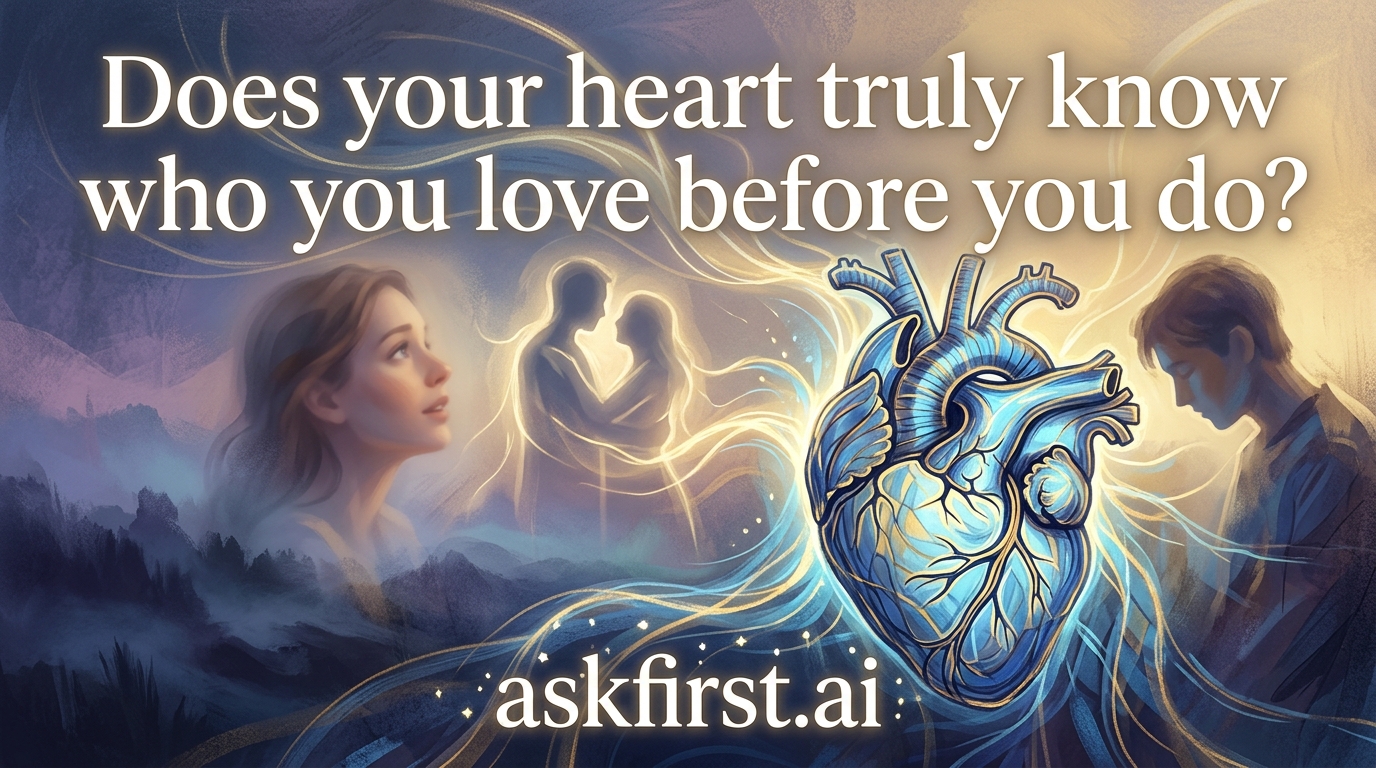
The Science of Pre-conscious Affection
The phenomenon of falling in love is frequently perceived as an emotional whirlwind, yet psychological research suggests that the human brain processes romantic attraction far faster than the conscious mind can articulate. This discrepancy between internal physiological responses and conscious recognition is often referred to as the pre-conscious evaluation of attachment.
The Biological Signaling System
When a human encounter occurs, the limbic system—the area of the brain responsible for memory and emotion—activates in mere milliseconds. Before an individual forms a coherent thought about a potential partner, the nervous system begins releasing a cascade of neurotransmitters, including dopamine, norepinephrine, and phenylethylamine. These chemical messengers operate as an internal signaling network, effectively labeling a person as a 'significant prospect' long before the prefrontal cortex attempts to rationalize the attraction.
- The Pupil Response: Studies in behavioral psychology indicate that pupil dilation occurs involuntarily when viewing individuals who trigger deep biological interest, a physiological reaction that the conscious mind cannot consciously trigger or suppress.
- Hormonal Priming: Oxytocin and vasopressin often spike during initial encounters, fostering a sense of familiarity or belonging that predates formal dating or intellectual connection.
The Curiosity Gap in Romantic Recognition
There is a profound disconnect between the 'gut feeling' and the 'conscious narrative.' Often, people find themselves strangely drawn to someone despite a perceived lack of 'logical' compatibility. This is because the heart—metaphorically representing the autonomous nervous system—processes patterns of genetic compatibility and emotional history stored in the subconscious. Evolutionary psychologists argue that this system serves as a survival mechanism, prioritizing potential mates who align with deep-seated psychological needs or biological fitness requirements that are not immediately visible to the analytical mind.
How to Identify Pre-conscious Attraction
Recognizing this phenomenon requires observing somatic markers. These are the 'leaks' of the subconscious into the physical realm:
- Unexplained Familiarity: Feeling as though one has known a person for a lifetime, even after a brief initial conversation.
- Increased Autonomic Arousal: Feeling a subtle, unexplained tension or 'buzz' when in their presence that isn't connected to stress.
- Heightened Selective Attention: Finding that, in a crowded room, the eyes return to one specific person repeatedly without an explicit command from the brain to do so.
The Role of Implicit Bias and Memory
Human attachment is heavily influenced by implicit associations. The subconscious maintains a database of experiences, childhood archetypes, and previous emotional milestones. When a new individual enters the sphere of interaction, the brain cross-references their voice, scent, and behavioral patterns against this internal repository. If the match is high, the brain signals 'love' or 'attraction' to the nervous system. By the time the person consciously acknowledges, 'I think I like this individual,' the brain has already completed the assessment phase and initiated the hormonal bonding process.
The Illusion of 'Choice'
While the conscious mind prides itself on making rational decisions regarding companionship, evidence from modern neuroscience implies that choice is often a post-hoc rationalization. We feel a pull, and then our mind constructs a story to explain it. 'I love them because they are funny,' or 'I love them because they are intelligent,' are often justifications for an attraction that began as a silent, invisible signal long before the specific qualities were even analyzed. In this sense, the 'heart' is a highly efficient, high-speed processing engine that identifies companionship value far ahead of the slow, deliberate speed of cognitive thought.
Conclusion: The Wisdom of the Subconscious
Ultimately, the sensation of 'knowing' who one loves before it is consciously acknowledged is not magic; it is a sophisticated neurobiological function. This system protects us by guiding us toward patterns that are familiar, safe, or biologically advantageous. Trusting the initial, unexplained impulse can often lead to deeper revelations about one's own desires and the nature of connection. By paying attention to these quiet, physiological nudges, one can gain deeper insight into the inner workings of the human romantic experience, bridging the gap between the unconscious biological drive and the conscious narrative of the heart.