The Evolutionary Sentinel: Why Our Memory Favors Caution
It is a pervasive human experience to vividly remember a moment of embarrassment or a narrow escape, while mundane, happy days often fade into the background. This phenomenon, known in psychology as the negativity bias, serves as a powerful testament to the evolutionary history of the human mind. The brain is not designed primarily for happiness; it is designed for survival.
The Amygdala and the Alarm System
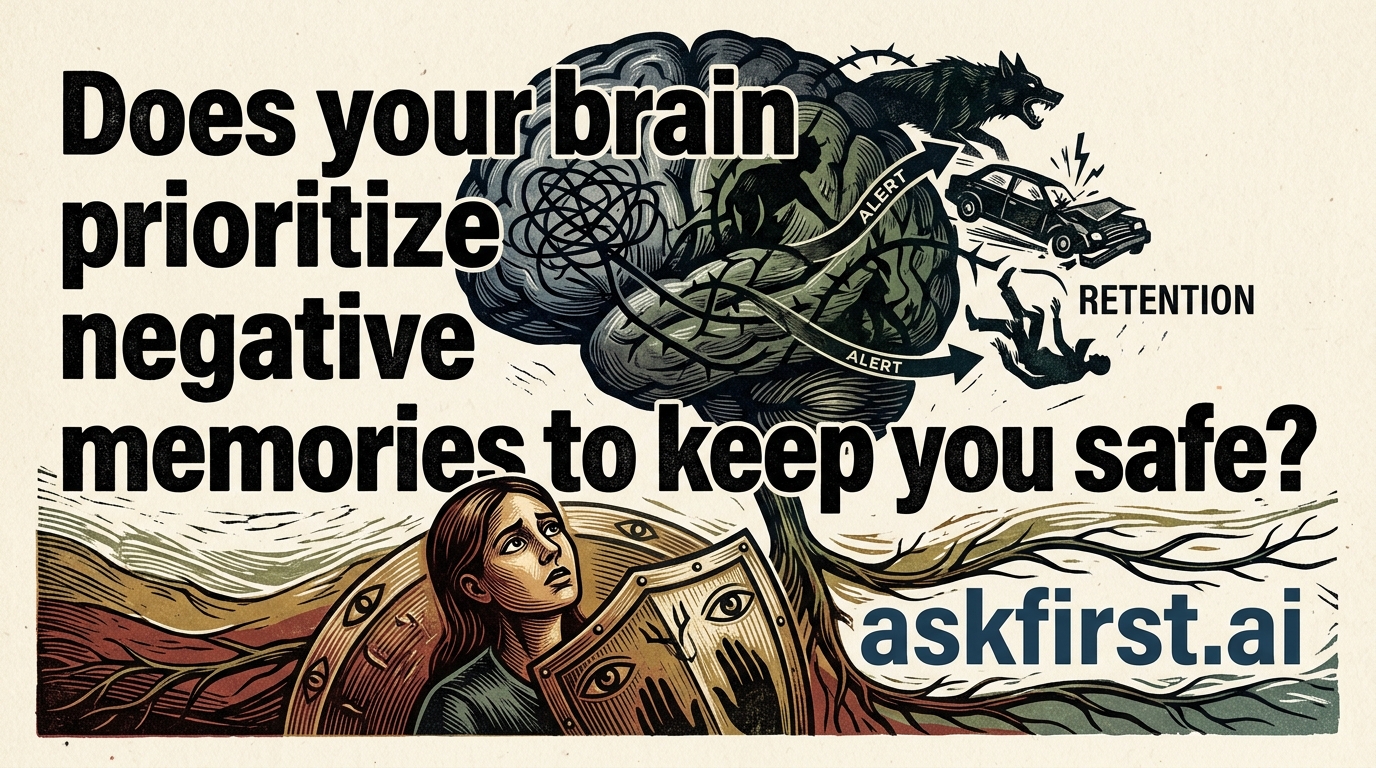
The brain functions like an intricate security network. At its core lies the amygdala, an almond-shaped cluster of nuclei responsible for processing emotions, particularly fear and threat. When the brain encounters an unpleasant or dangerous stimulus, the amygdala fires rapidly, signaling the hippocampus—the brain's librarian—to encode this information with extra intensity. This is why a single negative encounter often imprints more deeply than ten positive interactions.
From an ancestral perspective, this bias was a life-saving mechanism. A human ancestor who prioritized remembering where they found a beautiful sunset was less likely to pass on their genes than a peer who prioritized remembering exactly which bush hid a predator. This survival prioritization has been hardwired into our cognitive architecture over millions of years of natural selection.
The Science of Selective Encoding
Research indicates that our neural pathways are structurally predisposed to respond to threat cues. Neurological studies have shown that the brain allocates more neural resources to negative information. This process involves the norepinephrine system, which heightens arousal and sharpens focus, essentially highlighting specific memories as 'critical data' for future reference.
- Hyper-vigilance: By focusing on what went wrong, the brain attempts to create a predictive model to prevent a recurrence.
- Cognitive Efficiency: By labeling a negative event as 'dangerous,' the brain creates a mental shortcut—or heuristic—that allows for split-second decision-making when a similar situation arises.
Dispelling the Myth: Is It Negative or Simply Informative?
While we often perceive this tendency as 'negative,' the underlying intent is strictly protective. It is less about pessimism and more about error detection. Think of it as a internal quality-control system. If an algorithm encounters a bug, it marks that code path as problematic to ensure the system remains stable. Humans are no different. We categorize negative memories as warnings to refine our behavioral strategies.
Balancing the Scales: The Positivity Shift
Modern psychology suggests that while the negativity bias is an inherent biological default, it does not dictate our reality. Through the process of neuroplasticity, individuals can consciously alter their emotional landscapes. The practice of gratitude, for example, is not merely a social nicety; it is a cognitive exercise in 'retraining' the brain to scan for positive markers with the same intensity usually reserved for threats.
Evolutionary Advantages in a Modern Context
In the twenty-first century, the dangers we face are vastly different from those of the Pleistocene era. Yet, the same neural mechanisms remain in place.
- Risk Assessment: Understanding why we prioritize 'bad' news allows us to better manage anxiety by recognizing it as a biological alarm rather than an objective reality of our situation.
- Learning From Failure: High-level achievers often utilize this bias constructively. By analyzing what went wrong (the negative memory), they create stronger mental models for success.
Conclusion: The Brain as a Guardian
The brain does indeed prioritize memories that suggest risk, but this is a mechanism born of love for life and a drive to protect the organism. By understanding this natural bias, one can shift from being a passive recipient of these intrusive memories to an active manager of their own cognitive library. Recognize the alarm, acknowledge its protective intent, and use the clarity provided by that memory to build a safer, more resilient future. The brain is not trapping you in negativity; it is providing you with the tools of experience to navigate a complex world with vigilance and wisdom.