The Eternal Nature of Honey: Nature’s Biological Miracle
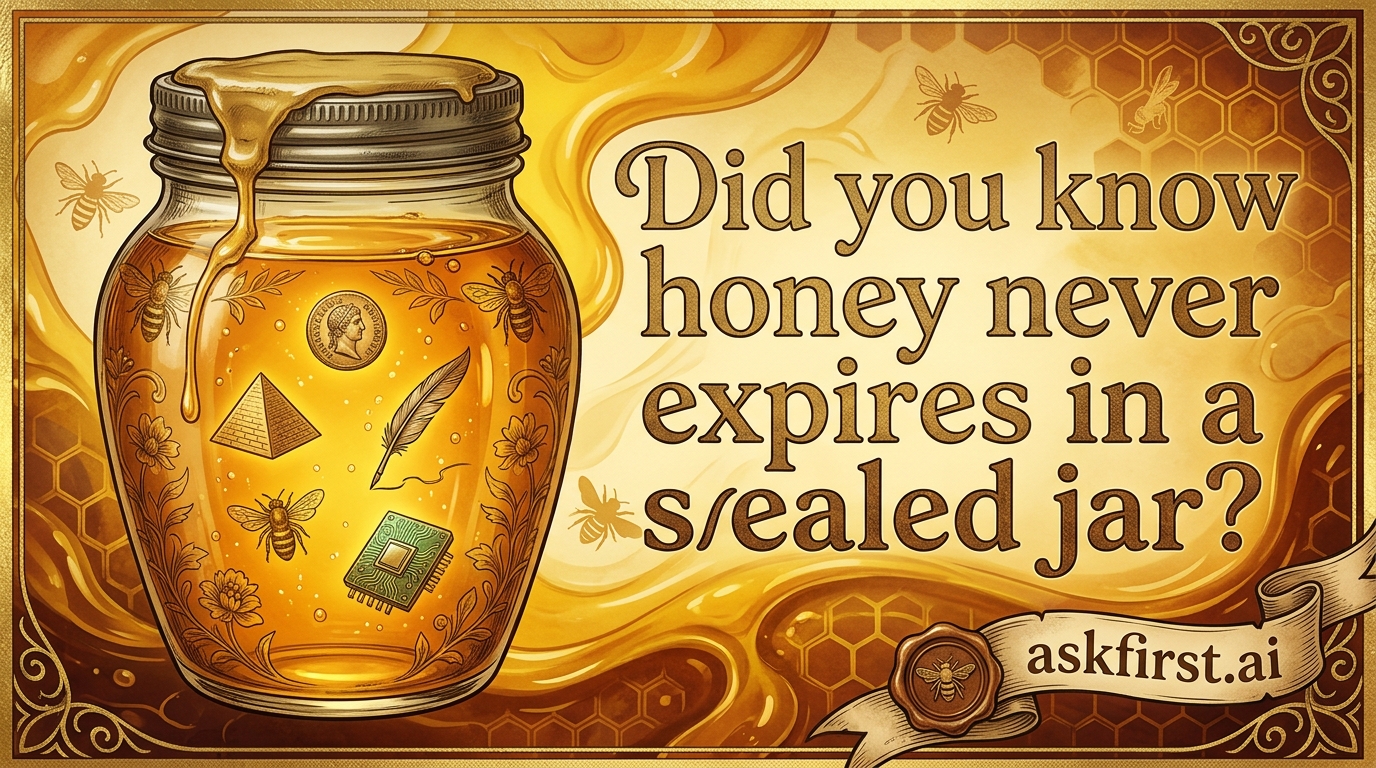
It is one of the most fascinating phenomena in the natural world: a substance that, under the right conditions, remains perfectly edible for millennia. Archeologists excavating ancient Egyptian tombs have discovered pots of honey dating back over 3,000 years that remain remarkably preserved. While the liquid may have crystallized or darkened, the substance is still chemically stable and safe for consumption. This durability is not the result of magic or secret preservatives, but rather a perfect storm of chemistry, biology, and physics.
The Chemical Composition: Why Bacteria Cannot Survive
Honey’s ability to resist spoilage is fundamentally rooted in its unique chemical profile. Bacteria and microorganisms require moisture to thrive and replicate; honey, however, is naturally hygroscopic. This means it has a very low water content and actively pulls moisture out of its environment. When a bacterium lands on honey, the honey draws the water out of the microbial cell through osmosis, effectively dehydrating the pathogen and rendering it incapable of reproduction or survival. If bacteria cannot multiply, spoilage cannot occur.
Furthermore, honey is highly acidic. With a pH typically ranging between 3.2 and 4.5, it creates an environment that is hostile to most common microbes. Few organisms can function in such a low-pH setting, acting as a secondary line of defense against the growth of mold or fermentation.
The Role of Hydrogen Peroxide
Perhaps the most compelling component of honey’s defense system is the presence of hydrogen peroxide. When worker bees collect nectar, they mix it with an enzyme called glucose oxidase which they secrete from their glands. Once the honey is stored in the comb, this enzyme breaks down glucose into gluconic acid and hydrogen peroxide. This natural production of hydrogen peroxide acts as a powerful antiseptic agent, preventing the colonization of opportunistic bacteria. This chemical interaction ensures that the honey remains pristine long after the bees have sealed the honeycomb with wax.
Crystallization: A Sign of Authenticity, Not Spoilage
A common misconception is that honey has 'gone bad' once it turns opaque or grainy. This process, known as crystallization, is entirely natural and actually serves as an indicator of high-quality, raw honey. Because honey is a supersaturated solution of sugars—primarily glucose and fructose—it is technically unstable in liquid form. Over time, the glucose molecules naturally want to bond together and form crystals. This process is accelerated by cooler temperatures or the presence of pollen grains, which act as seeds for crystal growth.
- How to Reverse Crystallization: If honey becomes too solid, it can be easily returned to a liquid state by placing the jar in a warm water bath.
- Crucial Tip: Avoid using boiling water or a microwave, as excessive heat can destroy the delicate enzymes and beneficial phytonutrients that contribute to honey’s health benefits.
Proper Storage for Eternal Longevity
While honey is technically eternal, its shelf life depends heavily on the integrity of its storage. If a jar is left open, it will absorb humidity from the atmosphere. Once the water content in the honey rises above roughly 18-20%, the protective hygroscopic effect is negated, allowing natural yeasts—which are present in almost all honey—to begin the fermentation process. To ensure honey lasts for years, follow these expert guidelines:
- Use Airtight Containers: Glass jars are the industry standard for long-term storage because they are non-reactive and provide an excellent seal against moisture.
- Keep it Cool and Dark: Fluctuations in temperature can alter the texture of honey. A pantry or cupboard away from direct sunlight and stovetops is the ideal location.
- Use Clean Utensils: Never introduce food particles or moisture into the jar by using a dirty spoon. Cross-contamination is the only significant threat to the stability of the honey.
The Historical and Medicinal Legacy
Throughout human history, various cultures have recognized honey not just as a sweetener, but as a medicine. Ancient physicians in Greece, Rome, and Egypt used it to treat skin wounds and burns. Modern science has validated these ancient practices; because honey provides a moisture-depleted, acidic, and antiseptic barrier, it effectively keeps wounds clean while promoting tissue regeneration. Today, clinical-grade honey is still utilized in modern medical settings to assist in the healing of complex infections. The fact that this substance—produced by a tiny insect—has maintained its medicinal value for centuries is a testament to the sophistication of ecological processes. In a world of fast-moving consumer goods and processed additives, honey stands as a monument to stability, proving that nature has already mastered the art of long-term preservation.