The Cognitive Science of Ambient Sound
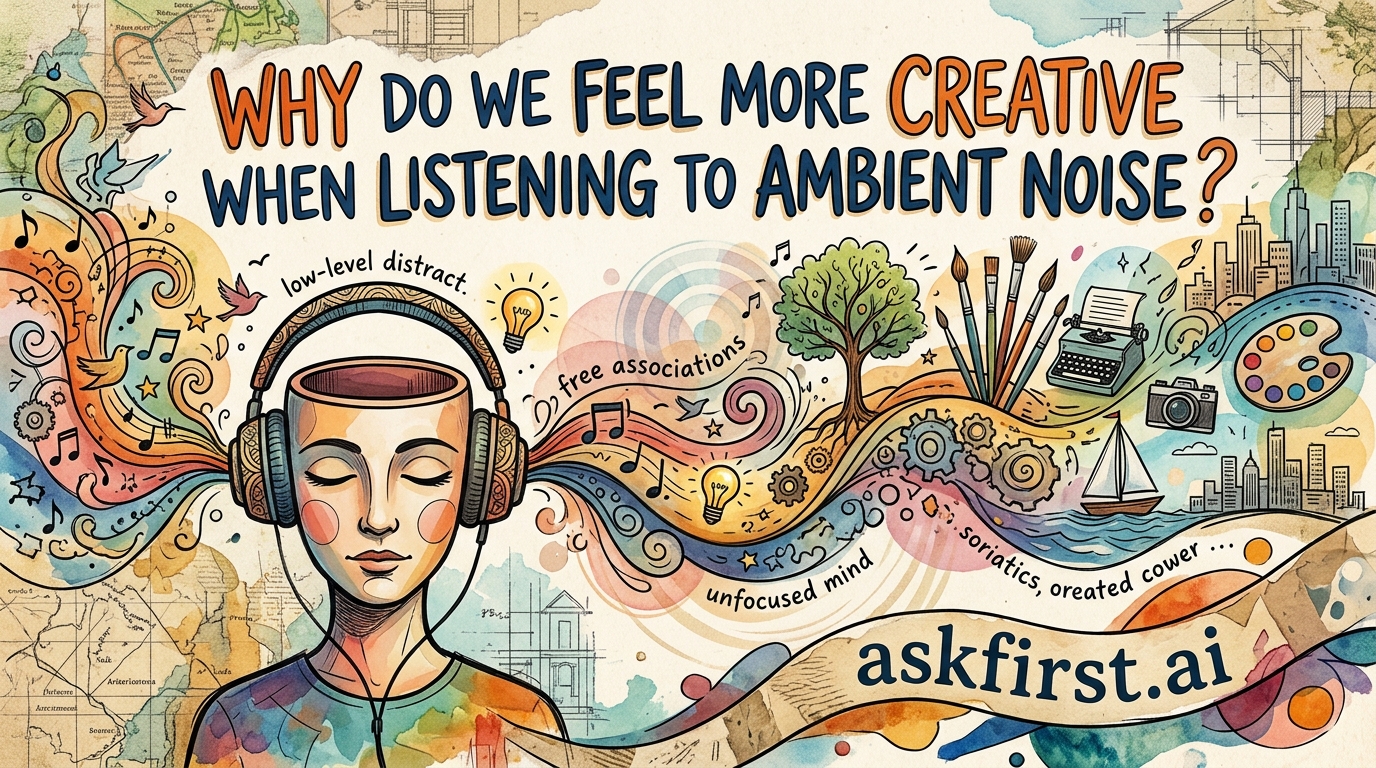
Ambient noise—often characterized as the subtle, steady hum of a coffee shop, the distant sound of rain, or the rhythmic buzz of a busy office—has long been utilized by creative professionals as an unintentional cognitive tool. While many assume that absolute silence is the optimal environment for deep work, recent scientific research suggests otherwise. The phenomenon is rooted in the concept of 'Stochastic Resonance,' a process wherein the introduction of a certain level of background noise can actually enhance the detectability of signals in a system, effectively boosting cognitive processing speed and creativity.
The Relationship Between Distraction and Divergent Thinking
At the core of this phenomenon lies the 'Distraction-Conflict Theory' and the 'Moderate Level of Distraction' hypothesis. When a person is working in total silence, the brain is often prone to over-focusing on tasks, which can lead to rigid, linear thinking. A moderate level of background noise, typically ranging between 50 and 70 decibels, acts as a mild disruption. This disruption is insufficient to break deep concentration but enough to force the brain to move away from binary, analytical problem-solving and toward more abstract, divergent thinking.
By forcing the brain to work slightly harder to process information amidst the ambient layer, the neural networks associated with imagination are activated. This 'cognitive load' prevents the mind from wandering into unproductive ruminations or getting stuck on a single mental path. Instead, the brain utilizes the ambient sound as a constant anchor, creating a state of 'flow' where the threshold for imaginative breakthroughs is lowered.
Why Silence Can Sometimes Be Oppressive
Contrary to popular belief, total silence can be counter-productive for many individuals. In a perfectly quiet room, any minor sound—a ticking clock, the settling of furniture, or the sound of one's own breathing—becomes an amplified distraction. This is known as 'sensory deprivation hyper-awareness.' When the environment is devoid of natural, non-intrusive sound, the brain becomes vigilant, scanning for anomalies. This alertness drains metabolic resources that would otherwise be allocated to creative synthesis.
Structuring the Optimal Creative Environment
To leverage the benefits of ambient noise effectively, one must consider the specific frequencies and patterns of sound. Expert recommendations emphasize the following elements:
- Non-Linguistic Backgrounds: Environments with human speech (like a conversation at a nearby table) can actually hinder productivity because the brain naturally attempts to decipher language, diverting energy from creative tasks. Instead, 'Pink Noise' or 'Brown Noise'—which are deeper and more consistent than 'White Noise'—are preferred.
- The 50-70 Decibel Sweet Spot: Research indicates that sound levels within this range create the optimal tension required to nudge the brain into a creative state. Levels higher than 85 decibels tend to induce stress and inhibit complex thought.
- Consistency is Key: The brain thrives on predictable patterns. Irregular sounds are jarring, while steady, ambient noise acts as a psychological 'blanket' that permits the subconscious to roam freely.
Practical Applications for Daily Productivity
Modern creative workflows incorporate these findings by utilizing specialized applications that simulate environments such as mountain storms, library whispers, or the interior of a train. These sounds mimic the 'acoustic comfort' of the real world while filtering out the volatile, unpredictable elements that disrupt focus. By layering these sounds over a task, the individual creates a personalized auditory environment that signals to the prefrontal cortex that it is time for exploration and innovation rather than rigid rote memorization.
Conclusion: The Balance of Stimulation
Ultimately, the quest for creativity is not about finding the 'perfect' soundless void, but about managing the cognitive energy required to navigate complex ideas. Ambient noise serves as a filter, a regulator, and a stimulator. It effectively manages the brain’s need for moderate stimulation while keeping it anchored in a focused, yet open, state. By understanding how to curate an auditory environment, individuals can effectively 'hack' their cognitive processes, ensuring that the next 'aha!' moment is supported by the optimal background frequencies.