The Evolutionary Sentinel: Decoding the Negativity Bias
Human cognition is governed by a fascinating psychological phenomenon known as the negativity bias. This principle asserts that individuals tend to pay more attention to, learn faster from, and assign more weight to negative experiences, information, and stimuli than to neutral or positive ones. While this may seem counterintuitive in a modern world filled with comfort, it is a byproduct of ancestral survival mechanisms that are deeply etched into the human neural architecture.
The Survival Foundation: A Case for Caution
From an evolutionary standpoint, the ability to identify and respond to a threat was far more important for long-term survival than the ability to recognize a benefit. If an early human missed an opportunity to eat a piece of fruit, they might experience temporary hunger. However, if they failed to notice a predator or ignored a signal of environmental danger, the consequence was final. Consequently, the brain developed a highly sensitive 'threat-detection system' that prioritizes potential risks above all else. This process is mediated primarily by the amygdala, an almond-shaped cluster of nuclei in the brain responsible for processing emotions, particularly fear and threat perception.
Neural Mechanisms at Play
When the brain encounters negative stimuli, the amygdala initiates a rapid response. Research in neuroscience, such as the studies conducted by John Cacioppo at the University of Chicago, has shown that the brain processes negative stimuli with greater electrical activity than positive ones. This heightened activation ensures that the brain allocates more cognitive resources to analyzing potential threats. This is a form of neuroplastic efficiency; by prioritizing the processing of danger, the brain attempts to minimize the likelihood of future harm through rapid pattern recognition and emotional 'tagging.'
Psychological Implications
- Decision Making: This bias leads to risk-averse behavior. People are more motivated to avoid loss than to achieve gains of equivalent value, a concept known as loss aversion in behavioral economics.
- Memory Retention: Negative memories often possess more vivid sensory and emotional detail because the brain 'marks' them as high-priority lessons for future survival.
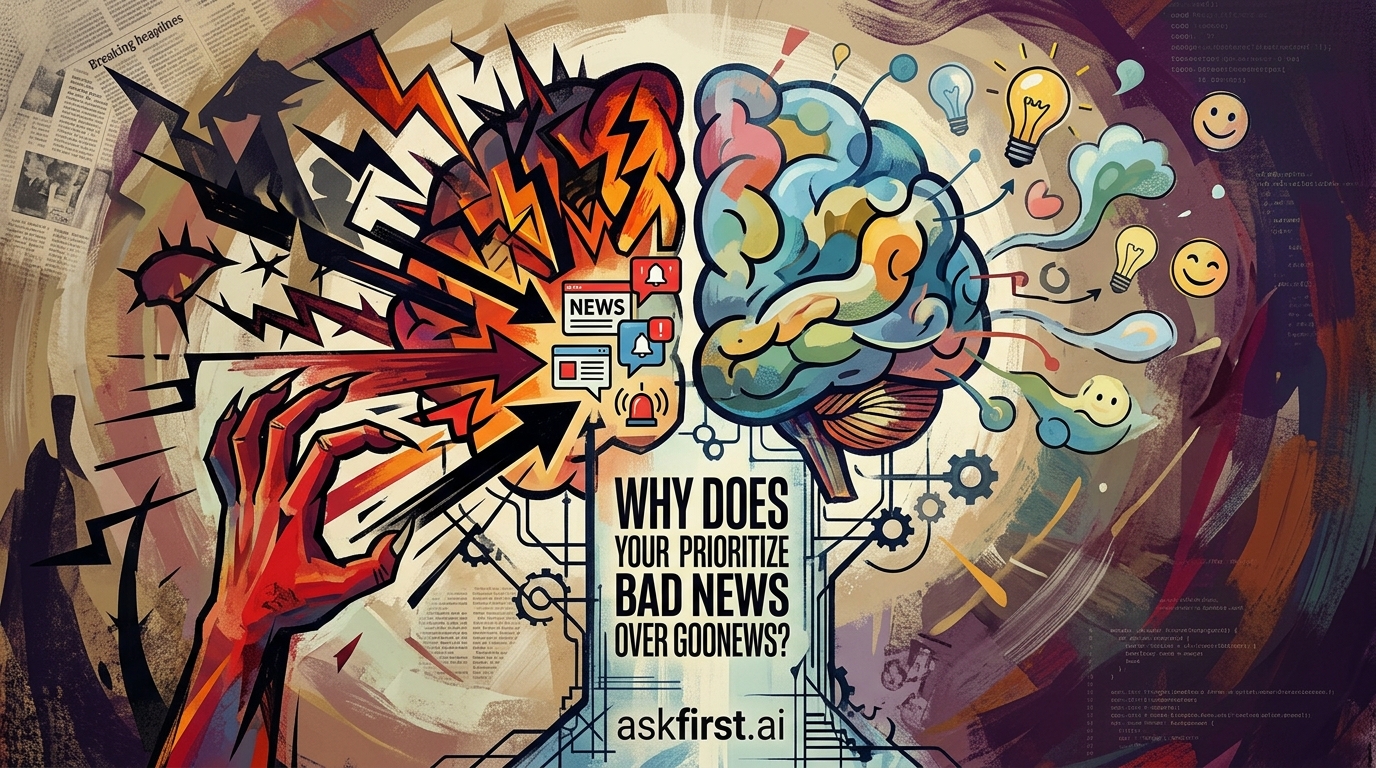
- Communication Dynamics: In media and interpersonal interactions, sensationalized 'bad news' captures attention more effectively because it taps into this pre-wired mechanism of scanning the horizon for danger.
Myths and Modern Reality
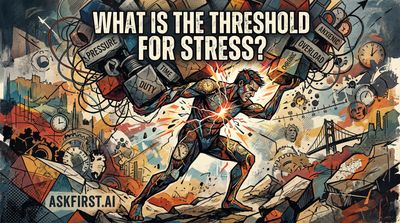
A common myth suggests that people are inherently pessimistic or doomed to misery. In reality, the negativity bias is a tool for resilience and adaptation. It is not a design flaw, but rather a functional feature that served human ancestors across millennia. The challenge in the modern world is that our environment has changed drastically, but our hardware remains that of our ancestors. We are essentially 'Stone Age' brains living in an 'Information Age' reality. This mismatch can create unnecessary stress, as the brain constant scans for 'tigers in the bushes' that no longer exist, leading to a state of heightened arousal in response to non-life-threatening information.
Cultivating Cognitive Balance
Understanding this biological predisposition is the first step toward reclaiming emotional agency. While the brain will naturally flag negative information, individuals can train their cognitive processes to mitigate the impact of the negativity bias through:
- Conscious Reframing: Actively identifying when a negative thought loop is being triggered and evaluating its true utility.
- Mindfulness Practices: Engaging in activities that strengthen the prefrontal cortex, which allows for the regulation of amygdala-driven responses.
- Positive Priming: Intentionally seeking out positive information to create a more balanced input stream, thereby tempering the default alarmist setting.
In summary, the brain is not wired to be happy; it is wired to survive. Recognizing this deep-seated prioritization of 'bad news' allows us to move beyond instinctive reactions and move toward a state of intentional awareness. By understanding the evolutionary origins of this bias, humanity can better navigate the modern information landscape without falling prey to the automatic, sometimes overwhelming, pull of the negative.