The Evolutionary Marvel of Cephalopod Biology
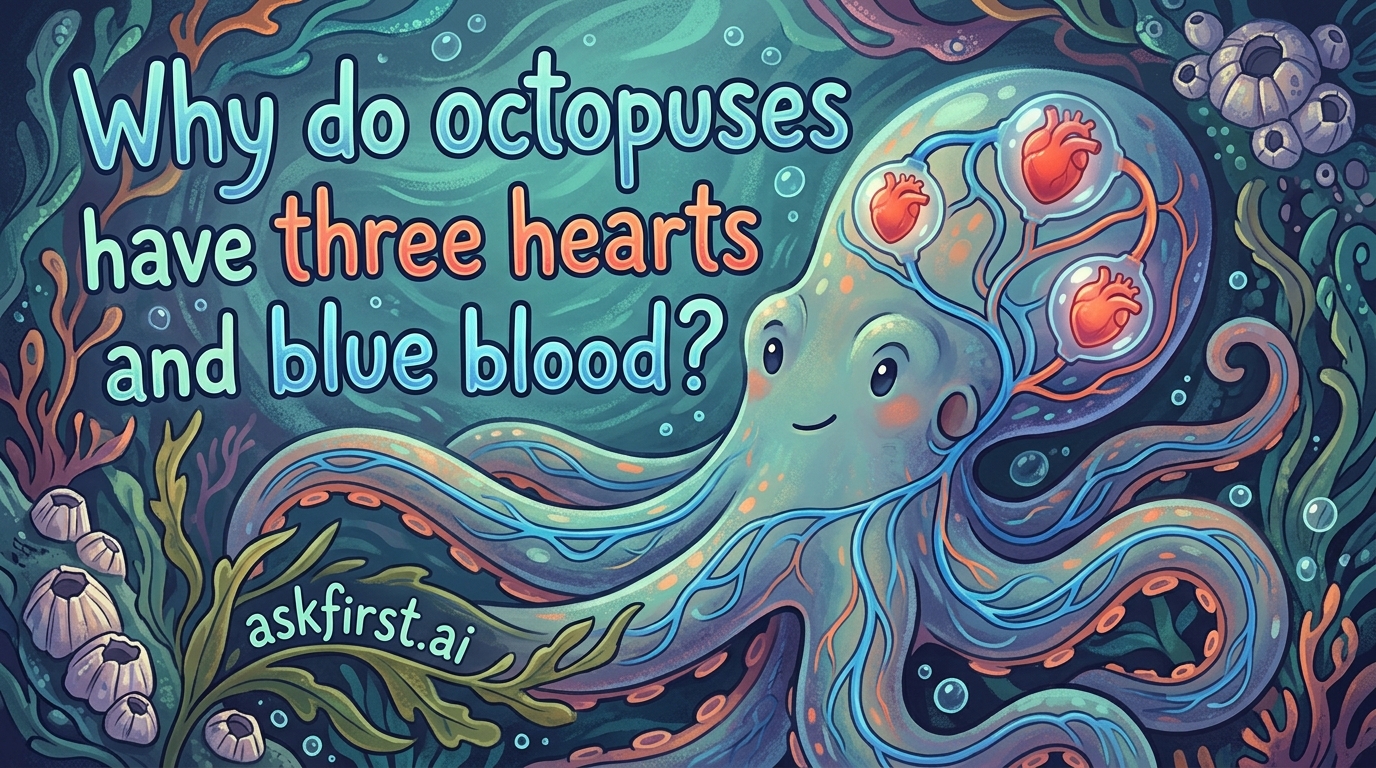
Octopuses represent one of the most fascinating examples of evolutionary divergence on Earth. Unlike mammals, which rely on a centralized, single-pump circulatory system and iron-based hemoglobin, octopuses have evolved an extraordinary physiological framework that includes three separate hearts and copper-based blood known as hemocyanin. These biological adaptations are not accidental; they are highly specialized solutions to the challenges of marine life.
The Anatomy of the Three-Heart System
To understand why an octopus needs three hearts, one must look at the physical demands of its anatomy. An octopus possesses one systemic heart and two branchial hearts. The systemic heart is responsible for pumping oxygenated blood throughout the entire body, delivering the vital nutrients required for complex brain function and muscle movement. However, the system faces a unique resistance problem because of the octopus's soft, elongated physiology and its reliance on high-pressure circulation.
- The Systemic Heart: Acts as the central hub, maintaining the pressure necessary to reach the extremities of the tentacles and the sensory organs.
- The Two Branchial Hearts: Each branchial heart is positioned next to one of the two gills. Their primary function is to pump deoxygenated blood through the gills, where gas exchange occurs. By having a dedicated heart for each gill, the octopus ensures that oxygen uptake is significantly more efficient than it would be if a single heart had to manage the resistance of the gill capillaries and the systemic circulation simultaneously.
This division of labor is critical for survival in the deep ocean, where oxygen availability can be limited. Without the dual branchial pumps, the systemic heart would likely be unable to move blood through the gills with enough pressure to sustain the octopus's high metabolic rate.
Hemocyanin: The Secret of Blue Blood
Human blood is red because it utilizes hemoglobin, an iron-containing protein that binds to oxygen. In contrast, octopuses use hemocyanin, a copper-containing protein, to transport oxygen through their bloodstream. This chemical shift is the reason why their blood appears bright blue when oxygenated and becomes colorless when deoxygenated.
Why did nature choose copper over iron? The answer lies in environmental adaptation:
- Efficiency in Cold Environments: Hemocyanin is far more efficient at binding and transporting oxygen in the cold, low-oxygen environments that many octopus species inhabit. While iron-based hemoglobin is superior at higher temperatures, it struggles to release oxygen efficiently in the near-freezing depths where some cephalopods thrive.
- Solubility: Copper-based proteins do not need to be packaged inside red blood cells to function; they remain dissolved in the hemolymph (the cephalopod equivalent of blood). This structural simplicity allows for a different circulatory flow that benefits their unique vascular pressure requirements.
The Trade-offs of Cephalopod Design
While this system is a masterpiece of adaptation, it comes with specific trade-offs. The reliance on hemocyanin means that octopuses are highly sensitive to acidity levels in the water. Ocean acidification, a result of rising carbon dioxide levels, can affect the ability of hemocyanin to bind oxygen. If the water becomes too acidic, the copper-based blood loses its efficiency, essentially suffocating the animal from the inside out.
Furthermore, the energy expenditure required to run three hearts is immense. This is why octopuses are known for their short lifespans and explosive growth rates. They live fast and die young, fueled by a high-octane, high-energy metabolism that necessitates this complex, multi-pump system. Scientists have noted that this physiological investment supports their remarkable intelligence, as maintaining a complex nervous system requires a constant and robust supply of oxygenated blood.
Conclusion
In summary, the octopus is a testament to the creativity of evolution. Its three-heart system solves the problem of high-pressure fluid movement through gill-heavy biology, while its blue blood, powered by copper-rich hemocyanin, provides an essential edge in cold, oxygen-sparse environments. By moving away from the iron-based blueprints used by vertebrates, octopuses have secured a unique niche as one of the most intelligent and capable invertebrates in the marine world. These biological features are not merely curiosities; they are essential survival mechanisms that continue to baffle and inspire researchers studying marine physiology today.