The concept of a "diamond planet"—scientifically classified as a carbon planet—captures the human imagination because it suggests a world of unimaginable opulence. However, from the perspective of planetary science, geology, and human physiology, a world composed primarily of diamond (or more accurately, crystalline carbon) would be a hostile, lethal environment that presents insurmountable challenges to biological life as we know it.
The Geological Reality of a Carbon Planet
To understand if humans could survive, we must first define what a diamond planet actually is. Astronomers have identified exoplanets like 55 Cancri e, which are theorized to have a high carbon-to-oxygen ratio. In such environments, the interior pressure is so immense that carbon is compressed into thick layers of graphite and diamond.
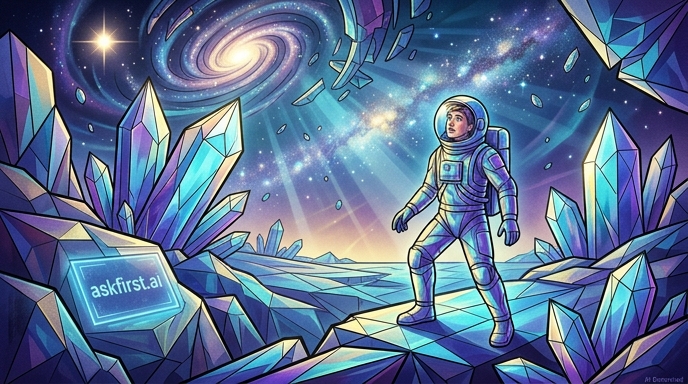
Unlike Earth, which is dominated by silicate rocks, iron, and water, a carbon planet would have a surface chemistry defined by carbides and elemental carbon. There would be no silicate-based sand, no granite, and no clay. Instead, the surface might be covered in thick, jagged fields of diamond, graphite, and perhaps oceans of liquid hydrocarbons. For a human explorer, this presents the first major hurdle: the lack of a stable, breathable, or chemically benign surface.
Atmospheric Composition and Surface Pressure
A planet made of diamond would likely possess an atmosphere radically different from Earth’s. On a carbon-rich world, the atmosphere would be heavily saturated with carbon-based gases—primarily carbon monoxide, carbon dioxide, and methane.
Without the oxygen-nitrogen cycle that sustains Earth’s biosphere, a human would find the atmosphere immediately toxic. Furthermore, because these planets are often massive "Super-Earths" (due to the density of carbon material), the surface gravity would likely be significantly higher than 1G. A human weighing 70 kilograms on Earth could weigh 150 to 200 kilograms on a diamond planet. This would cause severe cardiovascular strain, skeletal stress, and eventually, organ failure.
The Thermal and Radiant Environment
Diamond is an exceptional thermal conductor. On a planet where the crust is composed of diamond, the heat transfer from the planet’s core to the surface would be incredibly efficient. If the core remains volcanically active, the surface temperatures would be extreme, potentially reaching hundreds of degrees Celsius.
Conversely, if the planet is geologically dead, the surface would be frozen solid. In either scenario, the environment is thermally hostile. Humans require a very narrow "Goldilocks" temperature range to maintain metabolic functions. The diamond surface would provide no thermal insulation, and the lack of a protective magnetosphere—common in carbon-rich, non-metallic planetary cores—would expose any visitor to lethal doses of cosmic radiation.
The Absence of Biological Infrastructure
Perhaps the most significant barrier to human survival is the total absence of the "building blocks" of life. Humans are carbon-based, but our existence depends on the complex interplay of oxygen, nitrogen, hydrogen, and phosphorus.
- Water Scarcity: A diamond planet is inherently dry. Without oxygen to bond with hydrogen, the formation of water ($H_2O$) is statistically unlikely or restricted to trace amounts. Humans cannot survive more than a few days without hydration.
- The Food Chain: There would be no photosynthesis. Plants require minerals and water to thrive; on a diamond planet, the soil chemistry would be dominated by harsh carbides, which are toxic to Earth-based flora. Without a base level of biological production, there is no food source.
- Resource Extraction: While a diamond planet sounds wealthy, the materials are inaccessible. The "diamond" is likely locked deep within the mantle under gigapascals of pressure. The surface would be a jagged, razor-sharp wasteland of carbon allotropes that would shred standard EVA suits and equipment within minutes.
Psychological and Physical Atrophy
Even if we could manufacture a pressurized, oxygen-rich habitat to protect ourselves from the toxic atmosphere, the psychological toll of living on a diamond planet would be profound. The sky would likely be hazy with hydrocarbon smog, blocking out the stars and providing a perpetually dark or orange-tinted horizon. The landscape would be monochromatic, devoid of the vibrant greens and blues of Earth.
The structural integrity of a diamond planet also poses a risk of "starquakes." As the carbon mantle settles or shifts under the weight of its own density, the planet would undergo violent seismic events. These tremors, combined with the lack of a breathable atmosphere and the extreme gravitational pull, would make long-term survival impossible without a self-contained, subterranean city that would essentially be a high-tech coffin.
Conclusion: A Scientific Dead End
In summary, a planet made of diamond is a geological curiosity rather than a potential home for humanity. While it is a testament to the immense pressures and diverse chemistry of the universe, it lacks the essential life-support systems—liquid water, a breathable atmosphere, a temperate climate, and a foundational ecosystem—that have allowed humans to evolve and thrive. We are creatures of the silicate-water world, and we are fundamentally incompatible with the cold, hard, and toxic reality of a diamond planet. If we were to visit such a place, we would be nothing more than fragile observers in a landscape that is, quite literally, designed to destroy us.