The Architecture of Interaction: How We Communicate With Our Environment
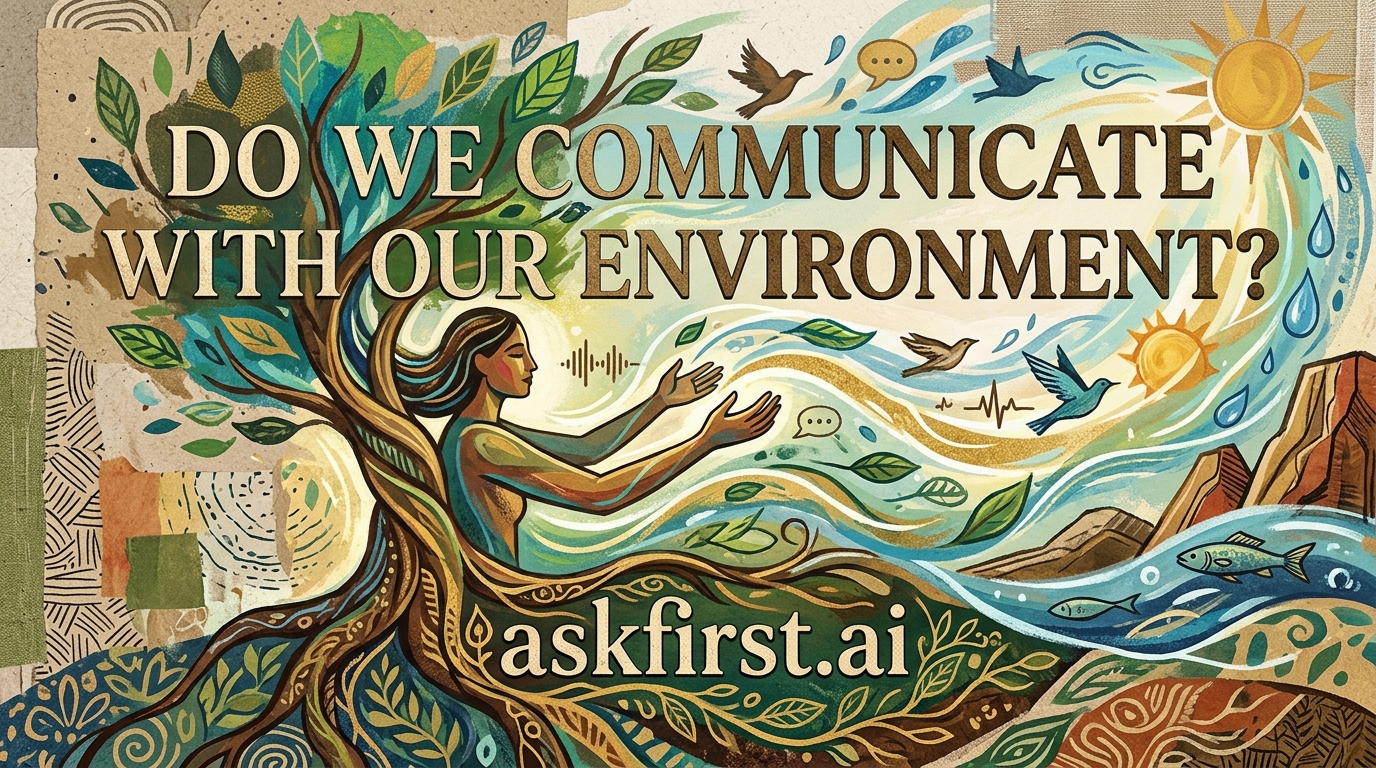
Human existence is not defined by isolation, but by a continuous, bidirectional exchange of information with the world around us. We often fall into the trap of viewing communication as a strictly linguistic or social phenomenon—something that occurs only between two conscious, speaking agents. However, in the fields of cognitive science, environmental psychology, and biology, it is understood that we are in a state of constant, fluid dialogue with our surroundings. This interaction is not merely passive observation; it is a sophisticated, multisensory feedback loop that shapes our biology, our mental health, and the physical configuration of our societies.
The Biological Feedback Loop: Sensory Integration
At the most fundamental level, our bodies "communicate" with the environment through sensory transduction. The environment provides a stream of data—light, sound, texture, chemical compounds—which our nervous system interprets, categorizes, and reacts to. This is a form of non-verbal communication where the environment acts as the "sender" and our brain acts as the "receiver."
In his seminal work The Ecological Approach to Visual Perception, psychologist James J. Gibson introduced the concept of "affordances." Gibson argued that we do not perceive the environment as a set of objective, neutral objects, but as a set of possibilities for action. For example, a chair "communicates" its function to us through its shape and height. We do not need to read a label to know it is for sitting; our brain instantly processes its geometry in relation to our body. This is a functional dialogue: the environment suggests a behavior, and we respond accordingly.
Environmental Psychology and the Architecture of Mood
Beyond simple utility, our environment communicates emotional and psychological cues that dictate our internal states. This is the core premise of environmental psychology, a field pioneered by researchers such as Roger Ulrich. In his landmark 1984 study published in Science, Ulrich demonstrated that hospital patients with a view of nature recovered faster and required less pain medication than those looking at a brick wall.
The environment here is effectively "speaking" to our nervous system. Natural fractals, soft light, and organic patterns signal safety and abundance to the human brain, which evolved in savanna-like landscapes. Conversely, sterile, high-contrast, or overly noisy environments signal stress or threat. We are constantly adjusting our internal neurochemistry—releasing cortisol or oxytocin—based on the "messages" we receive from our architecture and urban planning. When we design spaces, we are actually encoding communication into the walls, lighting, and layout, which then dictate the mood and behavior of the occupants.
The Feedback Loop of Human Impact: Shaping the World
The communication is not one-way. Humans are unique in our ability to modify our environment to better suit our needs, creating a recursive feedback loop. This is what geographers often call the "Anthropogenic Landscape." Every building we erect, every path we pave, and every garden we plant is a form of communication—a physical statement of human intent.
When we build a city, we are externalizing our values. A city with wide sidewalks and public parks communicates a value of community and pedestrian health. A city defined by sprawling highways and gated communities communicates a value of individualism and transit-based isolation. As noted by Jane Jacobs in her definitive book The Death and Life of Great American Cities, the physical environment is a "living document" that dictates how social life unfolds. If the environment is designed well, it encourages spontaneous social interaction. If it is designed poorly, it forces us into defensive, closed-off behaviors. We are, in effect, writing our social philosophy into the very concrete and steel of our surroundings.
The Digital Interface and Ambient Communication
In the modern era, the nature of this communication has shifted toward the digital. We now inhabit "hybrid environments" where physical spaces are overlaid with digital information. Through smartphones and augmented reality, our environment now "speaks" to us in real-time. A restaurant’s storefront may be physical, but our interaction with it is mediated by a digital rating, an availability status, and a menu on a screen.
This shift represents a new layer of communication. We are no longer just reacting to the physical properties of a space; we are reacting to the data-driven reputation of that space. This creates a hyper-responsive environment where the "dialogue" is accelerated. We leave reviews, we tag locations, and we share experiences, effectively "writing back" to our environment and changing how others will perceive and interact with it in the future.
Conclusion: A Reciprocal Existence
To ask if we communicate with our environment is to ask if we are alive. We are not separate from the world; we are embedded within it. From the way our circadian rhythms align with the rising sun to the way our cities reflect our societal priorities, we are in a perpetual state of exchange.
The environment is not a static stage upon which we play out our lives; it is an active participant in our biology and our culture. By understanding that every space we inhabit is sending us messages, and that every action we take is a message sent back to the world, we can become more intentional. We have the capacity to design environments that promote human flourishing and to read the environment for the wisdom it provides. We are, and will always be, in a deep, inseparable conversation with the world we inhabit.