The Neural Construction of Dreamscapes
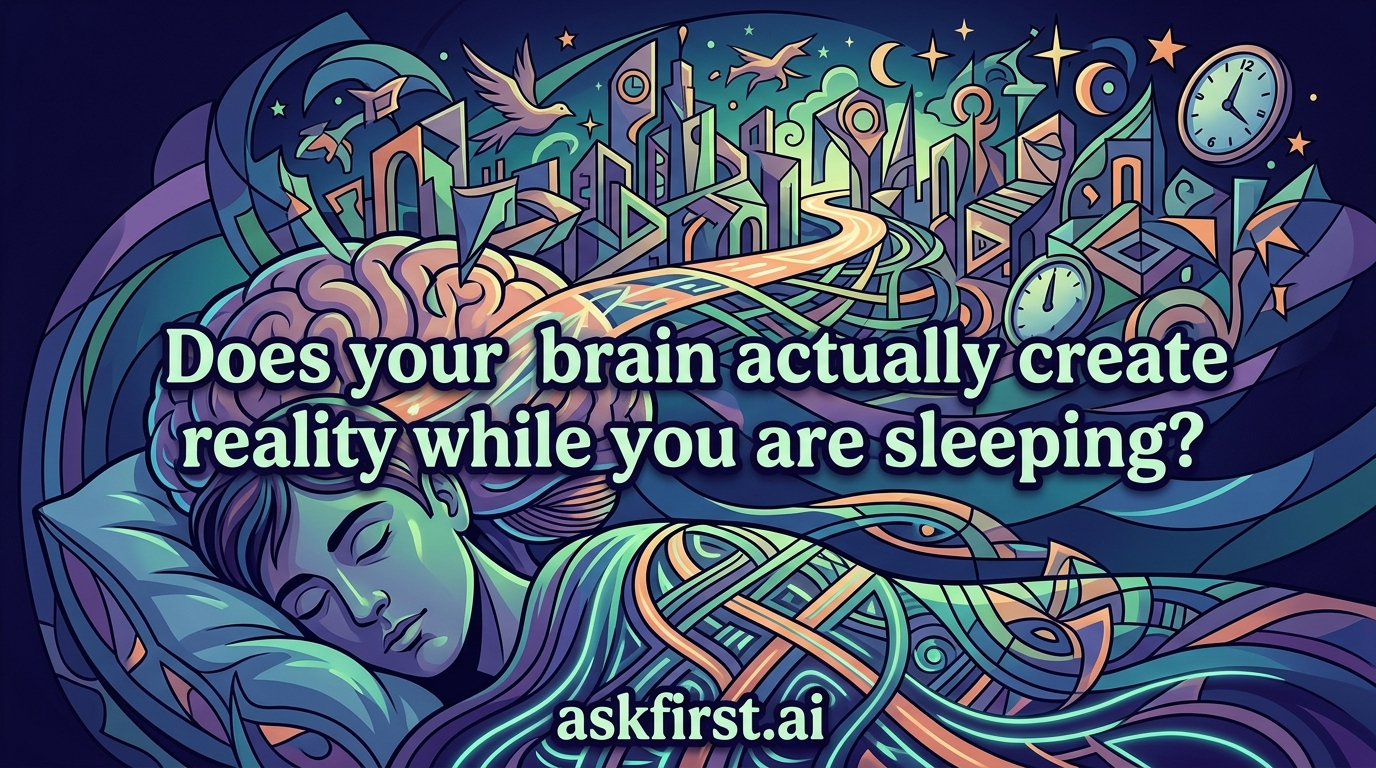
The question of whether the brain creates reality during sleep touches upon one of the most profound mysteries in neuroscience: the nature of conscious experience versus external input. When a person sleeps, the brain does not merely 'turn off.' Instead, it shifts into a highly active, autonomous state known as REM (Rapid Eye Movement) sleep. During this phase, the brain performs an extraordinary feat: it decouples from the external environment and begins to construct a simulated reality that feels entirely authentic to the dreamer.
The Mechanism of Internal Projection
During wakefulness, the brain acts as a processor of external data, translating photons and sound waves into our conscious perception of the world. However, when sleep onset occurs, the sensory gating mechanisms—specifically the thalamus—filter out incoming signals from the environment. Once this external data stream is severed, the brain turns inward, accessing its vast library of memories, emotional associations, and abstract concepts.
- The Role of the Prefrontal Cortex: During dreaming, the dorsolateral prefrontal cortex—the area responsible for logical reasoning, planning, and self-awareness—exhibits reduced activity. This explains why dreams often contain bizarre or impossible scenarios that the dreamer accepts without question.
- The Visual Cortex Engagement: Even without light entering the eyes, the primary visual cortex remains active, allowing the brain to 'see' landscapes, faces, and objects that are generated purely from internal neural firing patterns.
Is it Reality or Simulation?
From a purely neurological perspective, the brain does not distinguish between 'real' stimuli and 'internally generated' stimuli at the level of subjective experience. If the brain fires neurons associated with the color red or the sensation of running, the conscious mind experiences these sensations as if they were occurring in physical space. This process confirms that reality, as we experience it, is always a neural construction. Sleep simply allows the brain to run this construction process without the constraints of sensory anchors.
Scientific Perspectives and Theories
Several neurobiological theories provide context for why this internal reality creation is so vital to human function:
- Memory Consolidation: The brain replays events from the day, effectively 'offline' processing information. This helps shift memories from short-term storage (the hippocampus) to long-term storage (the neocortex).
- Threat Simulation Theory: Evolutionary biologists suggest that the brain creates dangerous or stressful scenarios during sleep as a form of 'rehearsal.' By navigating these simulated realities, the brain prepares the organism for potential challenges in the physical world.
- Emotional Regulation: Dreams allow the brain to process intense emotional baggage in a safe, decoupled state. By experiencing these emotions within a dreamscape, the neural pathways are effectively 'buffered' against potential trauma.
Why Dreams Feel 'Real'
The sensation of presence—the feeling that one is truly 'somewhere'—is facilitated by the parietal cortex and the vestibular system. Even while lying perfectly still in bed, the brain can construct the feeling of motion, gravity, and spatial orientation. When these circuits fire, the internal simulator successfully convinces the mind that the dream reality is the only reality present. This is the reason why, upon waking, there is often a fleeting moment of confusion or 'sleep inertia' as the brain recalibrates to external sensory input.
Conclusion: The Continuum of Experience
To answer the question definitively: Yes, the brain creates a valid, immersive reality while you sleep. While this reality lacks the rigid physical laws of the waking world, it is built from the same biological components and carries significant psychological weight. The brain is an incessant generator of narratives; whether it is processing the light of the sun or the firing of its own synaptic patterns, it remains an engine of creation. Recognizing that your reality is essentially a 'controlled hallucination'—whether you are awake or asleep—is the first step toward understanding the immense complexity of the human mind. The dreamscape is not an illusion; it is a profound testament to the brain's ability to create, reorganize, and interpret existence without needing the outside world at all.