The Science of Palatability: Decoding the Fast Food Addiction
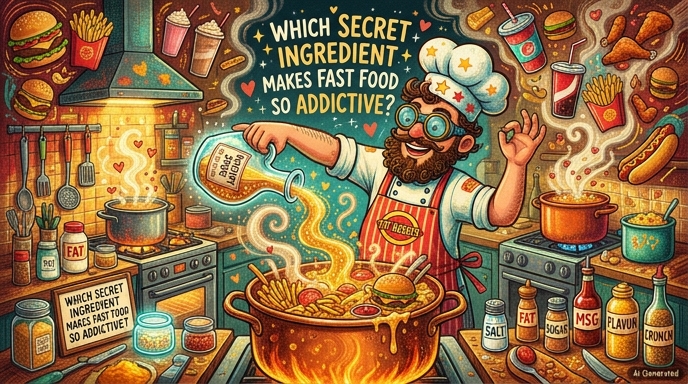
The addictive quality of fast food is not the result of a single "secret" ingredient, but rather a sophisticated, engineered synergy of sensory inputs known in the food industry as the "Bliss Point." This concept, pioneered by food scientist Howard Moskowitz, refers to the precise combination of sugar, fat, and salt that triggers the brain’s reward system, effectively overriding the body’s natural satiety signals. While consumers often point to MSG or specific flavor enhancers as the culprits, the reality is a complex orchestration of chemical, physical, and psychological triggers designed to maximize consumption.
1. The Holy Trinity: Sugar, Fat, and Salt
The foundation of modern fast food is the strategic calibration of the "Big Three." In nature, these nutrients were historically scarce, leading humans to evolve an evolutionary drive to seek them out for survival. Fast food manufacturers exploit this biological imperative through:
- Sugar: Beyond the obvious presence in sodas and buns, sugar is added to savory items like ketchup, pickles, and burger patties. It masks bitterness, enhances texture, and provides an immediate dopamine spike in the brain’s nucleus accumbens.
- Fat: Fat provides the "mouthfeel"—the luxurious, creamy, or crispy texture that signals caloric density. It coats the tongue and lingers, creating a sensory experience that feels rewarding and comforting.
- Salt: Sodium is the ultimate flavor amplifier. It suppresses bitterness and enhances the perception of other flavors. Critically, salt also stimulates the release of dopamine, reinforcing the desire to continue eating even when the stomach is full.
2. The Role of "Vanishing Caloric Density"
One of the most insidious secrets of fast food engineering is a phenomenon called vanishing caloric density. Foods like Cheetos or certain fast-food fries are designed to melt in the mouth quickly. When a food dissolves rapidly, the brain is tricked into thinking that the calories have disappeared, which prevents the satiety mechanism from "registering" the intake. Because the brain doesn't receive the signal that you have consumed a significant amount of energy, you are compelled to continue eating. This is why it is effortless to consume an entire large order of fries, but difficult to eat an equivalent amount of steamed broccoli or lean protein.
3. Sensory-Specific Satiety and Variety
The human brain is wired to crave variety—a survival mechanism that encouraged our ancestors to seek out different nutrient sources. Fast food chains utilize sensory-specific satiety to bypass this. If a meal is monotonous, the brain eventually loses interest. However, if a meal contains a variety of textures—the crunch of a lettuce leaf, the chewiness of the bun, the smoothness of the special sauce, and the saltiness of the patty—the brain remains engaged for longer. By layering these sensations, fast food prevents the palate from becoming "bored," allowing for higher consumption rates.
4. The Hidden Influence of MSG and Umami
While monosodium glutamate (MSG) has faced social stigma, it is the primary driver of umami, the fifth basic taste. Umami is the "savory" profile found in glutamates. Fast food relies heavily on hydrolyzed vegetable proteins, yeast extracts, and natural glutamates to provide a "meaty" depth that makes the food taste more satisfying than home-cooked alternatives. These compounds act as a chemical siren song, signaling to the brain that the food is rich in protein, even when the actual nutritional value is low.
5. Dynamic Contrast and Texture Engineering
Beyond chemistry, the physical structure of fast food is scientifically optimized. Dynamic contrast is the combination of different sensations in a single bite—for example, the contrast between a crispy, fried exterior and a soft, molten interior. This sensory contrast is highly stimulating to the brain. Food scientists invest millions of dollars into developing textures that provide "auditory feedback," such as the specific frequency of a "crunch." Studies show that the louder the crunch, the more delicious the consumer perceives the food to be, as the sound reinforces the perception of freshness and high quality.
6. The Psychological Loop: The Reward Circuit
The ultimate "secret" is that these foods are designed to be hyper-palatable. When you consume this specific combination of sugar, salt, and fat, your brain releases opioids and dopamine. This creates a neural pathway similar to the one activated by addictive substances. Over time, the brain begins to anticipate the reward before the food is even consumed. This is why the mere sight of a recognizable fast-food logo can trigger cravings; the brain is conditioned to associate the brand with the chemical hit it is about to receive.
In summary, there is no single "magic" substance. The addictiveness of fast food is the product of industrial alchemy. It is a calculated manipulation of human biology, using the interplay of texture, chemical flavor enhancers, and the precise balancing of macronutrients to ensure that the consumer remains in a state of perpetual craving, effectively turning the act of eating into a feedback loop that is difficult to break.