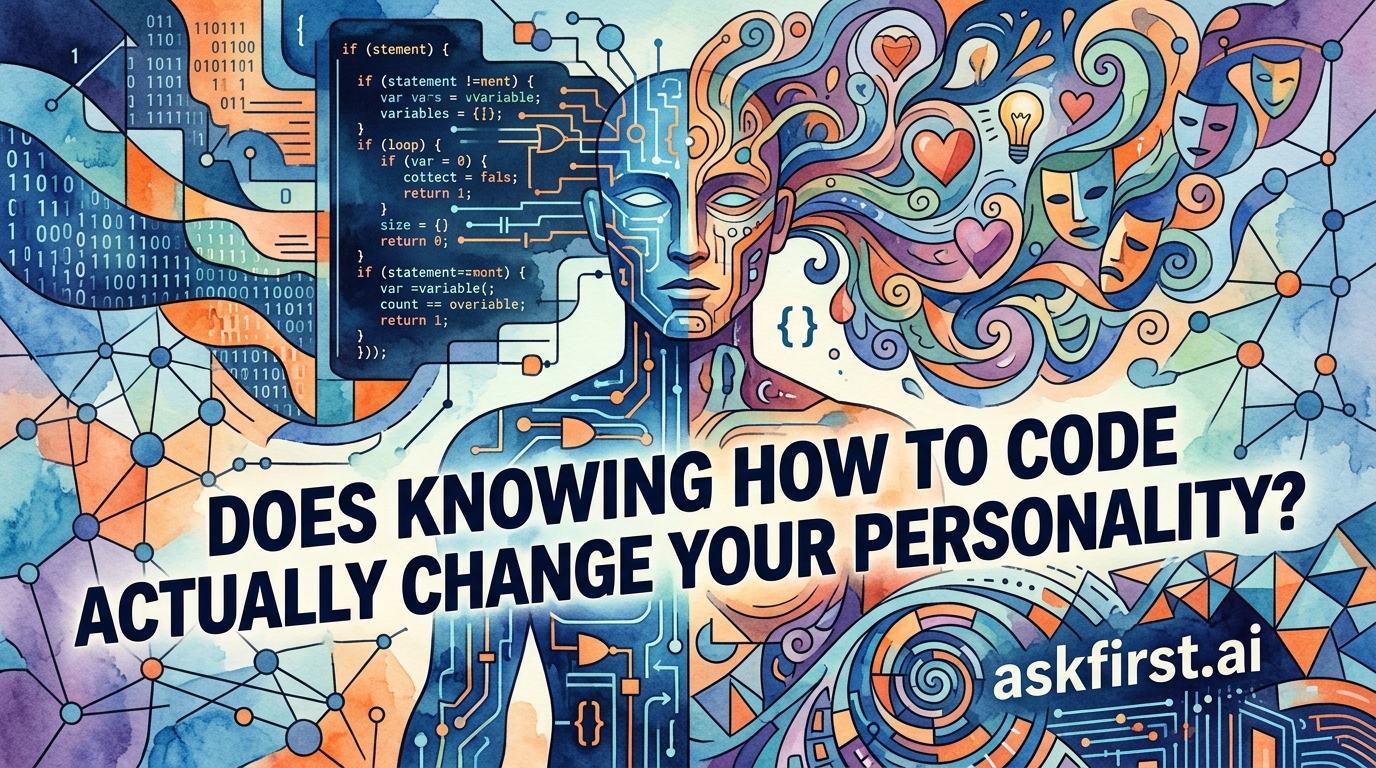
The Cognitive Metamorphosis: How Coding Rewires the Mind
The inquiry into whether the act of programming fundamentally alters human personality is not merely speculative; it touches upon the intersection of neuroplasticity, logic, and behavioral psychology. While one might assume that coding is simply a vocational skill, research suggests that the sustained practice of computational thinking fosters specific cognitive habits that inevitably spill over into daily behavior, social interactions, and decision-making frameworks. By adopting a 'programmer’s lens,' individuals undergo a subtle but profound evolution in how they perceive challenges and organize their thoughts.
The Architecture of Computational Thinking
At its core, coding necessitates decomposition. A daunting, monolithic problem is broken down into granular, manageable components. This habit of mind often translates into a more methodical approach to real-world obstacles. Instead of feeling overwhelmed by complex life scenarios, those with coding experience tend to subconsciously seek the 'edge cases' or the 'root cause' of an issue. This analytical shift minimizes panic and maximizes efficiency, as the brain becomes conditioned to view chaos as a series of fixable bugs rather than insurmountable barriers.
Debugging the Ego: Tolerance for Failure
Perhaps the most significant personality shift observed in developers is the transformation of the relationship with failure. In the programming world, bugs are not moral failings; they are data points. When a feature fails to compile, the coder does not conclude that they are incompetent; they investigate the syntax. This iterative cycle of trial, error, and refinement—known as the feedback loop—inculcates a growth mindset. Psychologically, this detachment from failure reduces anxiety and defensiveness. Over time, this resilience becomes a trait, allowing the individual to remain calm and objective when encountering setbacks in interpersonal relationships or professional high-stakes environments.
The Optimization Impulse
Coding encourages a predisposition toward optimization. Whether it is refining an algorithm for better time complexity or streamlining a daily workflow, the urge to automate and improve becomes a default mental state. This can manifest as increased productivity, but it also impacts social personality. The desire for logical consistency can lead to a more direct communication style. While this facilitates clarity, it can occasionally manifest as bluntness, as the brain seeks the most 'efficient' path to information exchange, sometimes bypassing the nuances of social fluff that human communication often requires.
Enhanced Pattern Recognition
Programming demands constant engagement with logic and structural patterns. Neurologically, this strengthens the neural pathways associated with deductive reasoning. Studies in cognitive neuroscience suggest that engaging in complex, rule-based systems influences how humans categorize information in other areas of life. A person who codes often notices systems where others see random occurrences. This ability to foresee potential outcomes based on current 'logic flows' can make them appear more cautious or observant. This heightened pattern recognition is a double-edged sword: it provides an advantage in strategic planning but can sometimes lead to 'overthinking' scenarios that are governed more by emotion than by logic.
Empathy Through Abstraction
While stereotypes often suggest that coders are detached, the reality is that high-level software engineering requires profound empathy—specifically, 'user empathy.' Developers must constantly step outside their own perspective to anticipate how a user might interact with their creation. This practice of constant perspective-taking effectively exercises the brain's social cognition centers. By repeatedly simulating the user's journey, the coder may develop a more intuitive understanding of diverse viewpoints, potentially leading to increased patience when interacting with those who do not share the same technical mental model.
Conclusion: A Permanent Shift
The practice of coding acts as a form of intellectual weight training. It reinforces the prefrontal cortex, encourages systematic problem-solving, and demystifies failure. While it does not change one's core values or temperament, it absolutely recalibrates the method by which one interacts with the world. By replacing the fear of the unknown with the curiosity of the debug, the coder adopts a personality characterized by resilience, structural awareness, and a relentless drive for optimization. The transition from 'passive observer' to 'active architect' is, perhaps, the most profound personality change that programming imparts.