The Cognitive Metamorphosis: How Programming Shapes the Human Mind
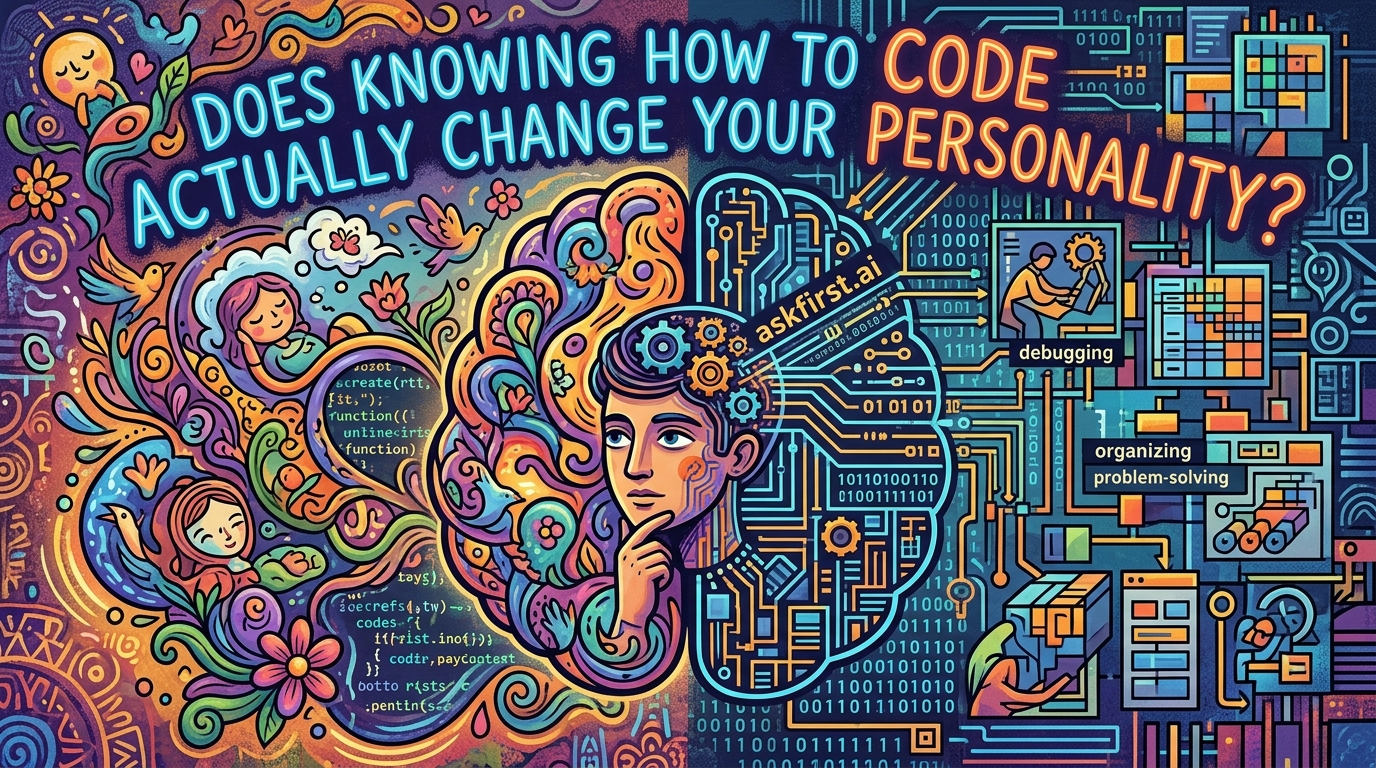
Does acquiring the skill of computer programming trigger a fundamental shift in how an individual perceives the world? The intersection of computer science and cognitive psychology suggests that learning to code acts as a catalyst for cognitive restructuring. This process goes far beyond merely memorizing syntax or understanding logic gates; it involves the internalization of systemic thinking, resilience, and analytical abstraction. As practitioners immerse themselves in the digital landscape, they often adopt a mindset defined by algorithmic problem-solving that permeates their daily decision-making processes.
The Shift Toward Computational Thinking
Computational thinking is a foundational skill that reconfigures the way humans approach obstacles. When a programmer encounters a challenge, they inherently break it down into modular, manageable components. This technique, known as decomposition, is a hallmark of coding. Over time, this becomes a habit of mind. Whether navigating a complex bureaucratic process or organizing a household, the programmer views life through the lens of workflows and potential failure points. This transformation is not a change in moral character, but rather a profound shift in cognitive architecture. The individual stops reacting emotionally to barriers and starts analyzing the logic behind the impediment.
Debugging the Inner Self: Resilience and Persistence
One of the most significant personality traits reinforced by coding is radical persistence. The act of debugging—searching for a microscopic error within thousands of lines of code—requires an immense amount of patience and emotional regulation. This repetitive cycle of failure, identification, and resolution builds a 'growth mindset' that psychologists like Carol Dweck have identified as essential for long-term success. Programmers frequently experience a phenomenon where they must separate their self-worth from the output. In the early stages, errors might be interpreted as personal failings, but seasoned coders eventually learn that the code is simply an objective entity that requires optimization. This detachment is a valuable psychological tool that promotes emotional stability in other life areas.
Structural Thinking and Cognitive Rigidity
While the benefits are immense, the shift toward a highly logical worldview can have unintended consequences. Some studies suggest that constant immersion in logical systems can foster a level of cognitive rigidity. When everything in the brain is structured to follow if-then statements, ambiguity in human relationships can become a source of frustration. Understanding this trade-off is crucial: while coding enhances the ability to navigate complex data, it requires conscious effort to maintain the flexibility needed for social empathy and intuitive human interaction. Recognizing this allows the programmer to cultivate a balanced persona—one that utilizes logic to structure the world while remaining open to the fluid nature of human emotions.
Analytical Decision-Making as a Way of Life
Beyond technical skill, coding encourages a penchant for systemic efficiency. This often manifests in the 'refactoring' of real-world habits. Just as a programmer identifies redundant processes in code, they begin to identify inefficiency in their physical environment. This tendency is not necessarily a personality 'change' but rather an expansion of observational capabilities. The world begins to look like a series of interconnected systems. This perspective encourages proactive planning, documentation of goals, and a constant search for iterative improvement. In this sense, the programmer does not just learn to build apps; they learn to build systems of living.
Conclusion: The Synthesis of Logic and Humanity
Ultimately, learning to code provides the tools for a deeper engagement with reality. By training the brain to think in abstractions, handle failure with grace, and see systems within systems, the individual gains a unique psychological toolkit. While the core personality remains, the cognitive habits formed during the learning process inevitably leave a permanent footprint on the brain. The transformation is one of empowerment—an evolution from a passive observer of systems to an active architect of them. The result is an individual better equipped to handle the complexities of the future, balancing the precision of logic with the adaptability required to navigate an unpredictable world.