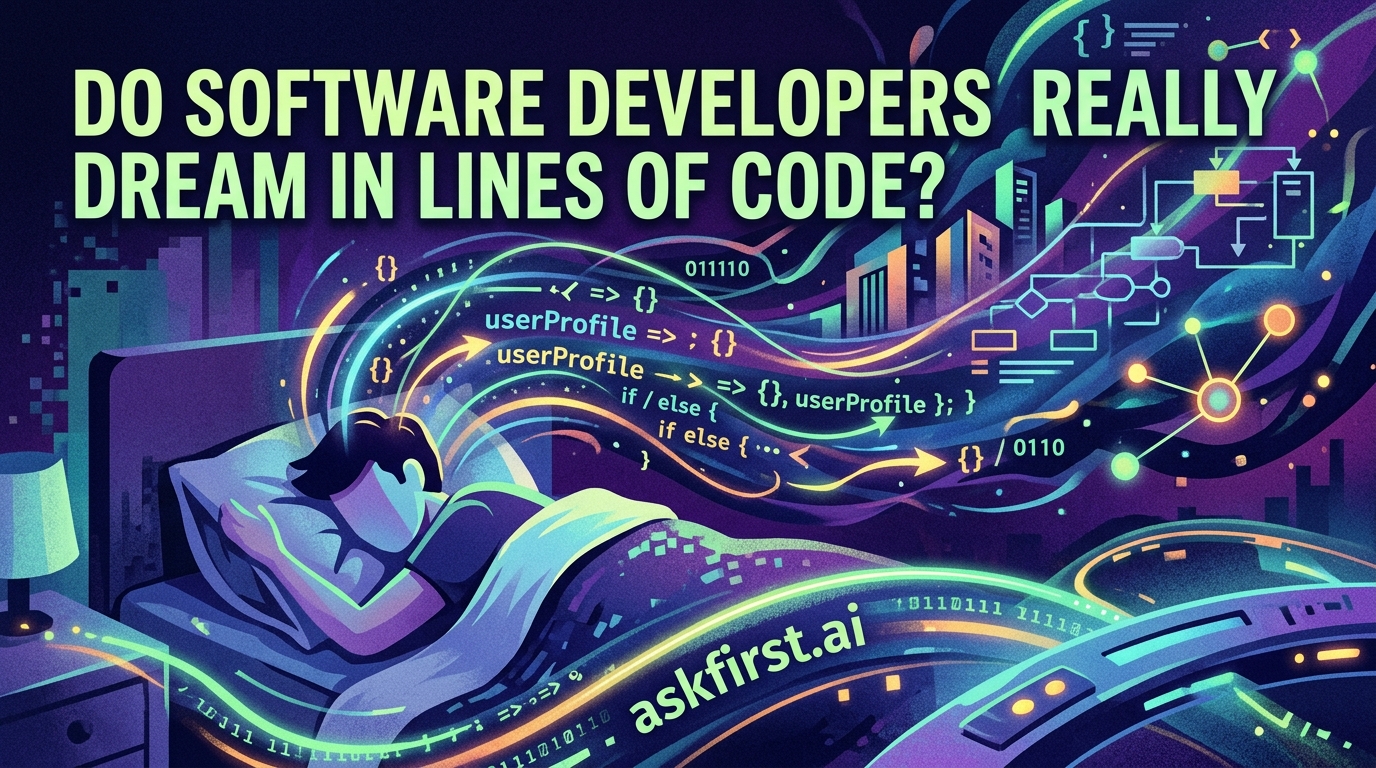
The Cognitive Reality of Coding Dreams
The phenomenon often described as 'dreaming in code' is a fascinating intersection of neurology, cognitive psychology, and the intense mental demands of software engineering. While the literal projection of syntax onto the canvas of a dream state is rare, the cognitive processes underlying this experience are grounded in real, measurable brain activity. When developers spend hours solving complex logic puzzles, the brain undergoes a process known as 'memory consolidation.' This is not merely a metaphor; it is the physiological mechanism through which the hippocampus transfers information to the neocortex, essentially refining patterns learned during the waking state.
The Tetris Effect and Pattern Recognition
The most prominent scientific explanation for this phenomenon is the 'Tetris Effect.' Named after the iconic block-stacking game, this psychological occurrence happens when individuals devote so much time to an activity that it begins to pattern their thoughts, mental images, and dreams. In the context of programming, the 'blocks' are not geometric shapes but logical structures, function calls, and syntax patterns. The brain, seeking efficiency, attempts to optimize these structures during sleep. Consequently, a developer might 'see' the flow of an algorithm or the structure of a class hierarchy while in a hypnagogic state, the period between wakefulness and sleep. This is often the phase where breakthroughs occur, as the subconscious is unbound by the rigid constraints of conscious 'logical' testing.
Neuroplasticity and Cognitive Load
Software development requires extreme cognitive load, engaging multiple brain regions simultaneously. The prefrontal cortex manages high-level logic, while the parietal lobe handles spatial awareness and data mapping. Over time, these networks strengthen through neuroplasticity. Research into REM (Rapid Eye Movement) sleep suggests that this stage is essential for procedural memory—the 'how-to' knowledge that governs motor and cognitive skills. For a developer, typing is a procedural skill, but architectural thinking is a high-level cognitive exercise. Dreams involving code are essentially the brain's way of 'rehearsing' these high-level architectural scenarios, stress-testing complex systems against potential bugs or logic errors before they are even written into a compiler.
Why Developers Experience This More Than Others
It is often asked why developers report this more frequently than, for example, accountants or lawyers. The reason lies in the nature of the 'debugging loop.' Coding is an iterative process characterized by constant error identification and resolution. This feedback loop is addictive to the brain's reward centers. When a developer encounters a 'Heisenbug'—a bug that disappears or changes when one attempts to study it—the brain remains hyper-focused even after the screen is turned off. The neural pathways remain primed, leading to dreams that serve as a continuation of the troubleshooting cycle. This is why many legendary programming solutions, such as the initial concepts for certain operating systems, were famously conceived during moments of relaxed reflection or sleep.
Practical Implications and Managing Mental Health
While the ability to 'dream in code' can lead to profound productivity, it also serves as a warning sign. Experts in human-computer interaction suggest that frequent dreams of work tasks indicate a state of high cognitive arousal. To maintain a healthy work-life balance, developers are encouraged to:
- Implement a 'Shutdown Ritual': Engaging in non-logical, non-screen-based activities before sleep, such as physical exercise or reading, to allow the brain to switch modes.
- Practice Active Decompression: Using techniques like mindfulness or meditation to disconnect from the rigid syntax of programming.
- Limit Late-Night Debugging: Engaging in high-stress troubleshooting immediately before sleep increases the likelihood of fragmented, dream-disrupted rest.
Conclusion
In essence, dreaming in code is a testament to the brain's remarkable adaptability. It is a sign that the brain is treating abstract syntax as a native language. While these dreams can be mentally exhausting, they also highlight the unique passion required to translate human intent into machine reality. By understanding the neuroscience behind these nocturnal sessions, developers can better appreciate their own cognitive processes and perhaps even use them as a tool for deeper architectural insight.