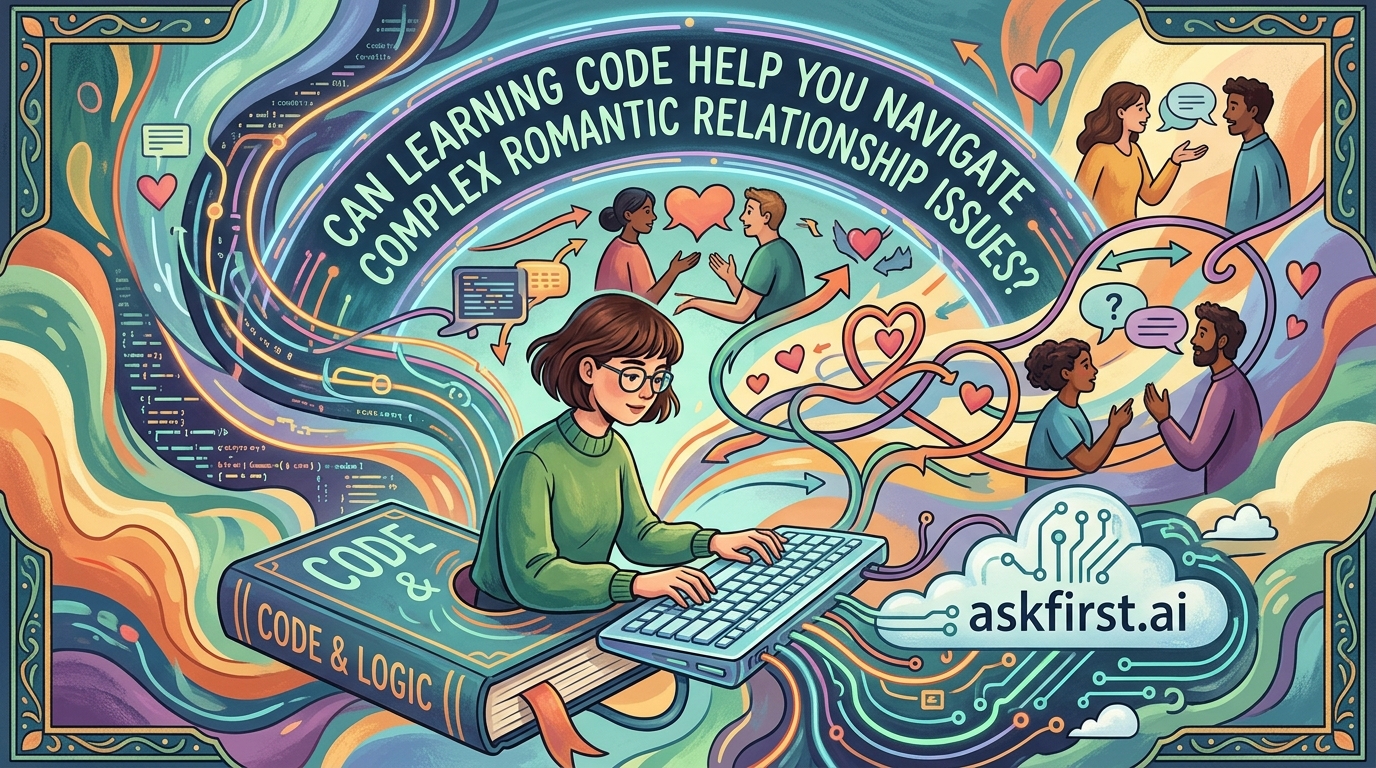
The Logic of Love: Why Coding Improves Relationship Dynamics
At first glance, the rigid, syntax-heavy world of computer programming appears diametrically opposed to the fluid, emotional, and unpredictable realm of human romance. However, the mental frameworks cultivated through learning to code—such as algorithmic thinking, systematic debugging, and state management—provide an unexpectedly robust toolkit for resolving complex interpersonal conflicts. When individuals approach relationships with the precision of a software architect, they often find that the sources of friction become easier to identify, isolate, and address.
1. Algorithmic Thinking and Conflict Resolution
Programmers are trained to decompose large, intractable problems into smaller, manageable sub-routines. Romantic relationship issues often feel overwhelming because they represent a 'spaghetti code' of emotions, history, and unmet needs. By applying a divide-and-conquer strategy, one can identify the specific 'edge case' causing the current failure in communication. Instead of viewing a partner's irritation as a global system failure, an algorithmic thinker asks: 'What is the specific input that triggered this output?' This neutral observation shifts the focus from blame to problem-solving, mirroring the way a developer isolates a function that causes a system crash.
2. Debugging: From Blame to Root Cause Analysis
In programming, 'blaming the compiler' is a hallmark of an amateur. Experts know that if code fails, there is a logical flaw in the implementation. Similarly, when a couple reaches a stalemate, the tendency to label the partner as 'broken' mirrors a faulty debugging process. Embracing a 'Root Cause Analysis' (RCA) mindset forces partners to investigate the underlying logic behind behaviors. Is the recurring argument truly about who does the dishes? Or is there a hidden dependency, such as a perceived lack of appreciation or an underlying fear of abandonment? Identifying these latent variables prevents the 'patching' of symptoms while leaving the core bug active.
3. State Management in Emotional Cycles
Complex systems are defined by their states. If a relationship is currently in an 'angry' or 'defensive' state, pushing more data (arguments/demands) into the system will only result in a system overflow. Coding teaches the importance of state management: knowing when to pause, clear the cache (cool down), and re-initialize the environment. Understanding that people, like programs, have limited buffer sizes helps partners recognize when a conversation has hit its capacity. A well-timed 'graceful exit'—a concept used to terminate a process safely without losing data—can save a relationship from the chaos of an forced, hostile shutdown.
4. Documentation and the Need for Explicit Contracts
Ambiguity is the enemy of both software and love. Many relationship issues stem from unspoken expectations—what developers might call 'undocumented requirements.' Just as a well-documented API allows two distinct services to communicate seamlessly, clear communication in a relationship prevents errors. Couples can benefit from the practice of explicitly defining 'interfaces.' This means stating desires and boundaries clearly rather than relying on the hope that the other party will infer them. Establishing these 'protocols' reduces the need for the partner to function as a mind-reader, thereby reducing the probability of logical errors during high-stress interactions.
5. Refactoring the Relationship
Code refactoring is the process of restructuring existing computer code without changing its external behavior, specifically to improve maintainability and performance. In a long-term partnership, habits often become rigid and inefficient. Periodically 'refactoring' the relationship involves updating the way partners share chores, discuss finances, or spend leisure time. It is a proactive approach to prevent 'technical debt'—a term for the long-term cost of choosing easy, suboptimal solutions today that become harder to fix tomorrow. By auditing how the partnership operates, couples ensure that their bond remains flexible and capable of handling future complexities.
Conclusion: The Human Syntax
Learning to code does not replace the necessity of empathy, love, or emotional intelligence; rather, it provides a structured mental framework to apply those virtues more effectively. It invites individuals to view conflicts not as personal attacks but as puzzles to be solved collaboratively. By adopting the principles of clear documentation, modular problem-solving, and disciplined state management, one transforms from an accidental participant in a relationship into an intentional architect of a healthy, long-lasting connection. The syntax of a successful relationship, much like the best code, is defined by clarity, consistency, and the ongoing commitment to improvement.