The Psychophysiology of the Clinical Encounter
It is a pervasive human experience: the moment one walks into a doctor’s office or sits down for a consultation, there is a tangible shift in mental and physical state. This phenomenon, often termed the 'consultation effect,' is a fascinating intersection of neurobiology, psychology, and social signaling. Far from being merely a placebo, the sense of relief often experienced upon visiting a healthcare provider is rooted in complex evolutionary mechanisms designed to manage stress and uncertainty.
1. The Power of Therapeutic Presence and Social Regulation
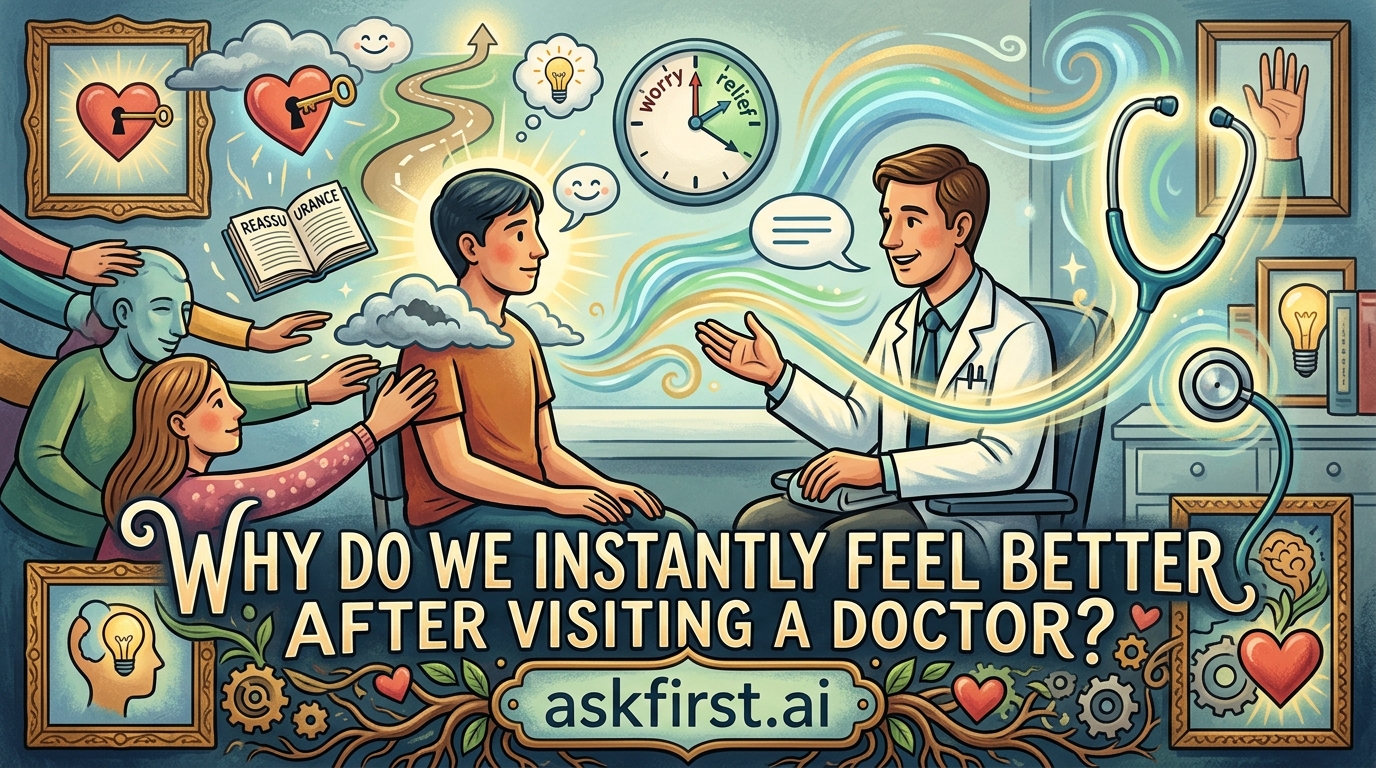
Humans are fundamentally social creatures, and the presence of an authority figure or a caregiver triggers a deep-seated biological response known as social buffering. When a patient encounters a doctor, they are stepping into a structured environment designed specifically to address their needs. This environment acts as an external regulator for the nervous system. By externalizing the burden of the health problem to a professional, the brain is allowed to shift from a state of high-alert 'threat detection' to a 'resting state.' The act of vocalizing symptoms to a competent professional signals to the brain that the threat is being managed, which immediately lowers the production of cortisol, the body’s primary stress hormone.
2. The Neurology of Certainty
One of the primary drivers of anxiety is the 'unknown.' Unexplained physical sensations are interpreted by the amygdala—the brain’s fear center—as potential hazards. When a doctor listens, assesses, and provides a framework for understanding the discomfort, they provide the patient with a cognitive map. Even before a diagnosis is fully confirmed, the mere categorization of symptoms into a diagnostic framework reduces the brain’s demand for processing power regarding 'what is happening to me.' By narrowing the possibilities of what might be wrong, the brain feels a sense of resolution and cognitive closure, which is inherently soothing.
3. The Ritualistic and Placebo Components
The medical consultation is a ritual that has been refined over centuries. From the white coat, which symbolizes competence and authority, to the physical examination tools like stethoscopes and blood pressure cuffs, these artifacts act as symbols of safety. Research in the field of the 'placebo response'—or more accurately, the 'contextual healing response'—demonstrates that the patient's expectation of relief is a potent mediator of neurochemical release. Upon entering the clinic, the brain anticipates treatment, which can lead to the endogenous release of dopamine and opioids. These chemicals are the body's natural painkillers and mood elevators, capable of producing a very real, physical reduction in the perception of pain.
4. The Shift from Passive Worry to Active Agency
Unaddressed health concerns create a passive loop of worry. The patient is stuck in a cycle of observation and fear, unable to influence the outcome. Scheduling and attending an appointment shifts the patient from a passive observer of their illness to an active participant in their recovery. This shift from helplessness to agency is a major psychological milestone. Taking the step to seek professional help is an act of self-preservation that validates the patient's intuition that their health is important. This self-validation significantly bolsters mental well-being, effectively acting as an immediate psychological boost.
5. Structured Professionalism and Reliability
Healthcare environments are intentionally designed to project order. In a chaotic world, the controlled, quiet, and antiseptic atmosphere of a medical facility provides a sensory break. This structured environment helps to stabilize the sensory nervous system. Furthermore, the professionalism of the medical staff provides a sense of being 'looked after' by a system that is robust and reliable. This feeling of being in a safe, competent system reduces the 'lone wolf' survival instinct, allowing the parasympathetic nervous system—the system responsible for 'rest and digest'—to take command. This leads to reduced heart rate, slower breathing, and a general feeling of relaxation.
The Importance of the 'Consultation Effect'
Understanding these mechanisms is crucial for both patients and clinicians. It highlights that healing is not just about pharmacological intervention; it is about the entire experience of the medical encounter. Even in the absence of a 'cure' or a prescription, the process of being heard, validated, and examined serves a functional, restorative purpose. This phenomenon demonstrates that the human mind and body are remarkably responsive to social connection, professional guidance, and the promise of a pathway toward health. Recognizing these factors allows us to appreciate that the doctor’s office offers a unique form of psychological and physiological medicine that begins the moment we walk through the door.