The Psychophysiology of the Clinical Encounter
There exists a profound, almost primal sense of relief that washes over an individual the moment a healthcare professional acknowledges their physical or mental concerns. This phenomenon is not merely a placebo effect; it is rooted in complex evolutionary biology, psychological validation, and the unique architecture of human social bonding. When a patient speaks to a doctor, several layers of emotional and physiological regulation are triggered simultaneously, effectively transforming a state of high-stress uncertainty into a state of cognitive and emotional calm.
1. The Power of Attentive Listening and Validation
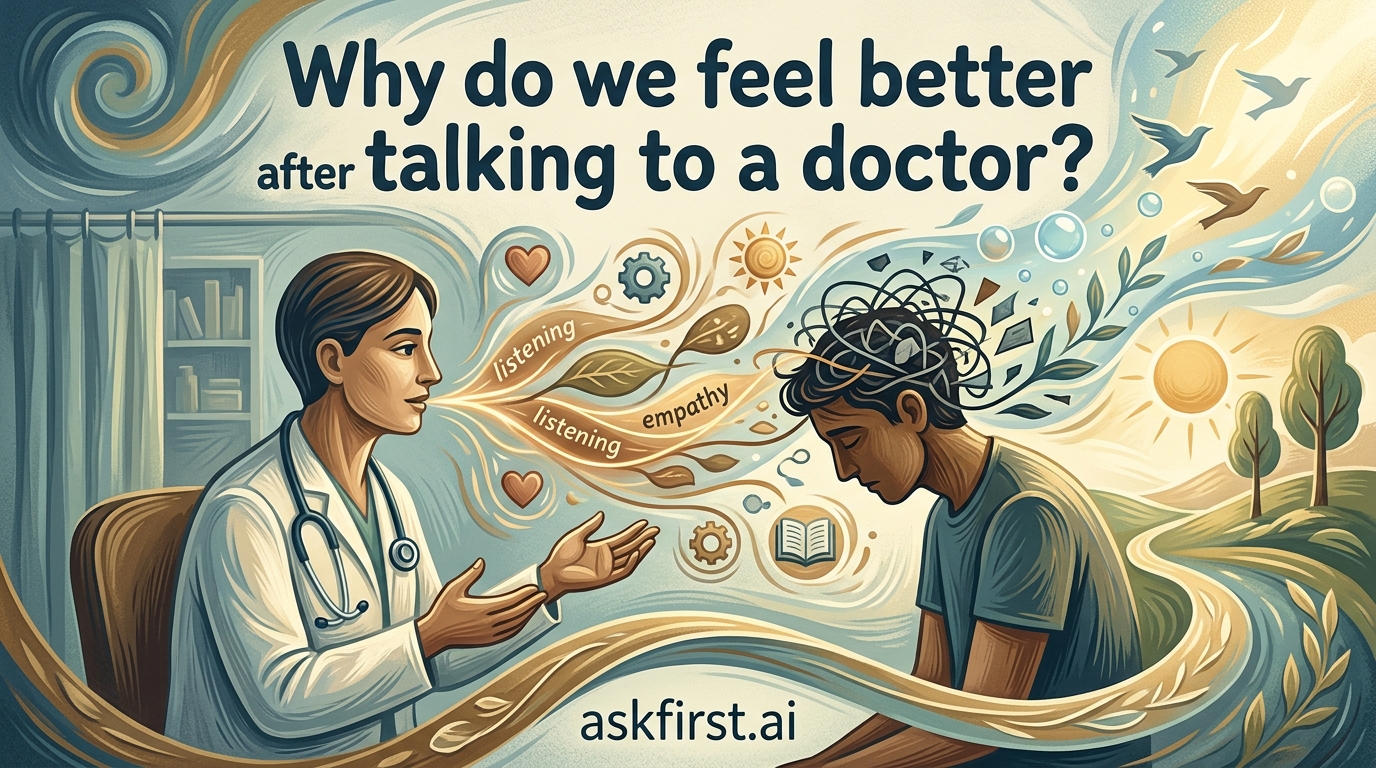
At the core of the therapeutic encounter lies the psychological concept of validation. Humans are profoundly social creatures who rely on external feedback to process internal states. When a doctor listens attentively, maintains eye contact, and validates the patient's symptoms, it signals safety to the amygdala—the brain’s fear center. This reduces the 'fight-or-flight' response that often accompanies physical distress. According to studies published in the Journal of General Internal Medicine, patients who feel their concerns were heard by their physician report lower levels of cortisol, the body’s primary stress hormone. This transition from 'anxiety-fueled rumination' to 'professional identification' is a significant psychological milestone.
2. The Reduction of Existential Uncertainty
One of the primary drivers of anxiety during health concerns is the 'unknown.' Humans are hardwired to solve problems; when a health issue is present but undiagnosed, the brain enters a state of persistent vigilance. This cognitive load is taxing. By speaking to a doctor, the patient shifts the burden of diagnosis and management onto a trained expert. This offloading of cognitive labor is highly restorative. The doctor provides a name, a pathway, or a reassurance that 'all is well,' which allows the brain to exit the hyper-vigilant state, thereby conserving metabolic energy and reducing emotional fatigue.
3. The Therapeutic Power of the 'White Coat'
Social psychology emphasizes the importance of symbols and roles. The 'white coat' or the medical setting itself functions as a cultural symbol of competence and protection. Research into the 'Contextual Healing Effect' suggests that the ritual of the clinical visit—the history taking, the physical examination, and the concluding diagnosis—is an ancient, ritualized form of care that human societies have relied upon for millennia. This ritual fosters trust, and trust is a biological catalyst for neurochemical changes, including the release of oxytocin, which promotes bonding and comfort.
4. Neurobiological Feedback Loops
When a doctor offers reassurance, it initiates a top-down regulation process in the brain. The prefrontal cortex, which is responsible for executive functions and logical reasoning, is activated by the doctor's expert assessment. This activity helps dampen the overactive limbic system. If the doctor can explain the mechanism behind a symptom (e.g., 'Your heart palpitations are likely related to caffeine intake, not a heart condition'), the patient gains a sense of control. Control is the ultimate antidote to anxiety. By replacing fear-based assumptions with evidence-based explanations, the clinical interaction directly alters the patient’s subjective reality.
5. Practical Steps to Enhance the Medical Encounter
To maximize the benefits of this interaction, patients are encouraged to follow these evidence-based practices:
- Prepare a List: Writing down questions reduces cognitive load and ensures that no concerns are forgotten under pressure.
- Seek Clarification: Asking, 'Can you explain why this is happening?' promotes a deeper understanding, which is more calming than simply receiving a prescription.
- Practice 'Shared Decision Making': Engaging in a dialogue rather than a one-way lecture keeps the patient active in their recovery, which reinforces a sense of agency and empowerment.
Conclusion
The relief experienced during a doctor’s visit is a multidimensional event involving sociology, neurobiology, and psychology. It represents a fundamental human need for external guidance and social support during times of vulnerability. Whether through the simple act of being heard or the profound relief of a logical explanation, the interaction provides the psychological 'anchor' necessary to weather health-related challenges. Recognizing this effect allows individuals to approach medical consultations not just as transactions, but as vital restorative experiences that bolster overall well-being.