The Paradox of Belief in Modern Medicine
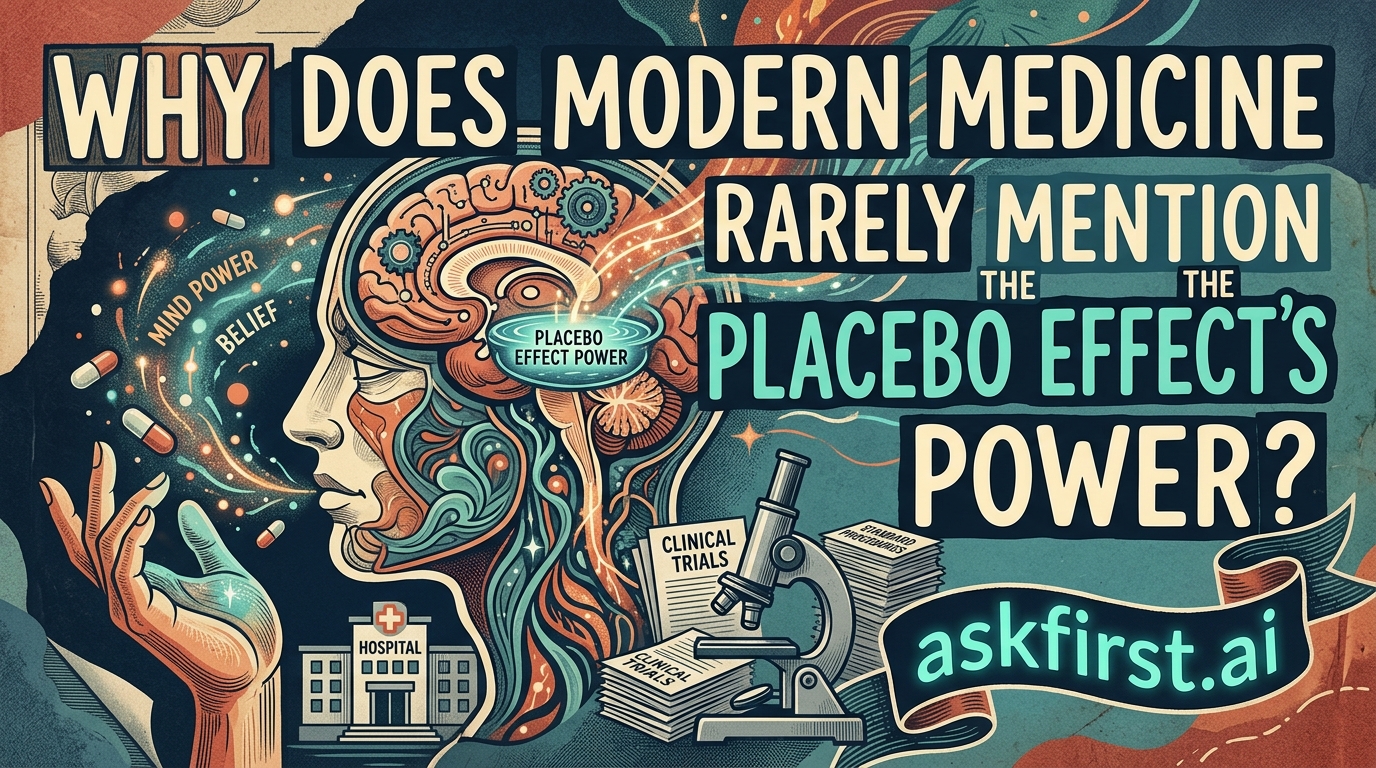
The placebo effect represents one of the most profound, yet systematically minimized, phenomena in clinical research. While often relegated to the status of a 'nuisance variable' in pharmaceutical trials—something to be subtracted from the efficacy of a new drug—the placebo effect is actually a testament to the untapped potential of the human mind-body connection. Modern medicine frequently bypasses this topic because it challenges the reductionist model of health that favors chemical intervention over systemic psychological regulation.
Why the Silence?
The Regulatory Framework: Clinical trials are designed to prove that a drug is 'better' than a sugar pill. If a placebo performs too well, the drug fails to gain regulatory approval. This creates a systemic disincentive to study, celebrate, or utilize the placebo effect. It is viewed as a hurdle to profitability rather than a therapeutic tool.
The Reductionist Paradigm: The current medical education system is rooted in the biomedical model, which treats the body like a complex machine. When a patient recovers due to belief, ritual, or expectation, it is often dismissed as a subjective observation rather than a physiological event. However, neurobiology tells a different story. Research, such as that conducted by Harvard professor Dr. Ted Kaptchuk, shows that the placebo response is actually a neurobiological process involving the release of endogenous opioids and dopamine.
Ethical and Practical Barriers: Doctors are trained to provide evidence-based prescriptions. Providing a placebo can feel ethically murky because it involves a degree of deception. However, recent studies on 'open-label placebos'—where patients are told they are receiving a placebo but are informed of its potential to trigger mind-body healing—have shown remarkable efficacy in conditions like chronic back pain and irritable bowel syndrome.
The Neurobiology of Expectation
The power of the placebo lies in the brain's capacity to predict outcomes. When a patient enters a doctor's office, the setting, the white coat, and the diagnostic equipment act as sensory cues that prime the brain for healing. This 'anticipatory modulation' activates the prefrontal cortex, which in turn influences the limbic system to regulate pain perception and immune responses.
- Endogenous Opioids: When a person expects pain relief, the brain releases endorphins, which bind to the same receptors as pharmaceutical painkillers.
- Dopamine Pathways: Expectations of reward or improvement trigger dopamine production in the ventral striatum, improving motor control and subjective well-being.
Moving Beyond Deception: The Contextual Healing Model
The medical community is beginning to explore 'contextual healing.' This is not about the sugar pill itself, but the entire ritual surrounding the treatment. Factors that enhance the placebo response include:
- The Therapeutic Alliance: A physician who is empathetic, confident, and listens to the patient significantly improves outcomes compared to one who is rushed or dismissive.
- The Ritual of Care: The act of taking a pill, receiving an injection, or undergoing a physical exam acts as a powerful psychological signal that the body is in the process of repair.
- Patient Expectations: Clearly articulated goals and optimism about the treatment protocol enhance the biological response to any intervention.
The Future of Integrated Medicine
To bridge this gap, modern medicine must move toward an integrative approach that views the placebo not as 'fake' medicine, but as 'contextual' medicine. By harnessing the patient’s own neurobiological capacity for healing, physicians can augment the efficacy of conventional treatments. Future medical training could emphasize the science of the placebo, turning the doctor-patient interaction itself into a potent, evidence-based therapeutic tool.
Understanding the placebo effect does not diminish the value of evidence-based pharmacology; rather, it completes the picture of human health. We are not just biological machines; we are complex, adaptive organisms whose physiology is intimately connected to our environment, our relationships, and our own inner narratives. As science advances, the taboo surrounding the placebo effect will likely dissolve, replaced by a sophisticated understanding of how the human brain orchestrates recovery. By validating the power of belief, we do not ignore the science—we expand it.