The Ancient Alchemy of Honey: Nature's Secret Wound Healer
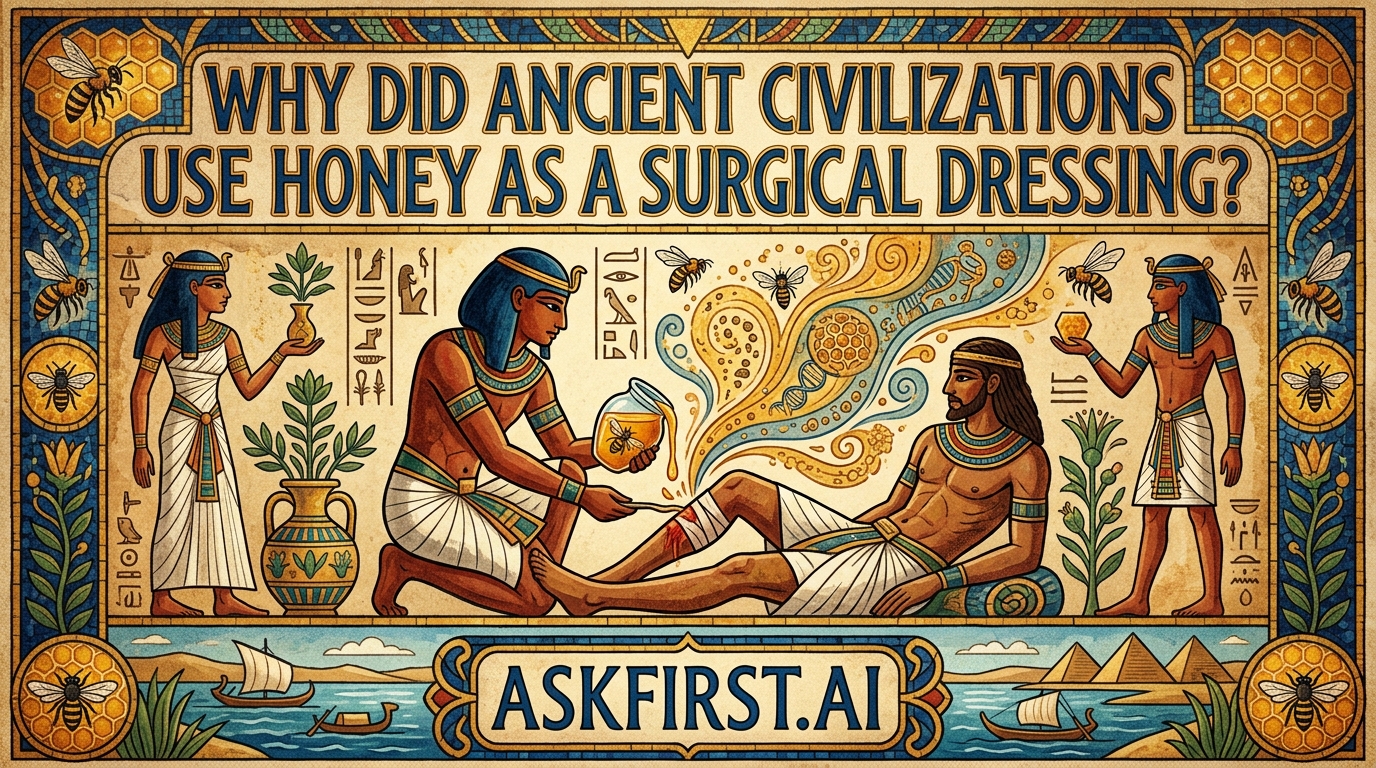
For thousands of years, long before the invention of modern antibiotics or sterile laboratory environments, ancient civilizations including the Egyptians, Greeks, and Romans recognized a profound truth: honey was far more than a simple sweetener. It was a potent medicinal agent. Throughout history, medical papyri from ancient Egypt, dating back to 2500 BCE, frequently mention honey as an essential component in the treatment of infected wounds and ulcers. This practice was not born of mere superstition but of an empirical understanding of nature's biochemical marvels.
The Biochemistry of Healing: Why Honey Works
To understand why honey served as a primary surgical dressing, one must examine its complex chemical composition. Honey is a supersaturated solution of sugars, primarily glucose and fructose, which creates a low-water-activity environment. This osmotic pressure is the primary "weapon" against bacterial colonization. When applied to a wound, honey draws water out of bacterial cells, effectively dehydrating and neutralizing them. This osmotic effect is a physical barrier that prevents infection without the toxic side effects associated with synthetic chemicals.
Furthermore, the enzymatic action of honey is nothing short of miraculous. When bees collect nectar, they introduce an enzyme called glucose oxidase. When this honey comes into contact with wound exudate, the enzyme reacts with the glucose to produce hydrogen peroxide in low, sustained concentrations. This controlled release provides a continuous antiseptic effect that is sufficient to kill pathogens while remaining gentle enough not to damage the delicate regenerating tissues of the human body.
The Golden Shield: Physiological Benefits
Beyond its antibacterial properties, honey offers three specific advantages that made it the gold standard for surgeons of antiquity:
- Moist Wound Healing: Modern medicine now confirms that wounds heal faster in a moist environment. Honey maintains this hydration while acting as a physical barrier against external contaminants like dust and insects.
- Anti-Inflammatory Properties: Honey reduces edema and minimizes the formation of inflammatory mediators. By soothing the area, it lowers pain levels for the patient during the recovery phase.
- Nutrient Delivery: Honey is rich in amino acids, vitamins, and minerals that provide local nourishment to the damaged skin cells, accelerating the process of epithelization—the formation of new skin.
Historical Applications and Cultural Significance
In ancient Egypt, honey was often blended with oils or animal fats to ensure it adhered to the wound site, creating a primitive but effective "plaster." The Ebers Papyrus, one of the oldest known medical texts, lists honey as a key ingredient in nearly 500 remedies. Greeks, including the legendary physician Hippocrates, frequently prescribed honey for various skin ailments and to facilitate rapid healing. By the time of the Roman Empire, honey was standard in military field hospitals to treat trauma from weaponry and abrasions, proving its efficacy on a massive scale.
From Ancient Lore to Modern Science
It is fascinating to observe that modern medical science has circled back to this ancient wisdom. In recent decades, medical-grade honey—specifically Manuka honey, known for its unique non-peroxide antibacterial components—has gained widespread acceptance in hospitals worldwide. This modern application is highly regulated, ensuring that the honey is sterilized via gamma irradiation to eliminate bacterial spores while retaining its healing properties. The use of specialized dressings infused with Manuka honey is now a standard practice for treating chronic, non-healing wounds, including diabetic foot ulcers and post-operative surgical incisions.
Conclusion: A Legacy of Resilience
The reliance on honey by ancient civilizations serves as a powerful reminder of how observant our ancestors were regarding the natural world. They did not have microscopes to view the bacteria they were killing, nor did they understand the molecular structure of enzymes, yet they identified a substance that balanced antiseptic power with biological harmony. By trusting in the healing capacity of honey, they successfully treated patients for millennia, proving that nature often holds the solutions to our most persistent challenges. The "sweet" dressing remains one of the most effective examples of sustainable, bio-compatible medicine in human history.