The Therapeutic Efficacy of Disclosure: The Psychology of Confiding in Medical Professionals
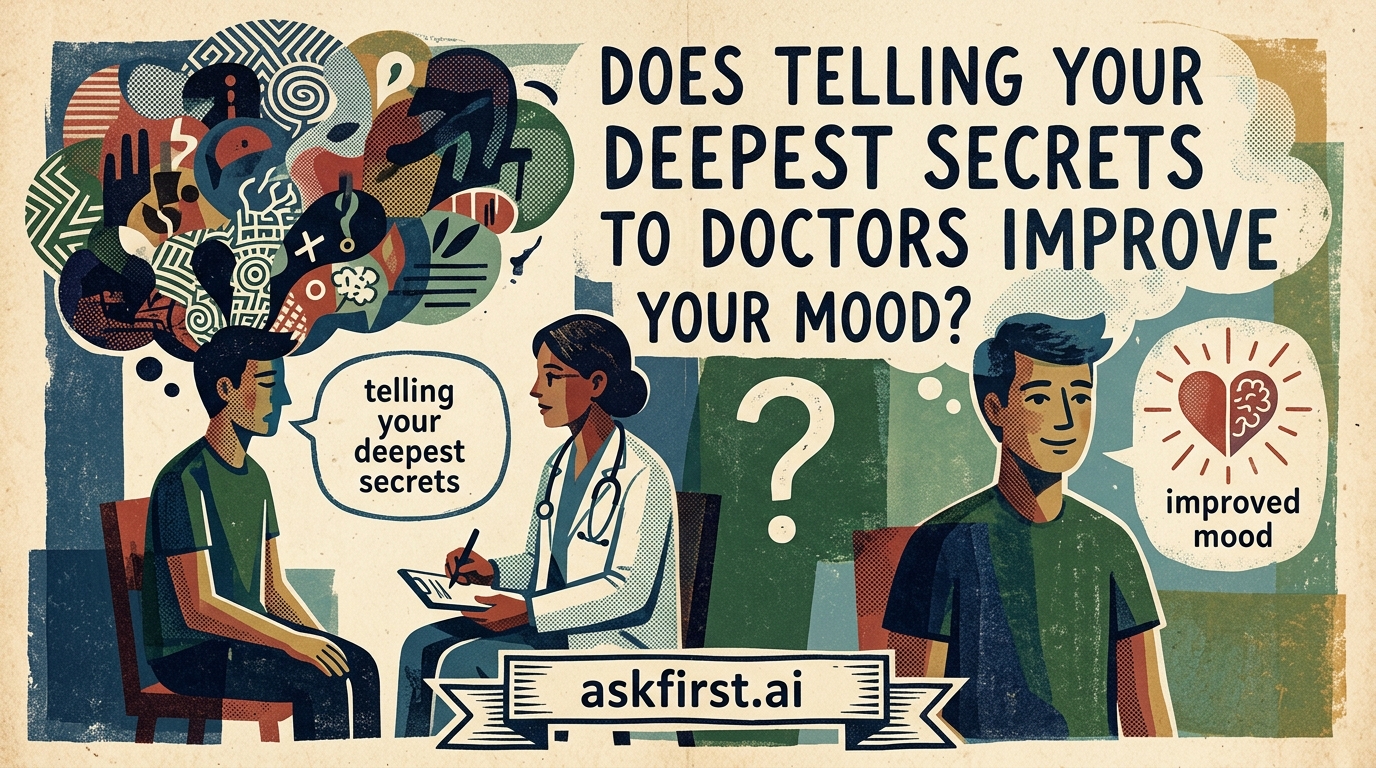
The act of revealing one’s deepest secrets—often referred to in clinical psychology as "self-disclosure"—is a cornerstone of the therapeutic process. Whether within the context of a psychiatric evaluation, a primary care consultation, or a dedicated psychotherapy session, the decision to be radically honest with a medical professional is frequently associated with significant improvements in mood, physiological health, and psychological well-being. This phenomenon is not merely anecdotal; it is rooted in complex neurological and sociological mechanisms that govern how humans process trauma, shame, and emotional suppression.
The Physiological Burden of Secrecy
To understand why telling secrets improves mood, one must first understand the physiological cost of keeping them. Dr. James Pennebaker, a social psychologist at the University of Texas at Austin and the author of Opening Up: The Healing Power of Expressing Emotions, has conducted decades of research demonstrating that the inhibition of thoughts and feelings—essentially the act of keeping secrets—requires active, constant physical effort.
When an individual suppresses a traumatic memory or a "deep secret," their autonomic nervous system remains in a state of heightened arousal. This chronic stress response elevates cortisol levels and increases heart rate, effectively placing the body in a state of "fight or flight" even when no immediate threat is present. By disclosing these secrets to a doctor, the patient effectively "unloads" the cognitive burden. Pennebaker’s studies consistently show that individuals who write about or verbally disclose their most distressing experiences exhibit improved immune function and a measurable decrease in long-term stress levels.
The Role of the "Safe Container"
The medical environment provides a unique framework known as the "holding environment," a concept popularized by British pediatrician and psychoanalyst Donald Winnicott in his seminal work Playing and Reality. In a medical setting, the doctor acts as a neutral, non-judgmental observer. Unlike a friend or family member, who may react with shock, disappointment, or unsolicited advice, a physician is trained to receive information within the boundaries of clinical confidentiality.
When a patient reveals a deep secret to a doctor, they are testing the limits of this "safe container." If the doctor responds with empathy and professional objectivity, the patient experiences a phenomenon known as "corrective emotional experience," a term coined by Franz Alexander and Thomas French in their book Psychoanalytic Therapy. This experience allows the patient to realize that their secret—which they may have perceived as monstrous or shameful—does not result in the rejection they feared. This realization is a powerful catalyst for mood elevation, as it dismantles the core of shame that often fuels depression and anxiety.
Cognitive Reframing and Narrative Coherence
Secrets often exist in the mind as fragmented, chaotic, or distorted memories. When a patient vocalizes these secrets to a medical professional, they are forced to organize their thoughts into a coherent narrative. This process of narration is inherently therapeutic. As noted by Bessel van der Kolk, a psychiatrist and author of The Body Keeps the Score, trauma and deep-seated secrets often reside in the non-verbal regions of the brain. By bringing these experiences into the verbal, linguistic realm, the patient moves the memory from the reactive, emotional centers of the brain (the amygdala) to the analytical centers (the prefrontal cortex).
For example, a patient who has spent years harboring guilt over a past mistake may view themselves as fundamentally "bad." By detailing this secret to a physician, the patient can view the event from an external perspective. The doctor can help the patient reframe the narrative, moving from a position of toxic self-blame to one of understanding and objective assessment. This shift in perspective is a direct driver of improved mood and self-esteem.
Concrete Examples of Improvement
Consider a patient suffering from chronic, unexplained somatic symptoms, such as tension headaches or gastrointestinal distress. Often, these symptoms are physical manifestations of "bottled-up" psychological pain. Research published in the Journal of Consulting and Clinical Psychology has shown that patients who disclose previously suppressed information to their doctors often report a rapid reduction in these physical symptoms. As the physical tension dissipates, the patient’s mood naturally lifts, creating a positive feedback loop: the patient feels better physically, which improves their emotional outlook, which in turn encourages further open communication.
Another example is found in the treatment of patients with "imposter syndrome" or those harboring secrets about substance use. By confessing these truths to a medical professional, the patient eliminates the energy-draining necessity of maintaining a facade. The relief of "being known" by a trusted authority figure provides a profound sense of liberation that is rarely achievable through self-reflection alone.
Conclusion
The act of telling one’s deepest secrets to a doctor is an act of profound vulnerability that yields significant psychological dividends. By offloading the physiological burden of secrecy, utilizing the clinical "safe container" to process shame, and gaining narrative coherence through professional guidance, patients can achieve a genuine improvement in their overall mood. While the process may be initially daunting, the transition from concealment to transparency is one of the most effective tools in the medical arsenal for promoting mental health and long-term emotional resilience. The evidence is clear: when we stop hiding our truths from those qualified to help us, we create the space necessary for genuine healing to occur.