The Psychology of Clinical Relief: Why Conversations Heal
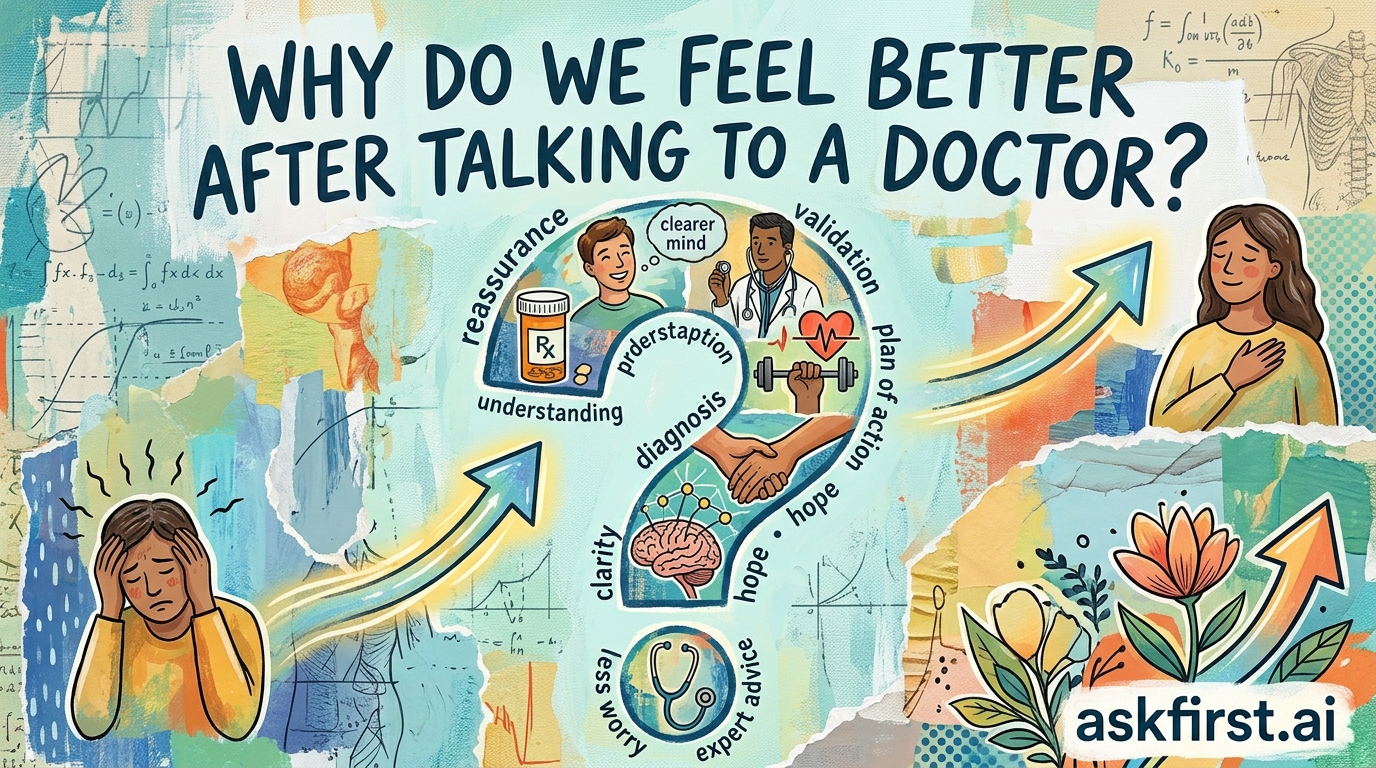
It is a universal human experience to walk into a medical clinic feeling anxious, distressed, or overwhelmed, and leave feeling a distinct sense of relief—often long before any medication has been ingested or a procedure performed. This phenomenon is rooted in a complex interplay of neurobiology, psychology, and the fundamental human need for authoritative validation. Understanding this process provides insight into the powerful connection between mind, body, and communication.
The Neurobiology of Co-Regulation
At the core of the relief felt during a doctor's visit lies the concept of co-regulation. Humans are inherently social creatures with nervous systems that are designed to attune to one another. When an individual is in a state of high physiological distress, the presence of a calm, professional, and knowledgeable figure acts as a grounding anchor. This professional's demeanor sends non-verbal cues—steady eye contact, a calm voice, and purposeful movement—which signal to the patient's autonomic nervous system that the threat level has decreased. This biological synchronization effectively lowers the patient's cortisol levels and helps down-regulate the sympathetic nervous system, shifting the body from a 'fight or flight' state toward a state of rest and digest.
The Power of Linguistic Categorization
Ambiguity is a major driver of anxiety. When a person is experiencing unexplained physical or emotional discomfort, the brain enters a cycle of 'catastrophizing,' where it assumes the worst-case scenario. This is an evolutionary survival mechanism designed to keep us vigilant, but it is often counterproductive in a modern context.
Talking to a doctor forces a process of semantic categorization. By naming symptoms, discussing potential causes, and mapping out a plan of action, the doctor helps the patient move from a state of chaotic uncertainty to one of structured understanding. The act of putting feelings and symptoms into words—a process often referred to in psychology as 'labeling to loosen'—reduces the activation of the amygdala, the brain's alarm system, and allows the prefrontal cortex to regain control.
The Placebo Effect and Expectancy Theory
The medical community has long recognized the power of the placebo effect, but it is more accurate to view this through the lens of 'expectancy theory.' When a patient consults an authority figure, the brain begins to anticipate relief. This expectation triggers the release of endogenous opioids and dopamine in the brain—the body's own natural analgesics and reward neurotransmitters. It is not necessarily that the doctor is magically 'curing' the patient through conversation alone, but that the act of seeking professional help catalyzes the brain’s internal healing machinery.
The Role of Professional Validation
Beyond the physiological effects, there is a profound psychological benefit to being heard by an expert. Often, individuals worry that their symptoms are 'all in their head' or are not significant enough to justify concern.
- Validation: Receiving a professional nod of acknowledgment validates the patient's reality. It confirms that their suffering is legitimate and worthy of attention.
- Partnership: The shift from 'suffering alone' to 'having a teammate' is transformative. Patients no longer bear the burden of diagnosis and treatment planning by themselves; they enter a collaborative partnership.
- Actionability: The feeling of helplessness is a primary precursor to depression and anxiety. A medical consultation transforms a passive state of enduring pain into an active state of 'doing something' about it, which restores a sense of agency and control.
Structuring the Healing Narrative
Every consultation functions as a narrative arc. The patient brings the 'inciting incident' (the symptoms), the doctor helps analyze the 'conflict' (the diagnostic process), and together they establish a 'resolution' (the treatment plan). This narrative structure is inherently soothing to the human mind, which is wired to seek patterns and order. By organizing the patient's subjective experience into a medical framework, the doctor restores order to the patient's internal world.
Conclusion
The relief experienced during a medical consultation is rarely the result of a single factor. Instead, it is a synergistic reaction comprising the reduction of uncertainty, the calming effect of professional presence, the activation of the body’s endogenous reward systems, and the psychological validation of one's own experiences. Recognizing these factors highlights the profound importance of the human element in medicine—reminding us that while science provides the tools, the therapeutic relationship remains the foundation upon which healing begins.