The Longevity Paradox: Beyond the Surface of Biohacking
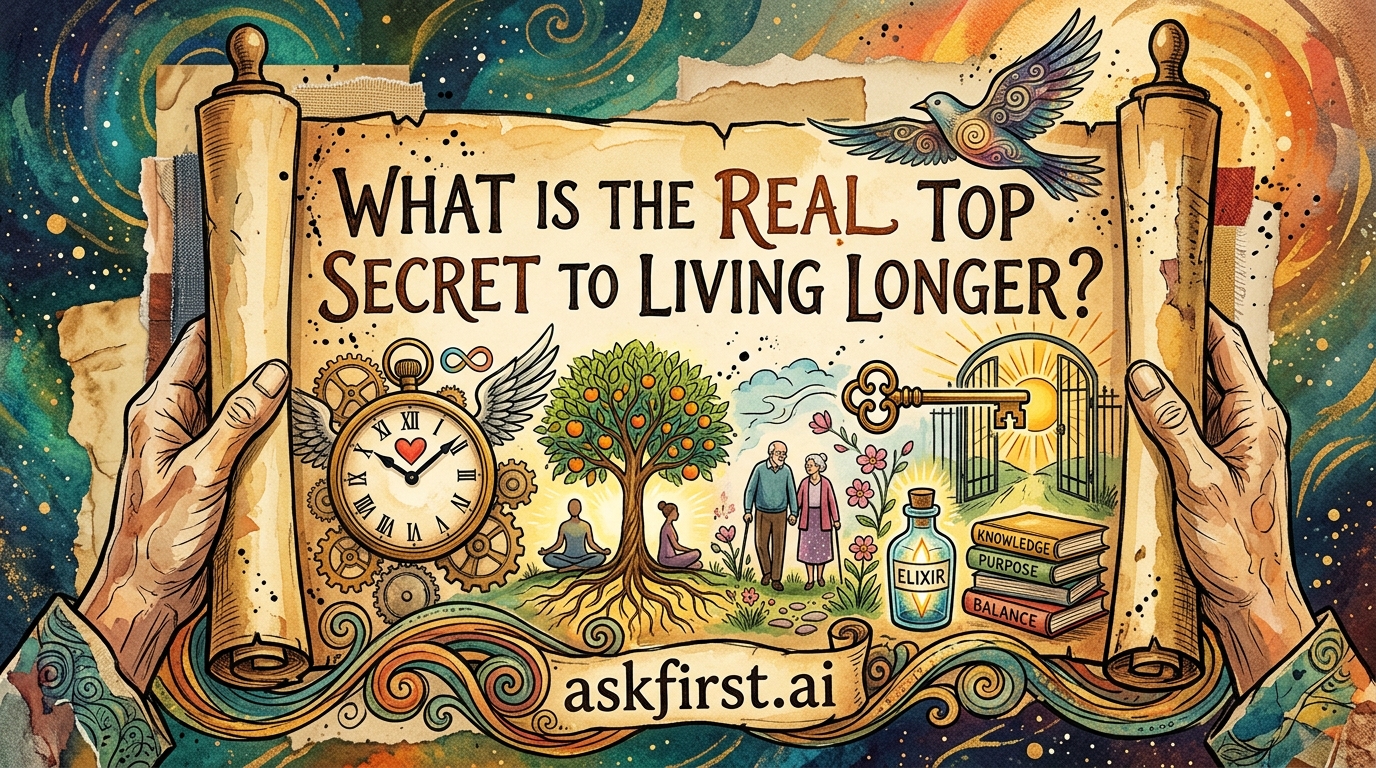
For decades, the search for the "fountain of youth" has shifted from mythical springs to clinical laboratories and Silicon Valley boardrooms. While the media often highlights expensive supplements, cryotherapy, or experimental gene therapies, the real top secret to living longer is surprisingly grounded in evolutionary biology and behavioral science. It is not a single "miracle pill," but rather a synergistic orchestration of biological stressors, metabolic flexibility, and, most importantly, social cohesion.
To understand longevity, we must look beyond mere survival and toward the concept of healthspan—the number of years spent in good health, free from chronic disease. The true secret lies in the mastery of hormesis, the optimization of the circadian rhythm, and the profound impact of communal belonging.
1. The Power of Hormetic Stress
The most significant biological mechanism for longevity is hormesis. As defined by Dr. Edward Calabrese, a toxicologist at the University of Massachusetts Amherst, hormesis is a biphasic dose-response phenomenon where low doses of a stressor induce a beneficial adaptive response, while high doses are toxic.
In our modern, ultra-comfortable environment, we have effectively "muted" our survival genes. To live longer, we must strategically reintroduce mild stressors:
- Thermal Stress: Regular exposure to cold (ice baths) and heat (saunas) triggers the production of Heat Shock Proteins (HSPs). Dr. Rhonda Patrick, a prominent researcher in nutritional science, has noted that regular sauna use (at least 4–7 times per week) is associated with a significant reduction in all-cause mortality and cardiovascular disease.
- Nutritional Hormesis (Fasting): Periodic caloric restriction or intermittent fasting forces cells into autophagy—a process of "cellular cleaning" where the body recycles damaged proteins and organelles. In the book The Longevity Diet by Dr. Valter Longo, director of the Longevity Institute at the University of Southern California, the evidence is clear: cycles of fasting-mimicking diets can reset metabolic pathways and reduce systemic inflammation.
2. Metabolic Flexibility and the Circadian Rhythm
Living longer is fundamentally about energy management. The modern diet, characterized by constant snacking and late-night eating, keeps our insulin levels chronically elevated. This prevents the body from ever switching to fat oxidation, which is essential for cellular repair.
The "secret" here is time-restricted feeding, which aligns our eating habits with our circadian rhythm. Dr. Satchin Panda of the Salk Institute, author of The Circadian Code, highlights that our genes operate on a 24-hour clock. When we eat late at night, we disrupt the liver’s ability to detoxify and repair. By confining food intake to a 10- or 12-hour window, we allow the body to enter a restorative state, drastically reducing the risk of metabolic syndrome, diabetes, and heart disease.
3. The "Blue Zone" Variable: Social Connection
Perhaps the most overlooked, yet scientifically validated, aspect of longevity is social integration. Dan Buettner, who spent years studying the "Blue Zones"—the regions of the world (such as Okinawa, Japan, and Sardinia, Italy) where people live the longest—discovered that diet and exercise are only half the story.
The secret is community. In Sardinia, the tradition of il momento—a daily social gathering—ensures that no one is left in isolation. Chronic loneliness has been shown by researchers like Dr. Julianne Holt-Lunstad to be as damaging to health as smoking 15 cigarettes a day. Longevity is not just a biological endeavor; it is a social one. Humans are obligate social animals; when we lose our place in a "tribe," our cortisol levels spike, our sleep quality degrades, and our immune system weakens.
4. Movement as Medicine: The "Non-Exercise" Approach
Many people fail to live longer because they treat exercise as a chore to be completed for 45 minutes at the gym, followed by 10 hours of sedentary behavior. This is known as the "active couch potato" syndrome.
The true secret is Low-Intensity Steady-State (LISS) activity. In places like Ikaria, Greece, people do not "work out" in the traditional sense. Instead, they move constantly throughout the day—gardening, walking to friends' houses, and performing manual chores. Dr. Peter Attia, in his comprehensive work Outlive: The Science and Art of Longevity, argues that "centenarian decathlon" training—building functional strength, stability, and VO2 max—is the key to ensuring that you are not just alive, but capable, in your later years.
Conclusion: The Synthesis of Longevity
The "top secret" to living longer is not found in a laboratory vial or a proprietary supplement stack. It is the deliberate, daily practice of intentional friction.
By inviting small, manageable stressors into our lives (hormesis), respecting the ancient rhythms of our biology (circadian alignment), maintaining deep, authentic relationships (social cohesion), and ensuring constant, natural movement, we hack the evolutionary code. We were never designed for the sedentary, isolated, and hyper-caloric existence of the 21st century. To live long and well, we must reclaim the fundamental behaviors that defined our species for millennia. The secret is not to fight time, but to align our modern lives with the biological requirements of our ancestors.