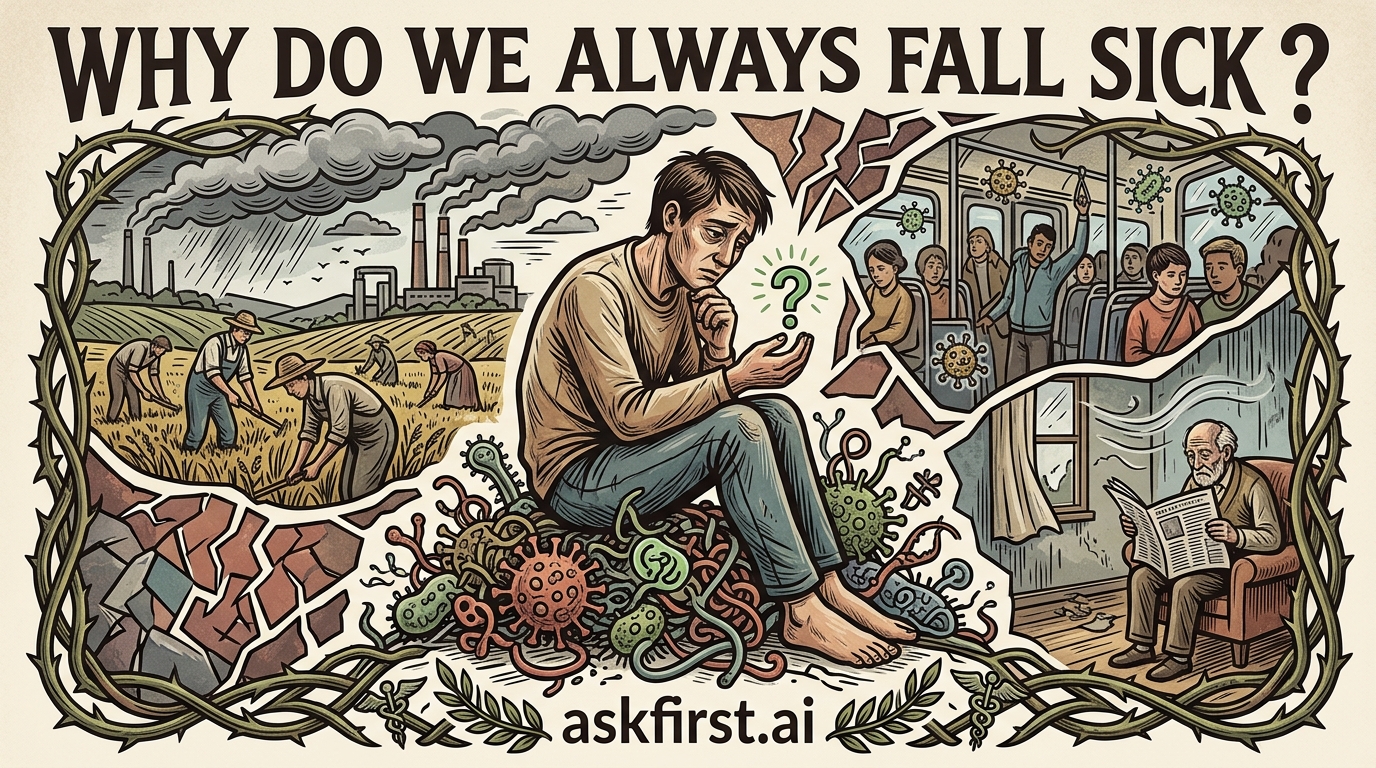
The susceptibility of the human body to illness is a complex biological reality that stems from the constant, high-stakes battle between our internal systems and a vast, ever-evolving microbial landscape. To understand why we fall sick, we must look beyond the simple notion of "germs" and examine the intricate interplay of evolutionary biology, environmental stressors, and the limitations of our own immune architecture.
The Evolutionary Arms Race: The Red Queen Hypothesis
At the core of human illness lies an evolutionary phenomenon known as the "Red Queen Hypothesis," a term coined by evolutionary biologist Leigh Van Valen in 1973. Much like the character in Lewis Carroll’s Through the Looking-Glass who must run as fast as she can just to stay in the same place, our immune systems are locked in a perpetual race with pathogens.
Bacteria, viruses, and parasites reproduce at speeds orders of magnitude faster than humans. As we develop defensive mechanisms, such as adaptive immunity and inflammatory responses, pathogens undergo rapid genetic mutations to evade these defenses. This constant pressure ensures that we are never truly "immune" to the world; we are merely in a state of dynamic equilibrium. When a pathogen manages to bypass our primary barriers—such as the skin, mucosal membranes, or the acidic environment of the stomach—we experience the symptoms of illness, which are, in many ways, the collateral damage of our immune system fighting back.
The Trade-offs of an Aggressive Immune System
We often view fever, inflammation, and congestion as signs of weakness, but these are actually intentional, energy-intensive strategies employed by the body. In his seminal work, Why We Get Sick: The New Science of Darwinian Medicine, authors Randolph Nesse and George Williams argue that many symptoms of disease are actually evolved defenses rather than malfunctions.
For example, a fever is not merely a consequence of infection; it is a controlled increase in body temperature designed to create an inhospitable environment for pathogens, which often function optimally at standard human temperatures. Similarly, coughing and sneezing are mechanical responses designed to expel invaders. We fall sick because our bodies prioritize survival over comfort. The "cost" of these defenses is the exhaustion, pain, and malaise we feel. We become "sick" because our body is redirecting its limited metabolic resources—glucose, proteins, and cellular energy—toward the production of antibodies and the mobilization of white blood cells.
Environmental Stressors and the Modern Lifestyle
While our biological hardware was optimized for the conditions of the Pleistocene era, our modern environment presents a drastically different set of challenges. Chronic stress, a hallmark of contemporary life, significantly compromises our immune efficacy. According to research conducted by Dr. Sheldon Cohen at Carnegie Mellon University, persistent psychological stress suppresses the production of lymphocytes and increases the levels of cortisol, a hormone that, while helpful in short bursts, dampens the immune response over time.
Furthermore, our obsession with hygiene—the "Hygiene Hypothesis"—has created a paradox. In our quest to eliminate all microbial exposure, we have deprived our immune systems of the "training" they require during childhood. Microbiologist Dr. Martin Blaser, in his book Missing Microbes, highlights how the depletion of our internal microbiome through the overuse of antibiotics and sterilized environments has left our immune systems confused, leading to a rise in autoimmune disorders and allergies. We fall sick because our immune systems, lacking the proper environmental input to calibrate correctly, often react inappropriately to benign substances or fail to identify genuine threats.
The Role of Metabolic Vulnerability
Beyond external pathogens, we fall sick because our bodies are biological machines subject to wear and tear. As we age, the efficiency of our cellular repair mechanisms—specifically autophagy, the process by which cells "clean out" damaged components—declines. This accumulation of cellular debris makes us more susceptible to both infectious diseases and non-communicable conditions.
Metabolic health also plays a critical role. A body fueled by processed, nutrient-poor foods lacks the necessary micronutrients (such as Zinc, Vitamin D, and Selenium) required for optimal immune function. When our internal "fuel" is subpar, the structural integrity of our epithelial barriers and the speed of our white blood cell production diminish, making us easy targets for opportunistic pathogens.
Conclusion: Embracing Biological Complexity
Falling sick is not a failure of design; it is a manifestation of the inherent risks of being a complex, multicellular organism in a world teeming with microscopic life. We are not static fortresses, but rather dynamic ecosystems that must constantly adapt to internal and external pressures.
Understanding why we fall sick requires us to shift our perspective from viewing illness as a "breakdown" to seeing it as a consequence of our evolutionary heritage. By managing our stress, supporting our microbiome, and respecting the biological trade-offs required for our immune system to function, we can mitigate the frequency and severity of illness. We do not fall sick because we are fragile; we fall sick because we are alive, and in the grand cycle of biological existence, the struggle to maintain health is the most fundamental act of life itself.