The Biological and Psychological Architecture of Romantic Attachment
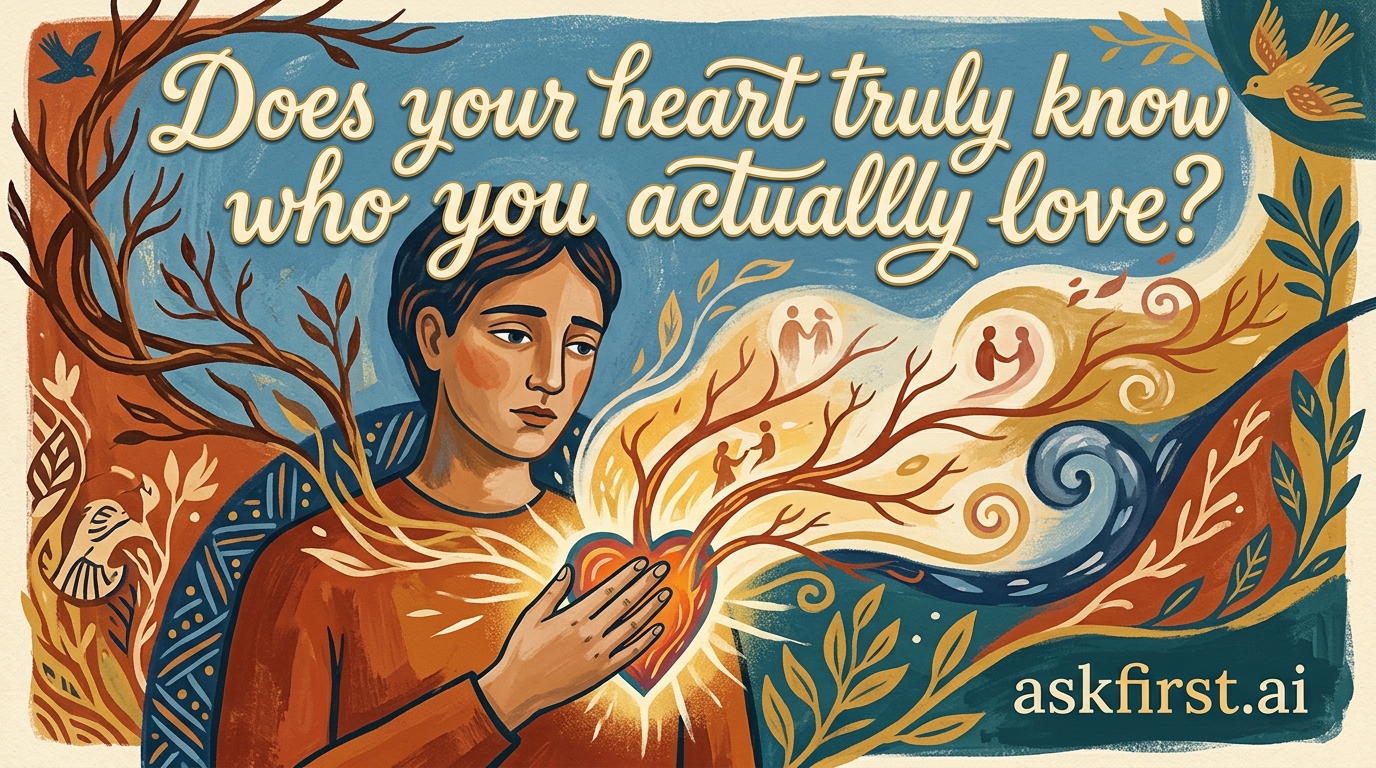
The question of whether the "heart" truly knows who we love is a profound intersection of evolutionary biology, neurochemistry, and depth psychology. While colloquial language attributes the seat of emotion to the heart, modern science suggests that our capacity for love is a sophisticated orchestration of the brain’s limbic system, endocrine responses, and long-term memory consolidation. To understand if the "heart" knows who we love, we must dissect the mechanisms that govern human attraction and attachment.
The Neurobiology of Romantic Selection
When we experience the sensation of "knowing" who we love, we are actually observing the brain’s reward system in action. According to Dr. Helen Fisher, a biological anthropologist and leading expert on the neurochemistry of love, romantic attraction is driven by three primary systems: lust, attraction, and attachment.
In her seminal work, Why We Love: The Nature and Chemistry of Romantic Love, Fisher explains that the brain’s ventral tegmental area (VTA) acts as a critical command center. When we interact with someone we are deeply attracted to, the VTA releases high levels of dopamine. This neurotransmitter creates a state of focused attention, high energy, and intense motivation. This is why, in the early stages of love, the object of your affection seems to occupy your thoughts incessantly. Your brain is essentially performing a "cost-benefit analysis" below the level of conscious thought, prioritizing this specific individual as a high-value target for reproduction and social bonding.
The Role of Subconscious Pattern Recognition
Beyond the dopamine rush, there is the matter of "imago" theory, a concept popularized by Dr. Harville Hendrix and Helen LaKelly Hunt in their book, Getting the Love You Want. They argue that our choice of partners is rarely as random as we believe. Instead, our subconscious mind—what we often refer to as the "heart’s intuition"—is actively searching for individuals who mirror the primary caregivers of our childhood.
This is not necessarily a conscious choice to relive trauma, but rather an unconscious drive to "heal" the past. If you find yourself inexplicably drawn to a specific type of person, your brain is likely utilizing a heuristic—a mental shortcut—to find someone who feels "familiar." This familiarity triggers a sense of safety and recognition, which we often interpret as a "gut feeling" or a "knowing" that this person is the one. In this sense, the heart is not a mystical organ, but a repository of emotional history that guides our selection process based on past experiences.
The Conflict Between Biological Drive and Rational Choice
The tension between what the heart "knows" and what the mind decides is a classic human dilemma. The prefrontal cortex, responsible for executive function and long-term planning, often clashes with the amygdala, which processes emotional responses.
For instance, consider the phenomenon of "limerence," a term coined by psychologist Dorothy Tennov in her book Love and Limerence: The Experience of Being in Love. Limerence is an involuntary state of intense romantic desire. When you are in a state of limerence, your brain is essentially hijacking your rational faculties. You may feel a profound, unshakable certainty that someone is your soulmate, even when your rational mind can identify clear incompatibilities.
This suggests that the "heart" is not always a reliable narrator. It is often fueled by novelty, biological drive, and the need to resolve past emotional deficits. True love, in its most mature form, requires the integration of this emotional intensity with the conscious, deliberate choice to commit, known in psychological literature as "companionate love."
The Anatomy of Long-Term Attachment
If the initial spark of love is driven by dopamine and subconscious familiarity, the maintenance of love relies on oxytocin and vasopressin. These hormones, often called the "cuddle chemicals," are responsible for the feeling of deep, secure attachment. This is the stage where the "heart" moves from a state of frantic seeking to a state of profound, quiet knowing.
In The Seven Principles for Making Marriage Work, Dr. John Gottman provides empirical evidence that long-term love is not a mystery, but a set of behaviors. He argues that the "knowing" of who you love is reinforced by "bids for connection"—small, everyday interactions where partners turn toward each other rather than away. The heart "knows" who you love not because of a magical epiphany, but because of the accumulated history of shared vulnerabilities and mutual support.
Conclusion
Does the heart truly know who you love? The answer is both yes and no. The heart—as a metaphor for our subconscious emotional processing—is an expert at identifying individuals who trigger our biological drives, fulfill our psychological needs, and offer the potential for security based on our personal history. However, it is also prone to illusions, chemical biases, and outdated patterns.
True, authentic love is not merely a feeling of knowing; it is a synthesis. It starts with the biological "pull" that feels like destiny, but it is sustained by the conscious decision to nurture that bond over time. We do not just "find" the person we love; we build the reality of that love through the interplay of our deepest instincts and our highest intentions. In the end, the heart provides the spark, but the conscious mind must be the one to keep the fire burning.