The Paradox of Avoidance: Understanding Interpersonal Distance
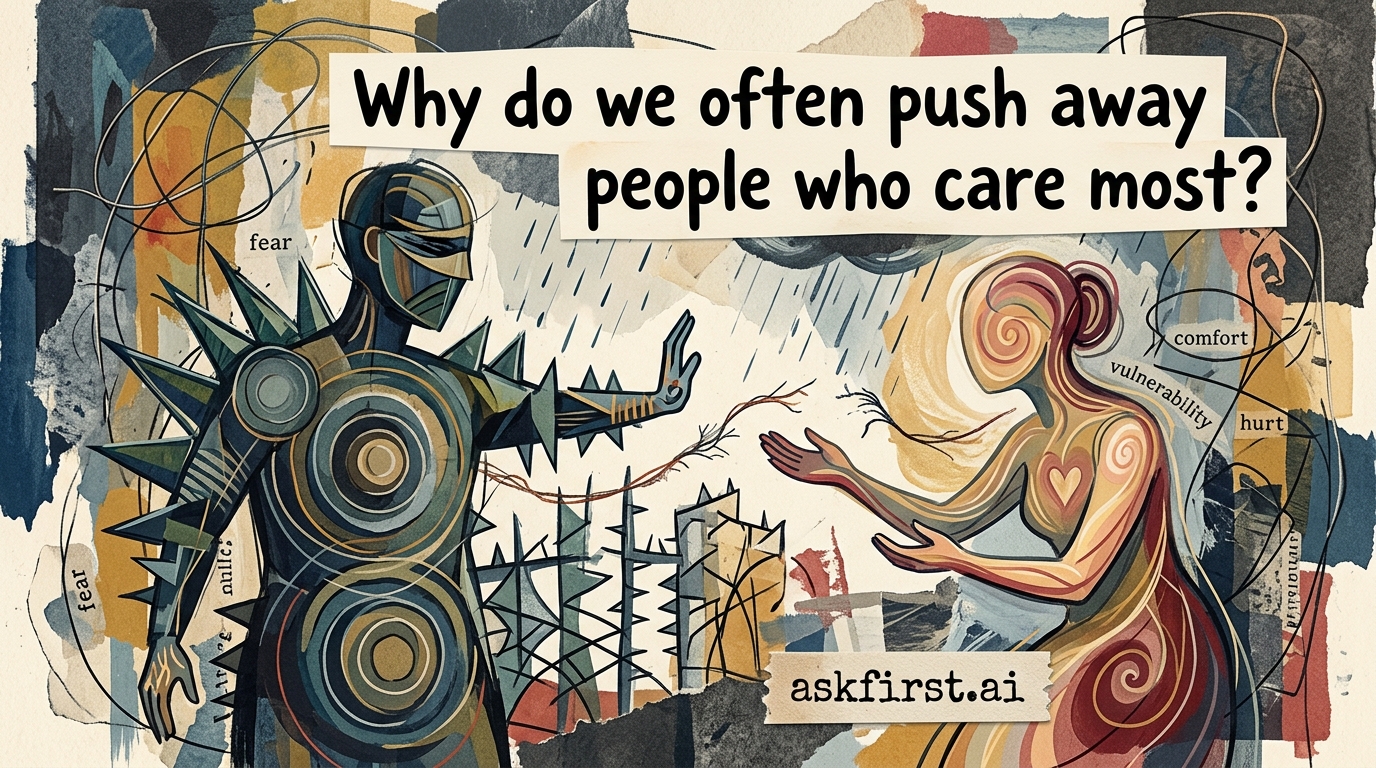
Human connection is the fundamental architecture of psychological well-being, yet a peculiar phenomenon exists where individuals frequently distance themselves from those who offer the most genuine care. This behavior, often labeled as 'self-sabotage' or 'relational distancing,' is not a sign of malice but rather a complex defense mechanism rooted in evolutionary psychology and childhood development. By examining the underlying mechanics, it becomes clear that pushing people away is rarely about the other person; it is about the internal landscape of the individual.
1. The Fear of Intimacy and Attachment Styles
At the core of this behavior lies the Attachment Theory, pioneered by John Bowlby and Mary Ainsworth. Individuals with an avoidant attachment style often perceive closeness as a threat to their autonomy. When someone cares deeply, it creates an expectation of reciprocity and presence that can feel suffocating to those who were conditioned to value independence above all else.
- Conditioning: Many individuals learn in early life that expressing needs leads to rejection or that relying on others is dangerous.
- The Guard Mechanism: Distancing serves as a protective wall to prevent the potential pain of loss. If one is never fully 'in' a relationship, one cannot be truly 'hurt' when it inevitably changes.
2. The Psychology of Self-Worth
There exists a fascinating psychological concept known as 'Self-Verification Theory.' Humans generally strive to maintain a consistent self-image. If an individual harbors deep-seated beliefs of inadequacy or unworthiness, receiving intense affection or care creates cognitive dissonance. The care from others conflicts with the internal belief that 'I am not worthy of love.'
- Challenging the Internal Narrative: When someone treats an individual with kindness, it forces that individual to question their internal narrative. It is often easier to push the person away than to reconstruct one's entire perception of self.
- The Imposter Phenomenon in Love: Similar to workplace impostor syndrome, individuals may feel that those who care most simply 'do not know the real truth' about them, leading to an urge to push them away before the 'mask' slips.
3. Fear of Vulnerability and Emotional Exposure
Dr. Brené Brown has extensively documented that vulnerability is the birthplace of connection, but it is also a source of immense terror. To allow someone to see the raw, unpolished parts of one's identity requires a level of courage that can feel like emotional exposure. Pushing people away acts as a shield against this perceived danger.
- Vulnerability as a Threat: In a world that often rewards performance over authenticity, being truly known by someone who cares can feel like walking naked into a crowd.
- Defense Against Betrayal: By distancing oneself, the individual maintains control. The logic is simple yet flawed: If I push you away now, I have control over how and when the relationship ends, thereby avoiding the vulnerability of being discarded later.
4. The Autonomy Trap
Many high-achieving or independent individuals equate love with a loss of identity. They fear that accepting care means sacrificing their goals or their 'self.' This is a common myth—that love must be a zero-sum game where one person's needs must eclipse the other's. When someone cares 'too much,' it is often perceived as an encroachment on personal territory rather than an invitation to partnership.
5. Breaking the Cycle
Understanding these triggers is the first step toward change. Breaking the cycle involves several key psychological shifts:
- Mindfulness of Reactions: Noticing the physical and emotional impulse to pull back when a conversation gets 'too real.'
- Cognitive Reframing: Recognizing that the discomfort felt is not a sign of a bad relationship, but a symptom of personal growth or past trauma being triggered.
- Communication: Engaging in transparent dialogue about these fears with the partner or friend. Vulnerability expressed is vulnerability resolved.
Ultimately, the individuals who care most are often the mirror reflecting our own internal blocks. By choosing to stay, lean in, and embrace the discomfort of being known, one can transition from a cycle of self-protective isolation into the profound safety of genuine, long-term human connection. Moving past the fear of rejection allows for the realization that true security comes not from closing doors, but from trusting that one is worthy of the affection being offered.