The Psychology of Morning Rituals: Unlocking Elite Productivity
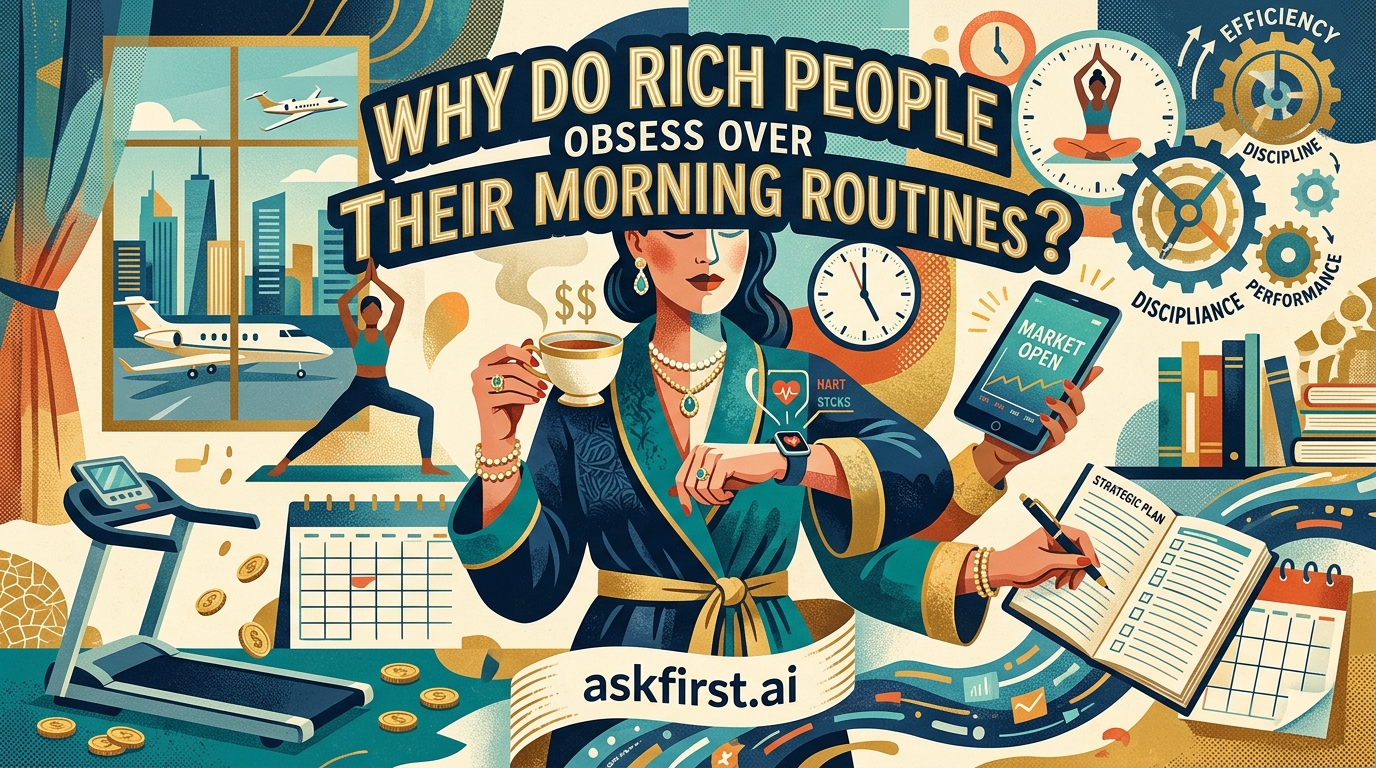
High-net-worth individuals and world-class performers often treat the first few hours of their day as a sacred laboratory for success. This obsession with morning routines is not merely about waking up early; it is a deliberate engineering of cognitive bandwidth. The primary driver behind this behavior is the management of decision fatigue. When a person makes thousands of critical, high-stakes decisions throughout the day, the brain’s executive function—located in the prefrontal cortex—eventually depletes. By automating the first two or three hours of the day, successful individuals preserve their mental clarity for the tasks that truly move the needle.
The Science of Cognitive Anchoring
Morning routines act as a psychological anchor. When external environments are chaotic or unpredictable, the ritual provides a sense of agency. This is often referred to in cognitive science as a proactive frame of mind. By performing specific sequences—such as intense exercise, meditation, or structured reading—individuals prime their neurochemistry. For example, cold exposure or high-intensity interval training releases a surge of dopamine and norepinephrine, which enhances focus and resilience against the stresses that inevitably follow during the business day. This is not about the specific activity itself, but the signal it sends to the brain: the day has begun on my terms, not the world's terms.
Core Pillars of a High-Performance Morning
Elite morning routines generally incorporate three specific components that serve distinct functions:
- Physical Activation: Moving the body before engaging with technology increases circulation and oxygenation to the brain. This creates a state of 'flow' that makes complex problem-solving easier.
- Cognitive Priming: Whether through silent meditation or journaling, setting clear intentions prevents 'reactive' behavior. Most people start their day by checking email, which forces them into a reactive state where they respond to others' priorities. Elite performers do the opposite by engaging with their own priorities first.
- Nutritional Optimization: Many successful individuals utilize intermittent fasting or strictly controlled breakfast regimens to avoid the 'post-meal slump' caused by heavy glucose spikes. Keeping the metabolism steady ensures consistent energy levels well into the afternoon.
Busting the Myth of "The Perfect Start"
The common misconception is that wealthy people follow routines because they have excess time. In reality, the most successful people are often the most time-constrained. Their obsession stems from an understanding of opportunity cost. If the first hour of the day can be optimized to increase the output of the subsequent ten hours by twenty percent, that is an investment with a massive return. It is an exercise in efficiency. Many CEOs cite the 'Golden Hour' as their only time for uninterrupted deep work. Once the world wakes up, their availability is effectively owned by investors, clients, and staff.
The Architecture of Habit Stacking
Modern behavioral science, popularized by researchers like B.J. Fogg, emphasizes the concept of 'habit stacking.' Rich individuals rarely view their routine as a chore. Instead, they link multiple small, efficient habits together until they become a singular, automatic sequence. This reduces the friction of willpower. If an individual has to decide whether to work out or read, the chances of skipping one increase. By making these actions a non-negotiable sequence, the mind stops treating them as decisions and starts treating them as automated programming.
The Long-Term Compound Effect
The obsession with these routines is essentially a long-term investment strategy applied to one’s own biology. In business, compound interest is the secret to wealth; in life, the compound effect of small, consistent daily habits is the secret to excellence. Over ten or twenty years, the gap between a person who manages their mornings and one who drifts into their day becomes astronomical. The 'ritual' acts as a safeguard against burnout and a catalyst for innovation. By the time the average person is deciding what to have for breakfast or checking social media, the high-performer has already completed a round of critical reflection, movement, and goal-setting. This structural advantage is why these routines are a staple in the lives of the most productive figures in history, from ancient philosophers to modern tech moguls. Ultimately, they view their morning not just as the start of a day, but as the foundation upon which their entire legacy is built.