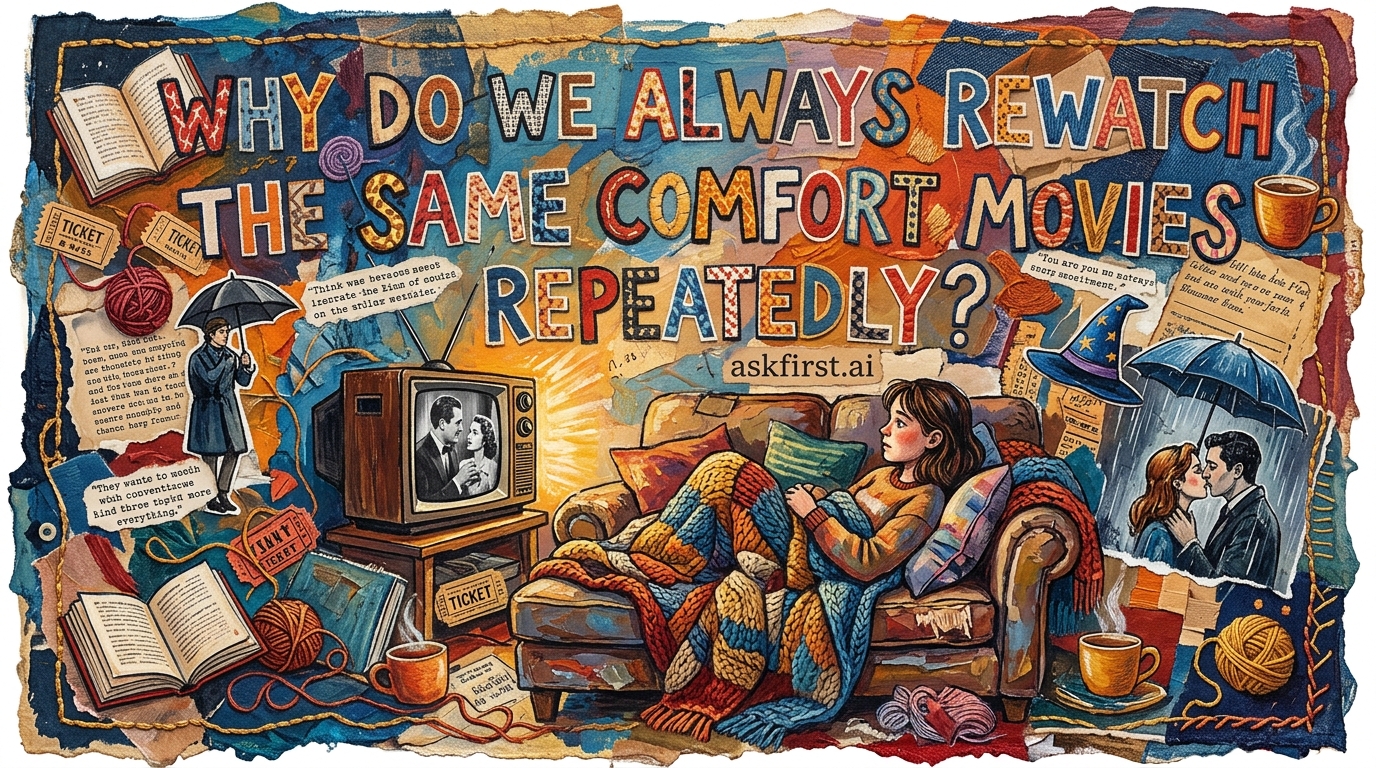
The Psychology of Familiarity: Why We Crave Comfort Cinema
Human beings possess an innate, deep-seated psychological attraction to familiarity. While the modern entertainment landscape offers a near-infinite library of fresh, groundbreaking content, a significant portion of the global audience frequently retreats to the same handful of beloved films. This phenomenon is not merely an act of boredom or a lack of imagination; it is a sophisticated cognitive strategy employed by the brain to manage emotional regulation, stress, and information processing. When we choose to rewatch a movie like The Princess Bride, Shrek, or The Lord of the Rings, we are participating in a behavioral ritual known as 'pleasurable nostalgia.'
1. The Cognitive Economy: Minimizing Mental Load
From a neuroscientific perspective, our brains are energy-intensive organs. Processing new stimuli—such as the complex narrative structure, character development, and plot twists of a first-time viewing—requires substantial cognitive resources. Conversely, rewatching a familiar movie allows the brain to transition into a state of 'low-effort processing.' Because the outcome is already known, the brain does not have to expend energy anticipating threats or analyzing complex character motives. This state of cognitive ease acts as a form of mental rest, allowing the viewer to recharge within a predictable environment. It is the narrative equivalent of putting on a favorite worn-in pair of sneakers.
2. Emotional Regulation and the 'Safe Space' Effect
Comfort movies function as anchors during periods of high stress, anxiety, or transition. Psychologist Jochen Gebauer notes that familiar narratives provide a sense of 'existential security.' In a volatile world, the narrative arc of a comfort film is unwavering. The hero will always overcome the antagonist; the resolution will always occur at the expected moment. This predictability grants the viewer a feeling of control, even if only for two hours. Research suggests that engaging with familiar stories can boost mood and reduce cortisol levels. By revisiting a positive narrative, viewers often experience a dopamine spike associated with the anticipation of their favorite scenes, effectively 'priming' their emotional state for stability.
3. Nostalgia as an Anchor to Self
Comfort films are often inextricably linked to specific periods of our past—childhood, a first relationship, or a formative year in education. When we rewatch these films, we are not just watching the movie; we are reliving a version of ourselves. This is known as 'identity continuity.' In a world that is constantly moving forward and forcing us to adapt, rewatching a movie serves as a temporal bridge that connects our current self with our past self. This serves as a psychological anchor, reinforcing who we were, what we valued, and how far we have grown. It is a vital tool for emotional resilience in an ever-changing landscape.
4. The 'Mere Exposure' Effect
In social psychology, the 'mere exposure effect' dictates that people tend to develop a preference for things merely because they are familiar with them. The more often we see a stimulus, the more we like it, provided it wasn't negative to begin with. With movies, this effect is compounded. As we watch a film multiple times, we move beyond the plot and start to appreciate the subtleties—the clever foreshadowing, the nuanced performances, and the aesthetic details that we missed on the first pass. This depth of understanding creates a more intimate relationship with the media, transforming the film from a simple piece of entertainment into a lifelong companion.
Why This Is A Healthy Ritual
Many skeptics view rewatching movies as a 'stuck' behavior or a sign of intellectual stagnation. Science, however, points to the opposite conclusion. Engaging with comforting, familiar media is a form of self-care. It helps us regulate our emotions, process past memories, and preserve mental energy. The next time you find yourself reaching for that dusty DVD or clicking that familiar icon on your streaming service, do not view it as a failure to seek new experiences. View it as an intentional act of self-regulation—a way to ground yourself, honor your past, and find peace in a narrative that you know, deep down, will always have a happy ending. Your comfort movies are not just entertainment; they are a psychological lifeline that helps keep you balanced, focused, and ready for whatever the future holds.