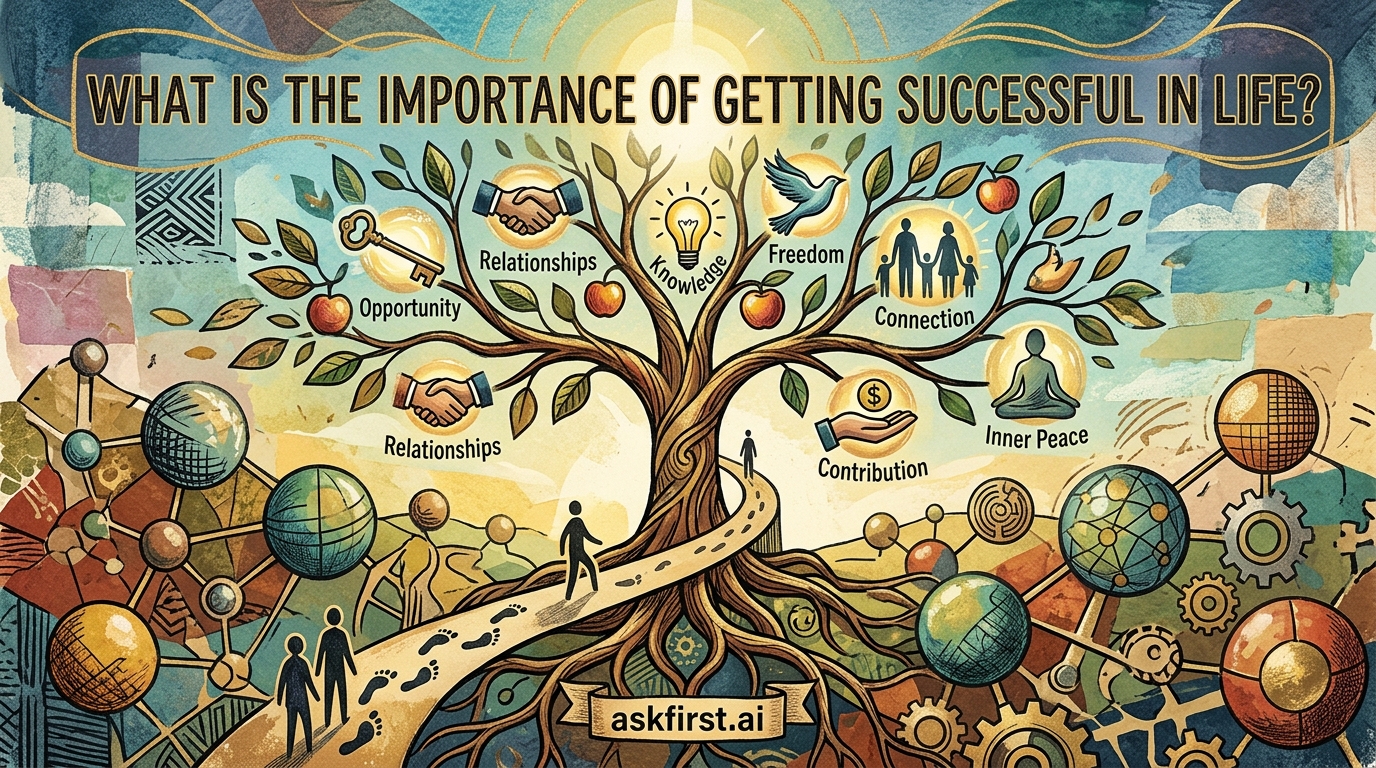
The Architecture of Achievement: Defining the Importance of Success
The pursuit of success is perhaps the most fundamental human endeavor. Throughout history, from the philosophical inquiries of Aristotle in his seminal work Nicomachean Ethics to the modern psychological frameworks established by Abraham Maslow in his Hierarchy of Needs, the quest for accomplishment has been viewed as a primary driver of human evolution. Success, however, is not a monolithic concept. It is a multifaceted construct that balances personal fulfillment, societal contribution, and the attainment of mastery. Understanding the importance of success requires us to look beyond mere material accumulation and examine the psychological, social, and existential benefits that come with reaching one’s potential.
1. The Psychological Imperative: Self-Actualization and Mental Well-being
At its core, the drive for success is tied to the concept of self-actualization. In his landmark book Motivation and Personality, Abraham Maslow posits that once basic physiological and safety needs are met, individuals are psychologically compelled to realize their innate potential. Success serves as the evidence of this realization. When an individual sets a goal—whether it is mastering a craft, building a business, or fostering a healthy family unit—and achieves it, they experience a surge in dopamine and serotonin, the neurotransmitters associated with reward and contentment.
This process is not just about the "win"; it is about the competence gained along the way. According to psychologists Edward Deci and Richard Ryan in their Self-Determination Theory, humans have an intrinsic need for competence. Success provides the feedback loop necessary to validate that one is capable of interacting effectively with their environment. Without the pursuit of success, individuals often fall into states of apathy or existential drift, which can lead to chronic dissatisfaction and mental health challenges.
2. The Economic and Social Multiplier Effect
Success is not an isolated event; it is a catalyst for broader social impact. When an individual achieves professional or personal success, they often become a "node" of stability and innovation within their community. Consider the impact of entrepreneurs like Steve Jobs or social reformers like Florence Nightingale. Their success did not terminate with their personal gain; it radiated outward, changing the way millions of people live, work, and heal.
In the book The Tipping Point by Malcolm Gladwell, the author illustrates how "connectors" and "mavens"—people who have achieved a high level of success and mastery in their fields—act as the engines of societal progress. By achieving success, you gain the "social capital" necessary to influence change. You acquire the resources, the platform, and the credibility to advocate for causes, mentor others, and invest in the future. In this sense, success is a responsibility; it provides the leverage required to solve problems that others cannot.
3. Cultivating Resilience and Character
Perhaps the most important aspect of success is not the destination, but the process of becoming. Success is rarely a linear path. It is almost always paved with failure, pivots, and persistent effort. In her book Grit: The Power of Passion and Perseverance, psychologist Angela Duckworth argues that success is a product of long-term dedication rather than innate talent.
When you strive for success, you are forced to develop character traits that define a meaningful life:
- Discipline: The ability to prioritize long-term goals over short-term gratification.
- Adaptability: The capacity to pivot when faced with insurmountable obstacles.
- Humility: The realization that success often requires the help, guidance, and labor of others.
The importance of success, therefore, lies in the "forging" process. Like a blade tempered in fire, the individual who pursues success undergoes a transformation. They emerge with a stronger sense of self-efficacy—the belief that they have the power to affect their own destiny.
4. The Legacy of Impact
Finally, the importance of success is anchored in the desire for a legacy. As noted by Viktor Frankl in Man’s Search for Meaning, the primary human drive is not pleasure, but the discovery and pursuit of what we personally find meaningful. Success is the tangible expression of that meaning. It is the footprint we leave behind. Whether through a body of creative work, the raising of a successful generation, or the creation of an institution that outlives us, success is the medium through which we communicate our values to the future.
Conclusion
The importance of success cannot be overstated. It is the mechanism through which we test our limits, contribute to the tapestry of human history, and achieve internal harmony. Success is not merely about wealth or accolades; it is about the active, intentional pursuit of excellence in all facets of life. By striving for success, we engage in the ultimate act of self-respect, proving to ourselves and the world that we are capable of growth, contribution, and enduring impact. As you navigate your path, remember that success is a journey of continuous refinement—a commitment to being better today than you were yesterday.