The Psychology of Wealth: Experiences Over Materialism
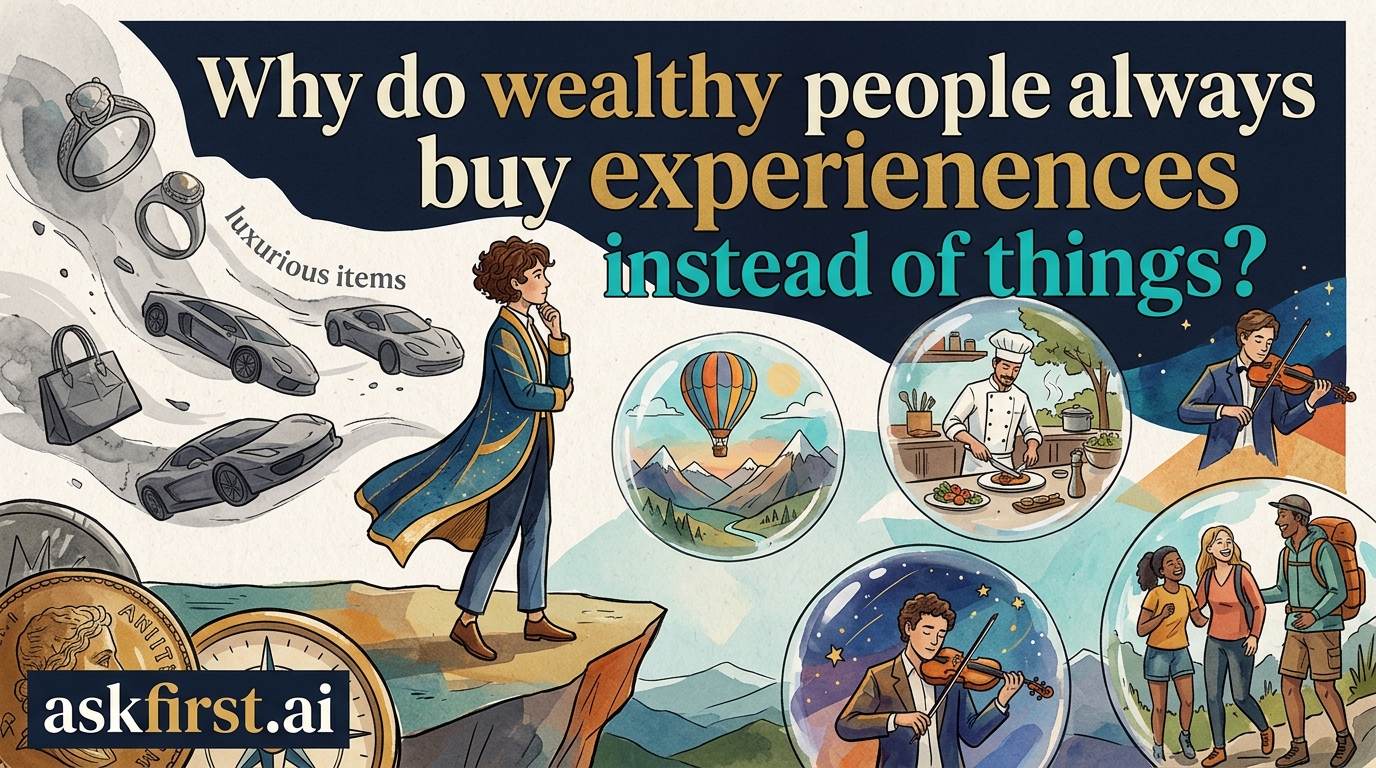
In the realm of behavioral economics and psychology, a fascinating trend persists among the exceptionally wealthy: the systematic prioritization of experiential consumption over material acquisition. While the common perception suggests that extreme wealth leads to an endless accumulation of physical assets—luxury cars, sprawling estates, or designer goods—the empirical reality reveals that long-term life satisfaction is more effectively derived from events rather than objects. This phenomenon is rooted in the concept of the hedonic treadmill, which posits that humans quickly return to a relatively stable level of happiness despite positive or negative events or life changes.
The Hedonic Treadmill and Material Goods
Material possessions suffer from a psychological disadvantage known as hedonic adaptation. When an individual purchases a luxury item, the initial spike in dopamine is significant, but it rapidly diminishes. As the object becomes a part of the person's daily environment, it becomes the 'new normal.' The novelty fades, and the psychological value of the item plateaus. Conversely, experiences—such as travel, educational workshops, or unique cultural events—do not suffer from the same rate of decay. Instead, they often appreciate in value through the process of memory, storytelling, and integration into one's identity.
Why Experiences Form the Bedrock of Identity
Unlike a watch or a handbag, which remains external to the individual, experiences become a part of the person's autobiography. Psychological research suggests that human beings define themselves more by what they have done and felt than by what they possess. When a wealthy individual invests in an expedition to Antarctica or a private masterclass in culinary arts, they are purchasing a permanent change to their internal state. This creates a psychological 'self-narrative' that is resilient, portable, and inherently immune to the physical degradation that plagues material goods.
The Social Currency of Shared Experiences
Beyond personal satisfaction, experiences serve as a powerful tool for social bonding. Humans are fundamentally social creatures, and experiences are more likely to be shared. Research indicates that discussing a shared adventure or a collaborative experience fosters stronger interpersonal connections than discussing material purchases. For the wealthy, the social network is a critical asset; therefore, investing in shared experiences acts as a mechanism to reinforce community, strengthen relationships, and build social capital that a static object could never provide. The 'story value' of an experience also contributes to its longevity, as recounting these moments keeps the positive emotional state alive for years.
The Concept of Experiential Value
Financial experts and life coaches often highlight that experiences provide a unique form of emotional insurance. Because experiences are fleeting, they are less prone to the critical comparisons that often follow material purchases. A person might constantly compare their car to a neighbor’s newer model, inducing feelings of inadequacy or regret—a phenomenon known as 'buyer’s remorse.' Experiences, however, are subjective and idiosyncratic. It is far more difficult to benchmark one person's experience against another, which protects the consumer from the negative psychological impact of peer comparison.
Strategic Investment in Human Capital
Many wealthy individuals treat experiences as investments in human capital rather than mere consumption. Activities like attending global conferences, undergoing intensive leadership retreats, or engaging in philanthropic excursions contribute directly to intellectual growth. By focusing on experiences that broaden perspective, improve skills, or enhance health, high-net-worth individuals are essentially compounding their personal potential. This is a deliberate strategy to ensure that their 'wealth' is not just in their bank account, but in their capacity to perceive, innovate, and adapt to the world around them.
Designing the Legacy of Memory
Ultimately, the shift toward experiences is a shift toward long-term legacy. When reflecting on a life well-lived, the highlight reel is composed of moments, breakthroughs, and profound shifts in understanding. By prioritizing experiences, the wealthy curate a life that feels expansive rather than constrained by the burden of maintenance. Material possessions require storage, security, and maintenance, which can create a psychological 'clutter' that distracts from the pursuit of fulfillment. Experiences, by contrast, leave behind only the mental and emotional imprint, freeing the individual to remain agile and focused on the future.
- Key Takeaway: Materialism satisfies a fleeting desire, while experiences build the very foundation of who we are.
- Conclusion: The choice to favor experiences is not merely a sign of wealth but a profound understanding of how to optimize the human experience for enduring happiness.