The quest for "true love"—defined here as a stable, deeply empathetic, and enduring romantic partnership—is perhaps the most complex psychological and sociological endeavor a human can undertake. While poets and filmmakers often frame love as a spontaneous, magical accident, social scientists and relationship experts suggest that finding a long-term partner is a process governed by deliberate choices, self-awareness, and the cultivation of specific interpersonal skills.
The Foundation: Self-Differentiation and Emotional Maturity
Before one can identify a suitable partner, one must first possess a clear understanding of the self. Dr. Murray Bowen, a pioneer in family systems theory, introduced the concept of "differentiation of self." In his seminal work, Family Evaluation: An Approach Based on Bowen Theory, Bowen argues that individuals who are highly differentiated can distinguish between their intellectual processes and their emotional reactions.
In practical terms, this means that if you enter a relationship looking for someone to "complete" you or fix your internal voids, you are setting the stage for codependency rather than true love. True love thrives when two autonomous individuals choose to share their lives, rather than two incomplete individuals trying to become a single unit. Before seeking a partner, focus on building a life that you genuinely enjoy. When you are secure in your own values, hobbies, and emotional regulation, you are far less likely to settle for toxic or incompatible partners simply to avoid being alone.
The Science of Compatibility: Values vs. Interests
A common pitfall in modern dating is the confusion between shared interests and shared values. You might enjoy the same movies, travel destinations, or music as a potential partner, but these are superficial layers of a relationship. True compatibility is found in the alignment of fundamental values.
According to Dr. John Gottman and Dr. Julie Schwartz Gottman in their book The Seven Principles for Making Marriage Work, successful long-term relationships are built on the creation of "shared meaning." This includes how you view money, how you handle conflict, your stance on family and child-rearing, and your general outlook on life’s purpose.
Examples of value-based alignment include:
- Conflict Resolution Styles: Does one person prefer to process internally while the other needs to speak immediately? Understanding these rhythms early is vital.
- Financial Philosophies: Is one person a saver while the other is a spender? These are not just habits; they are deep-seated beliefs about security and freedom.
- Future Vision: Do both partners desire the same lifestyle trajectory? A mismatch here often leads to resentment years down the road.
The Role of Intentional Exposure and Vulnerability
Finding love requires being in the "market" of human connection, but it must be done with intentionality. Dr. Brené Brown, in her research detailed in Daring Greatly, emphasizes that vulnerability is the birthplace of love, belonging, and joy. Many people fail to find true love because they keep their walls up, fearing rejection.
To find love, you must be willing to show your authentic self, including your imperfections. This is not about "oversharing" on a first date, but rather moving past the curated social media persona. Engage in communities—clubs, volunteer organizations, or professional groups—where your core values are represented. When you meet someone, ask questions that peel back the layers: "What is a challenge you’ve overcome recently?" or "What are you most proud of in your life?" These questions move the conversation away from the mundane and toward the character of the individual.
Recognizing the "Green Flags"
While society emphasizes spotting "red flags," it is equally important to identify the green flags that signal a partner capable of true love. Look for these indicators:
- Consistency: Does their behavior match their words over a period of months?
- Accountability: Can they admit when they are wrong without shifting the blame?
- Support: Do they celebrate your successes with as much enthusiasm as they comfort you in your failures?
- Curiosity: Do they continue to learn about you, even after the "honeymoon phase" has faded?
Conclusion: Love as an Action, Not a Feeling
Ultimately, the search for true love is not about finding a perfect person, but about finding a person who is willing to commit to the work of love. Erich Fromm, in his classic 1956 work The Art of Loving, famously posits that love is an art that requires knowledge and effort. It is not an affect—a feeling that simply happens to you—but an activity.
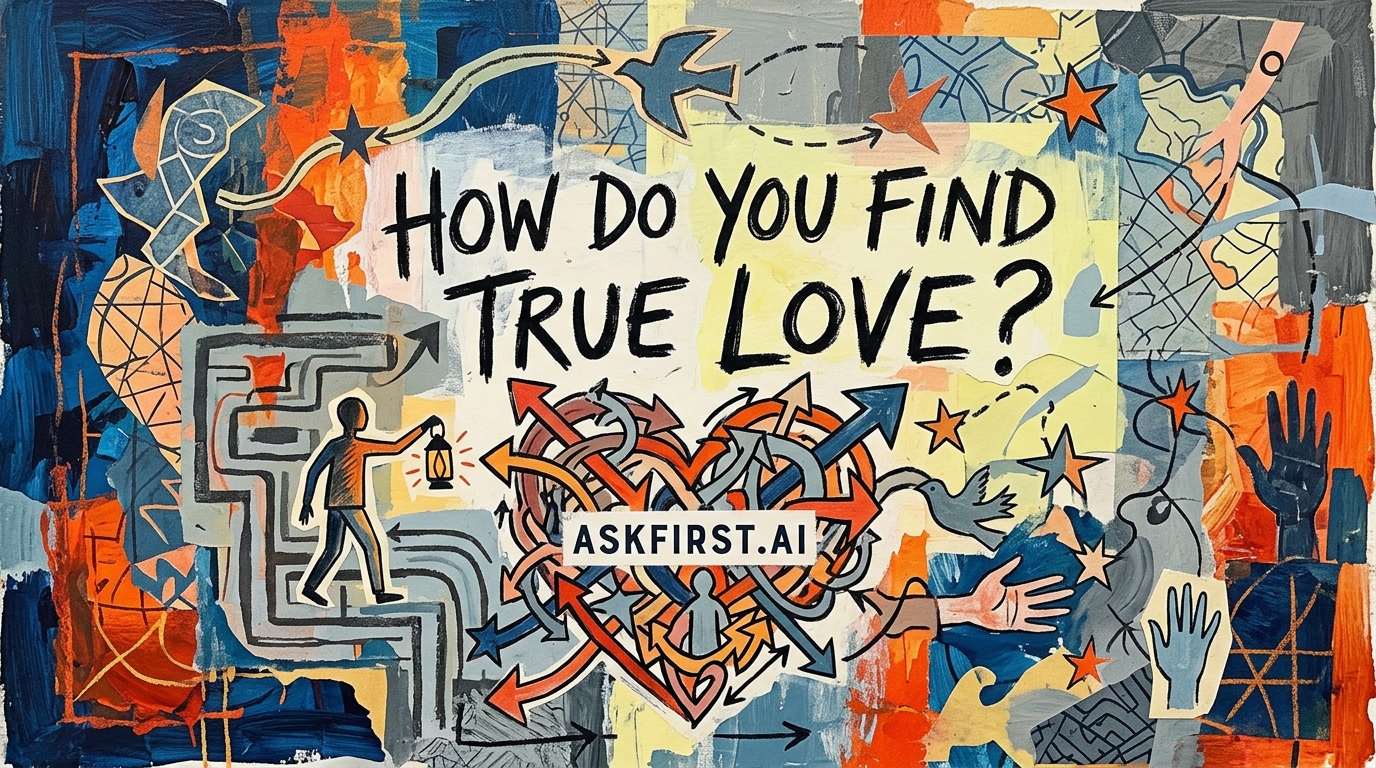
True love is found when you stop searching for a magical soulmate who will make life effortless and start looking for a partner who is willing to navigate the complexities of existence with you. By cultivating your own emotional maturity, prioritizing shared values over superficial interests, and embracing the vulnerability required to be truly known, you create the conditions under which a deep, lasting connection can flourish. True love is not a destination you arrive at; it is a garden you choose to cultivate every single day.